In 30 Sekunden
In this October 2024 news roundup, Matthew Berman shares his early impressions of Apple Intelligence and reviews announcements and reports about GitHub Copilot, Meta AI search, Grok vision, Perplexity, Claude, Llama, Cerebras, Waymo, a mystery image model, and Google’s reported Project Jarvis. He ends with Stable Diffusion 3.5 Medium. The article preserves the video’s historical context: performance numbers are company claims or a snapshot of a leaderboard, reported projects are not confirmed releases, and the lawsuit involves allegations rather than a finding of liability. Berman’s forecasts and product opinions are his own.
- 1Apple Intelligence arrivesBerman describes his early experience as underwhelming, while finding notification summaries useful.
- 2Copilot model choiceGitHub announces model options and previews a natural-language app builder called Spark.
- 3Search competitionBerman discusses a report that Meta was developing a search engine and his shift toward answer-oriented tools.
- 4Publishers sue PerplexityBerman discusses allegations about use of publisher content and Perplexity’s revenue-sharing response.
- 5Smaller Llama modelsMeta reports quantized 1B and 3B releases with lower memory and faster inference under its stated conditions.
- 6Mystery image modelA leaderboard snapshot places Red Panda first; Berman says he has not tested it.
- 7Reported browser agentAn article describes Project Jarvis, a reported browser automation project, rather than a demonstrated public release.
Das Wichtigste
- Berman found Apple Intelligence’s initial feature set underwhelming but liked notification summaries.
- GitHub announced additional models for Copilot and previewed Spark as a natural-language application builder.
- Berman sees growing competition in AI search, while a reported lawsuit highlights publishers’ allegations about use of their content.
- Meta’s model-size and speed figures for quantized Llama 3.2 and Cerebras’s throughput comparisons are vendor-reported results.
- Waymo’s funding and ride numbers are presented alongside Berman’s speculative comparison of camera-only and multi-sensor autonomous driving.
- Red Panda’s arena ranking and reports about Project Jarvis were snapshots from October 2024, not proof of enduring leadership or an available product.
Den bearbeiteten Text nach Kapiteln lesen
Apple Intelligence’s early release
Berman reviews the features he has tried and finds the initial release limited. Notification summaries stand out as useful to him.
In October 2024, I begin the roundup with the public release of iOS 18.1 and the first Apple Intelligence features. After using the beta for several weeks, I find the initial experience underwhelming compared with the broader vision Apple had promoted. That is my early impression, not an assessment of later releases.
I had expected an assistant able to use context across contacts, email, messages, and apps. The release I tried did not deliver the broad cross-app experience I wanted, and some image and emoji features were not available to me. Product availability and supported devices should be understood as they stood in the 2024 rollout.
The writing tools can rewrite or help draft text, a capability I already encounter in other applications. The feature I find genuinely useful is notification rollups: rather than reading every notification in a stack, I can see a short summary of the group.
I also try describing a photo album, but Apple Photos lacks functions I want before switching from Google Photos. I remain disappointed with Siri and want an advanced conversational voice assistant integrated directly into the phone. My remarks about ChatGPT integration reflect my understanding at the time, not a verification of the exact rollout.
GitHub Copilot, Spark, and Meta search
GitHub announces model choice and previews an app builder. Berman considers a report about Meta developing search and the competitive implications.
At its annual event, GitHub announces more model choice for Copilot, naming Anthropic’s Claude 3.5 Sonnet, Google’s Gemini 1.5 Pro, and OpenAI’s o1 models. I read the move as part of a wider Microsoft strategy to avoid relying on a single model provider. That is my interpretation, not a stated reason I establish in the video.
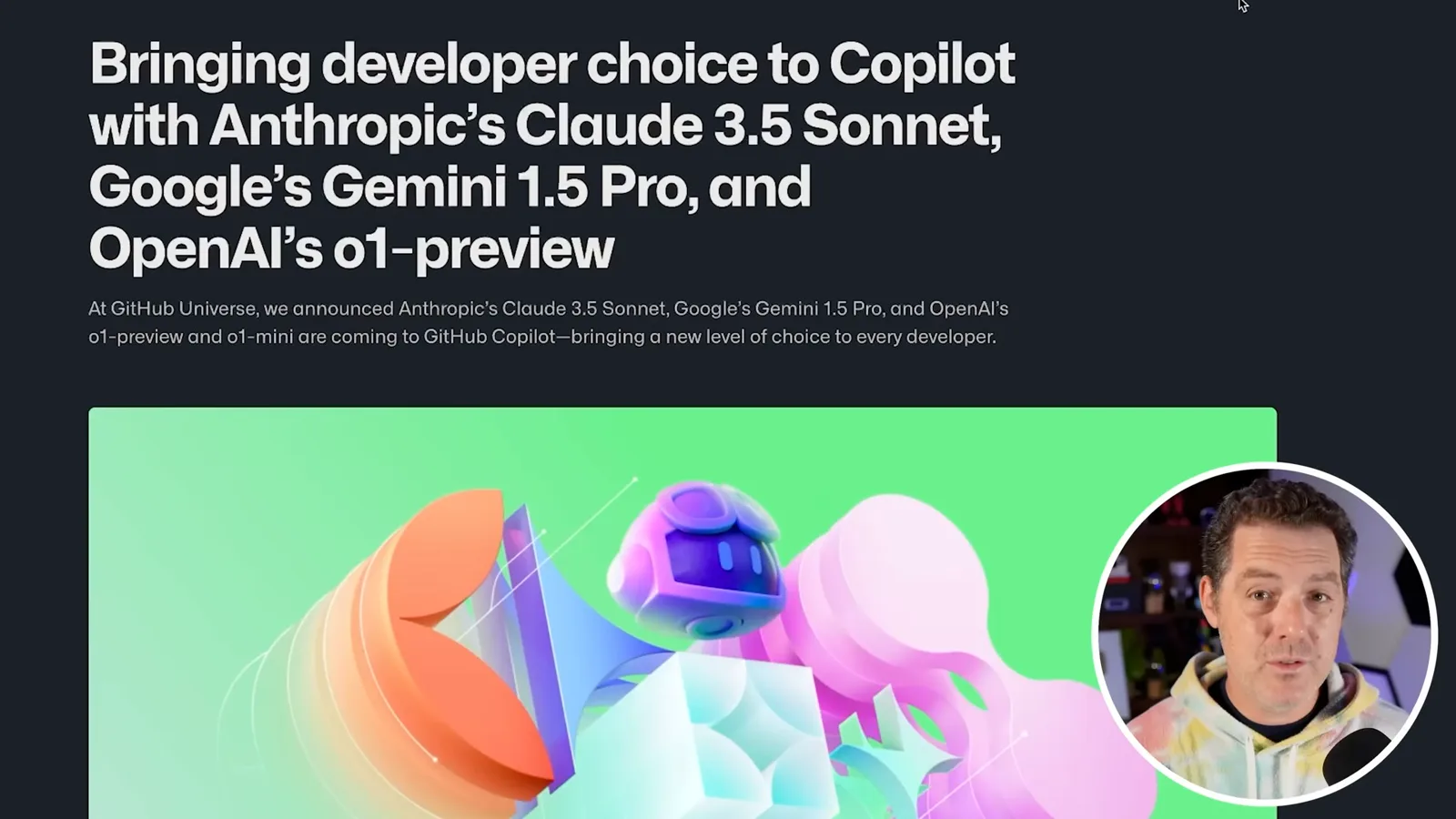
The company presents the models as having different strengths, including coding and large context windows. Those model options were announced for Copilot; the announcement shown in the video does not establish that each option powered every tab-completion workflow.
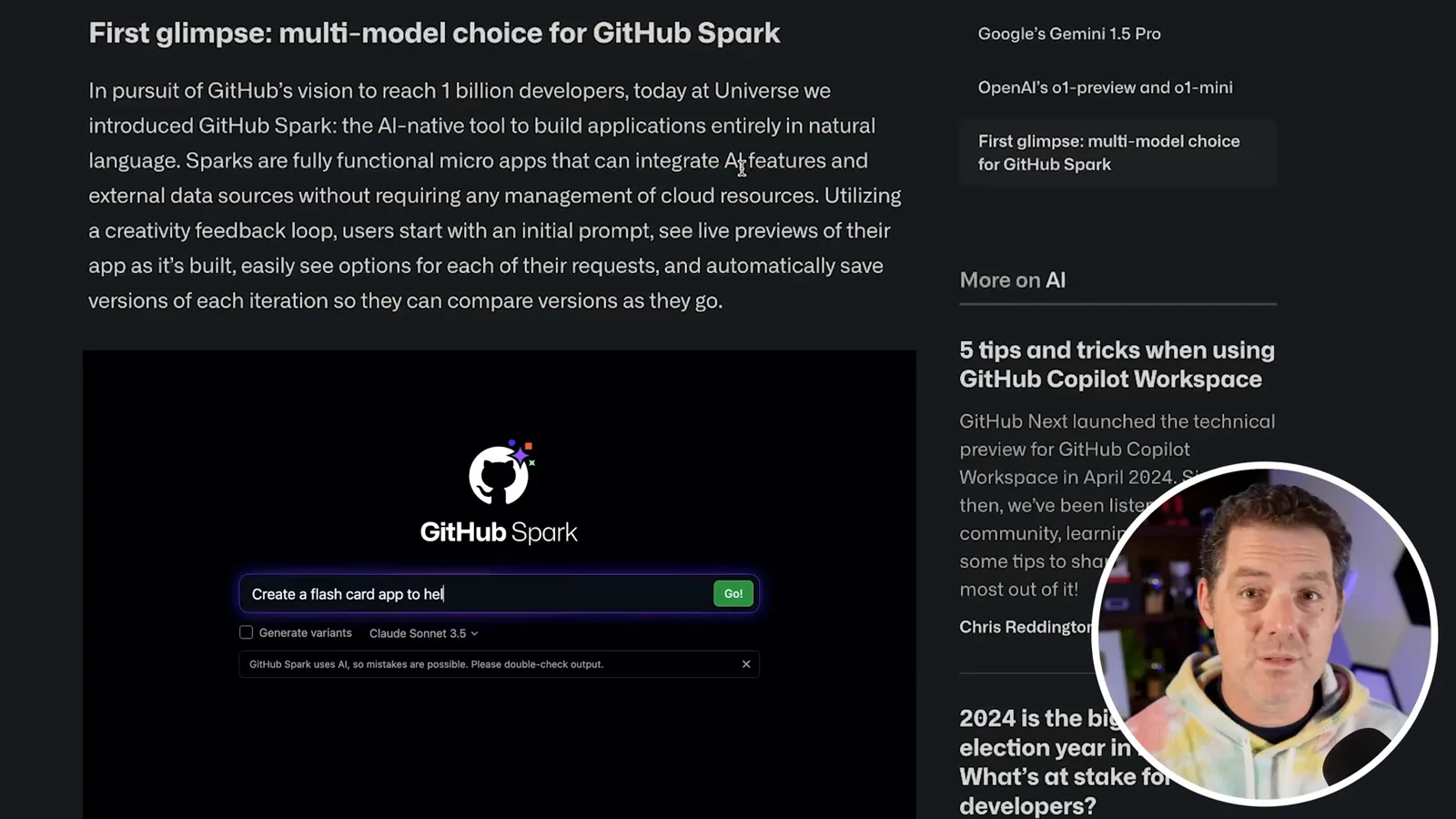
GitHub also previews Spark, described as a way to build small applications using natural language, with AI features and external data sources. I see it as part of an increasingly competitive market for AI-assisted software creation. The description is from the launch period, not a guarantee of present availability.
The Information reports that Meta is developing its own search engine. I think combining Meta AI with current web information could make search more competitive, though I acknowledge that implementing a web crawler and search system is more complex than the strategic idea sounds.
I say that I have shifted much of my own information seeking from traditional Google search to Perplexity and ChatGPT, using Google more when I know which site or image I want. This is my personal usage pattern, not a market-share measurement. I also discuss a reported Reuters arrangement to provide news through Meta AI.
I am optimistic about Meta AI but remain unconvinced that glasses are the final form factor for AI hardware. Other people, including Mark Zuckerberg, may disagree; I present that as my own product prediction.
Grok vision and the Perplexity lawsuit
Berman tests an image prompt and discusses publisher allegations against Perplexity. He shares his own view on consent for use of creators’ work.
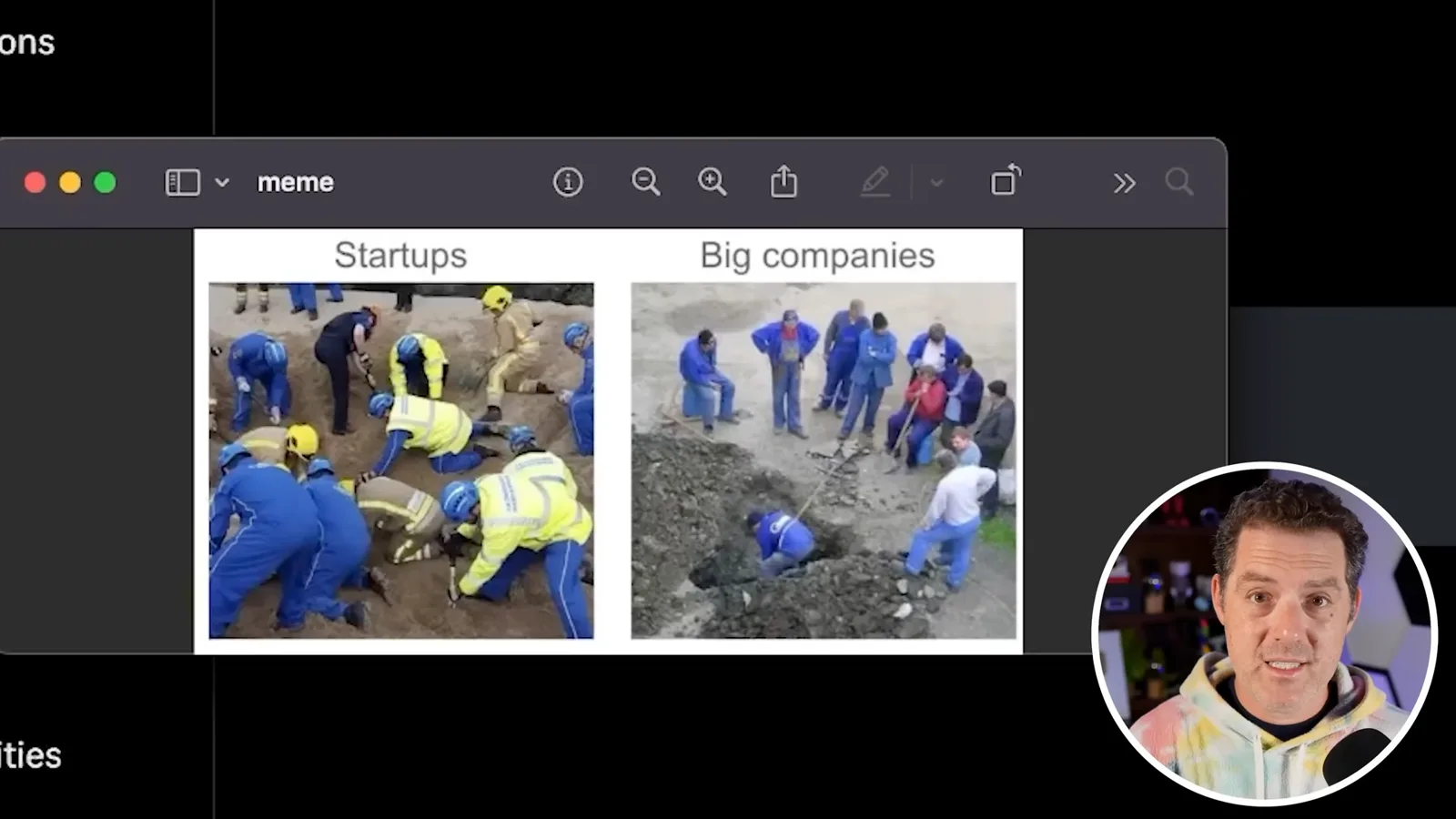
Grok gains image understanding, and I try a meme comparing startups with large companies. I say the model correctly explains the joke in this example. One successful example is not a systematic evaluation of its visual reasoning.
I turn to the lawsuit brought by the publishers of The Wall Street Journal and New York Post against Perplexity. Their allegations concern use of publisher content by an AI answer service; the existence of a lawsuit does not itself establish infringement or liability.
I worry that answer engines can reduce the need to click through to the original source, while publishers object to the use and presentation of their material. I also mention Perplexity’s response and its publisher revenue-sharing program. These are competing positions in a developing dispute, not a legal conclusion.
As a creator, I say I want the option to decide whether AI systems ingest my work. I compare publishers’ responses to earlier reactions to new technologies, while acknowledging that viewers may disagree with my view of copyright.
Claude, Perplexity, and local models
The roundup covers Claude code execution, a Mac app, and quantized Llama 3.2 models. Performance figures are historical vendor claims.
Claude can write and execute code, an update I compare to ChatGPT’s Advanced Data Analysis. Code execution can help with tasks such as counting letters in a string, because the model can run an explicit calculation. It does not guarantee every generated program or answer will be correct.
I say I installed Perplexity’s native macOS application and like it. I add that Perplexity does not pay me for that endorsement; it and ChatGPT are tools I personally use often.
Meta releases quantized Llama 3.2 1B and 3B models intended for devices. Quantization reduces representation size and can trade off quality for efficiency. Meta reports up to two-to-four-times faster inference, an average 56% reduction in model size, and a 41% smaller memory footprint under its stated comparison; I have not tested the models myself.
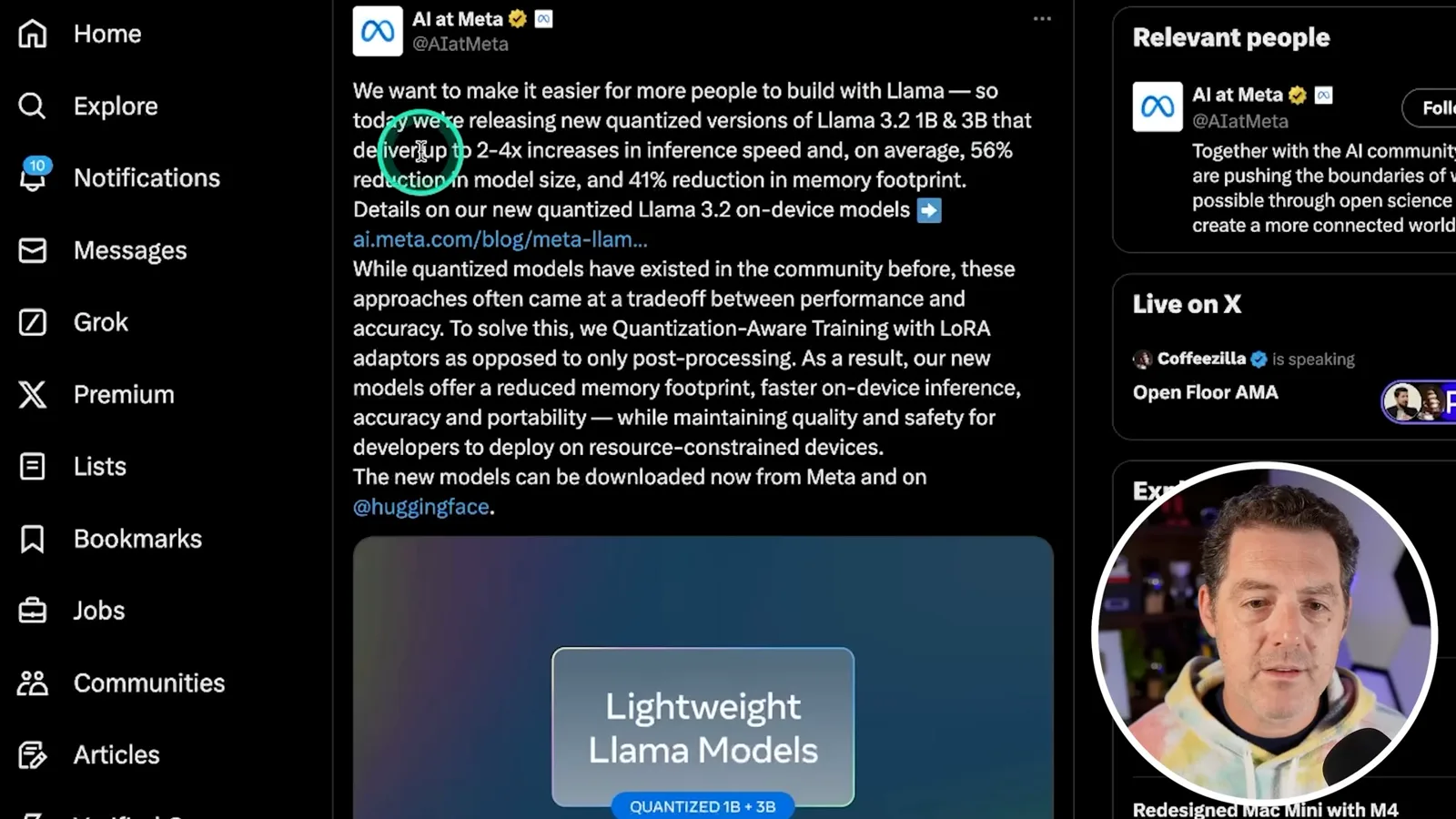
I welcome smaller local models because I value privacy, security, low latency, and ownership. My expectation that small models can handle most people’s common tasks is a prediction and will depend on the task and quality required.
Inference hardware and autonomous vehicles
Berman reviews Cerebras speed claims, a TSMC yield report, and Waymo funding. His predictions about driving sensors are opinions, not safety comparisons.
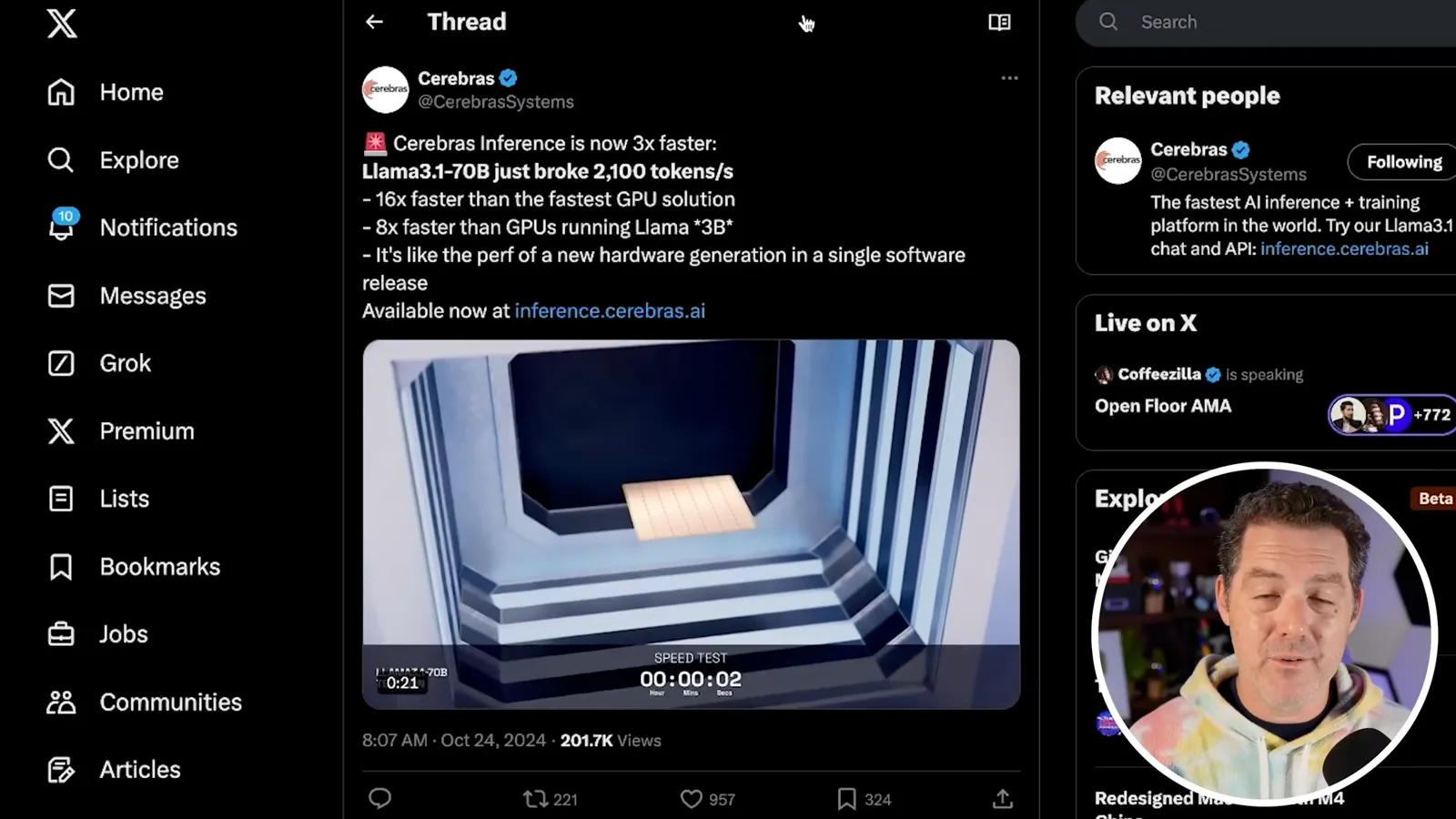
Cerebras says its inference service has accelerated and reports Llama 3.1 70B exceeding 2,100 tokens per second, alongside comparisons with GPU systems. These are Cerebras’s performance claims, not measurements I independently reproduce, and the relative results depend on the compared workloads and configurations.
I discuss a report that early production yields at TSMC’s Arizona facility exceeded those at a comparable Taiwan facility by four percentage points. I welcome domestic chip production as a way to reduce supply dependence; the reported yield comparison is not a general ranking of all factories or processes.
Waymo announces a $5.6 billion funding round led by Alphabet, and I cite more than 100,000 paid rides per week. I describe service in San Francisco, Los Angeles, and Phoenix and an Uber partnership as presented at the time. These are 2024 company figures and plans, not current operating statistics.

I contrast Waymo’s cameras, lidar, radar, and other sensors with Tesla’s camera-centered approach. I speculate that vision-only systems may eventually win, while noting blocked or obscured cameras as a challenge. That is my opinion, not evidence that either approach is safer in all conditions.
Mystery image model and browser agents
A leaderboard snapshot highlights Red Panda, and a report describes Project Jarvis. Berman ends with Stable Diffusion 3.5 Medium.
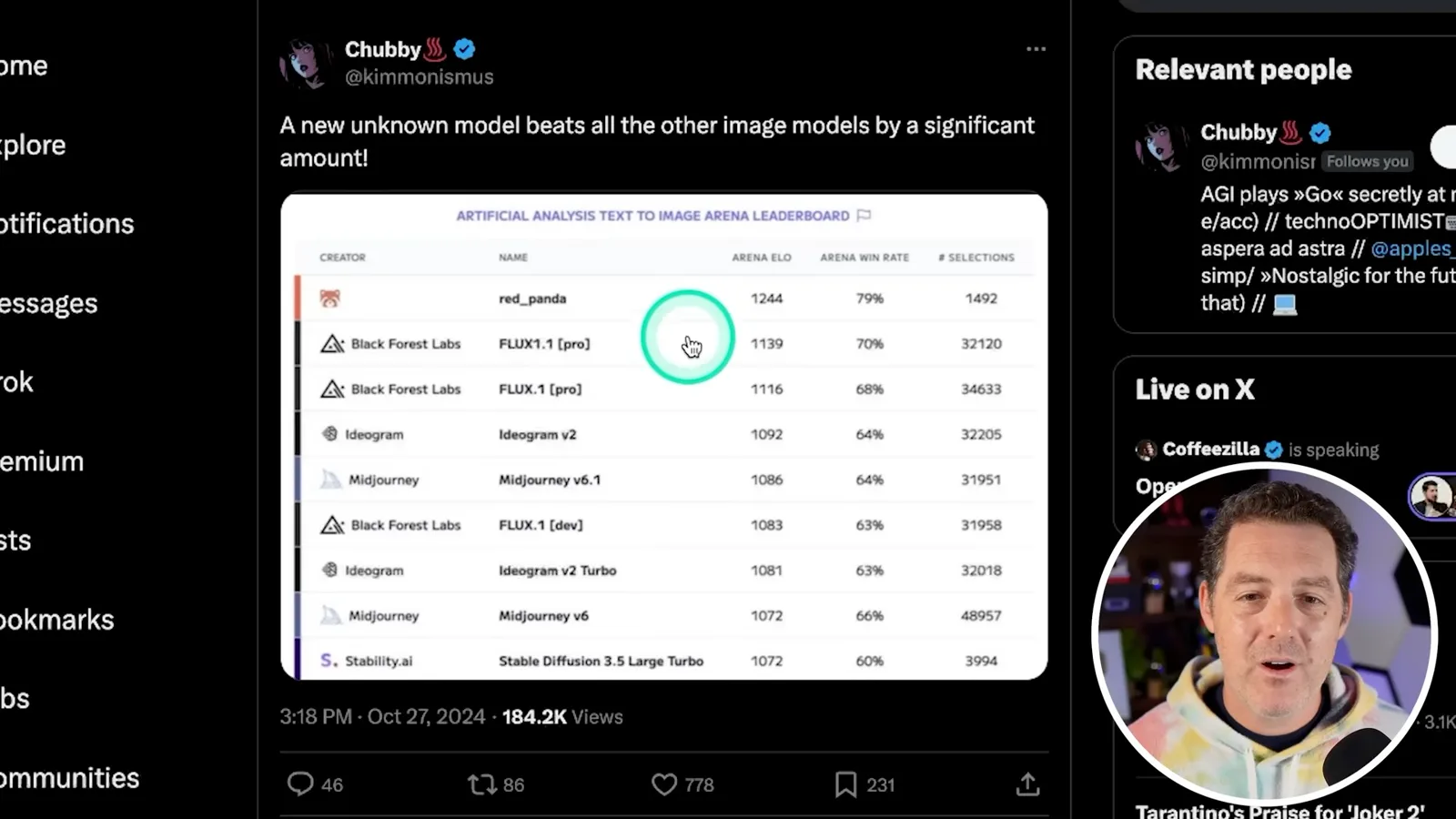
A post by Chubby highlights an unknown image model called Red Panda at the top of an Artificial Analysis arena leaderboard. I have not tested it; the screenshot is a historical ranking from that evaluation, with a different number of selections for each model, rather than a universal or lasting measure of image quality.
I discuss a report about Google’s Project Jarvis, described as a consumer-facing Chrome agent for tasks such as research, booking, and purchasing. At this point it is a reported project, not a publicly demonstrated release. The article says the agent would interpret frequent screenshots and then click or type, with a delay between actions.
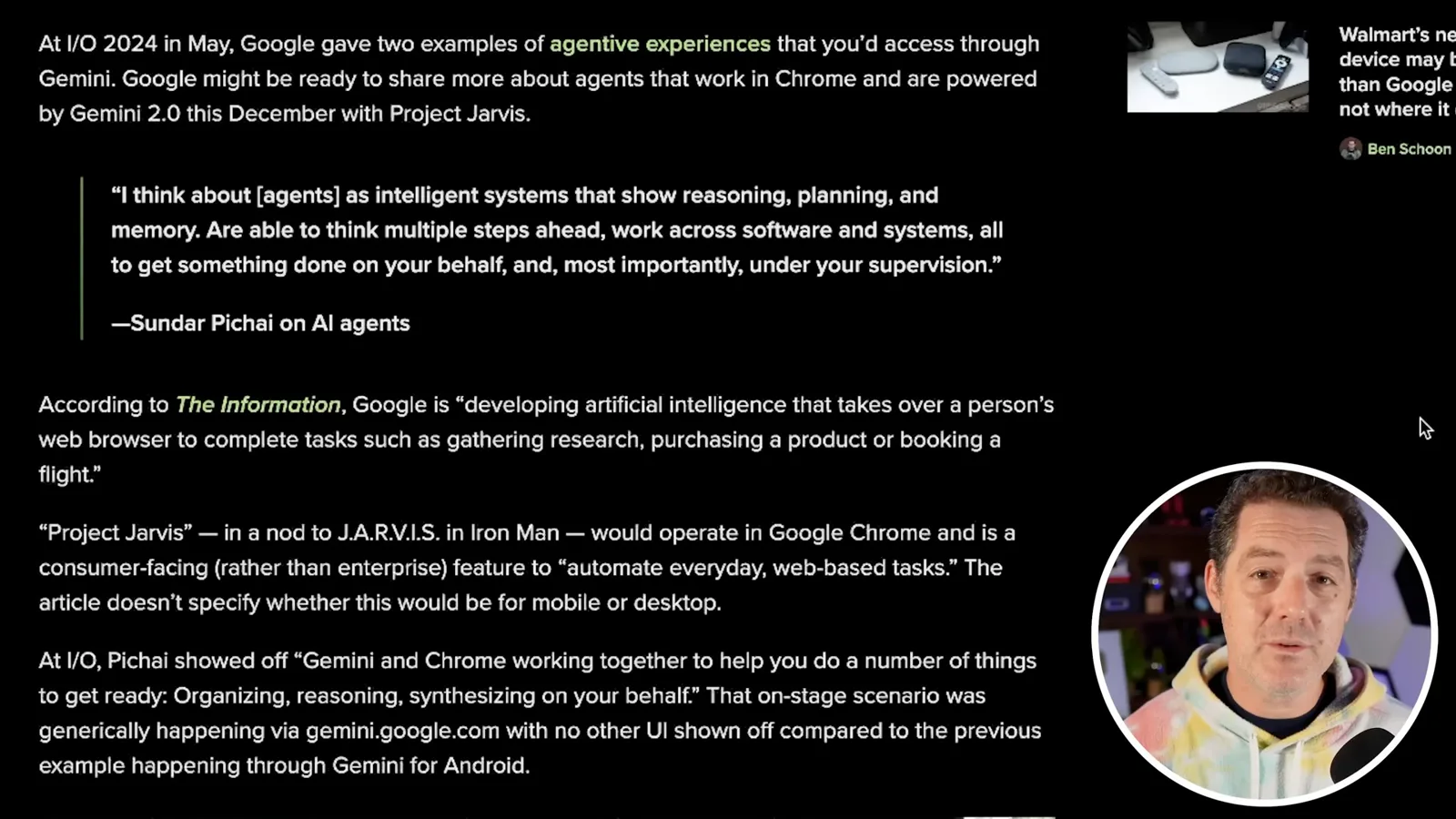
I compare that reported approach with existing computer-control systems and express concern about the reliability of screenshot-based coordinate selection. I speculate that tighter integration with browser APIs might help. Neither the proposed implementation nor the eventual performance is established by the report alone.

Finally, I discuss Stable Diffusion 3.5 Medium and its intended local use. Stability AI describes changes to architecture and training aimed at image quality, coherence, and multiple resolutions; I like the examples but offer to test it on my own GPUs rather than claiming a completed benchmark.
Mehr aus diesem Kanal
 34:21EN
 Matthew Berman· 27. Okt. 2026Matthew Berman Examines Anthropic’s IPO Filing, AI Growth and GovernanceMatthew Berman, Sam Altman · Forward FutureThe presenter reviews the S-1’s financial metrics, compute strategy and voting structure while questioning the tension between rapid AI development and safety.
 0:36ENMatthew Berman· 25. Okt. 2026Kimi K3.1 and a Rubik’s Cube Solver DemonstrationMatthew Berman · Forward FutureMatthew Berman shows a scrambled virtual cube being solved and gives the Kimi K3.1 test a favorable assessment.
 25:50ENMatthew Berman· 24. Okt. 2026Kimi K3.1 Pro Tested: Strong 3D Demos, Uneven Results and Competitive PricingMatthew Berman · Forward FutureMatthew Berman tests the open-weight model on coding, 3D rendering and visual explanations, then compares benchmark results and prices.
 32:20ENMatthew Berman· 23. Okt. 2026Who Is Local AI For? The Costs, Trade-offs and a Hybrid FutureMatthew Berman · Forward FutureMatthew Berman weighs data control and independence against hardware cost, setup complexity and inference speed.
 1:03:37ENMatthew Berman· 23. Okt. 2026Matthew Berman’s Team Tests Kimi K3.1 on Animation, Games, and ChartsMatthew Berman, Alex, Brian · Forward FutureA live team AMA turns into an informal test of Kimi K3.1, from personal-agent workflows to motion graphics, a browser game, and a benchmark chart.
 0:53ENMatthew Berman· 22. Okt. 2026Sam Altman on AI and the Discovery of New KnowledgeSam Altman · OpenAIAltman expects progress in mathematical discovery to extend to biology, materials and energy.