In 30 Sekunden
Michael Stevens discusses perception, uncertainty about reality and the practical importance of caring for others in a philosophical conversation with Lex Fridman.
- 1A speculative questionStevens discusses the limits of direct experience.
- 2Acting on inferenceHe treats care for others as a practical starting point.
- 3Digital and real animalsThe speakers explore differences in moral intuition.
Das Wichtigste
- Experience reaches us through perception.
- Stevens treats the reality question as speculative.
- Everyday care remains a practical concern.
Den bearbeiteten Text nach Kapiteln lesen
Experience and reality
Lex Fridman asks Michael Stevens of Vsauce about the gap between perception and reality.
Lex Fridman asks Michael Stevens of Vsauce about the gap between perception and reality.
Stevens says the question is speculative and argues that people experience the world through events in their own minds.
He nevertheless considers it useful to act on the inference that other beings and the world exist, using care for a cat as an example.
Practical and ethical questions
He finds simulation and consciousness questions fascinating but asks what practical difference a hypothetical answer would make to everyday responsibilities.
He finds simulation and consciousness questions fascinating but asks what practical difference a hypothetical answer would make to everyday responsibilities.
The pair compare a digital pet with a real animal to explore why neglect feels different. Their conversation raises an ethical question rather than settling it.
Mehr aus diesem Kanal
 3:34:27EN
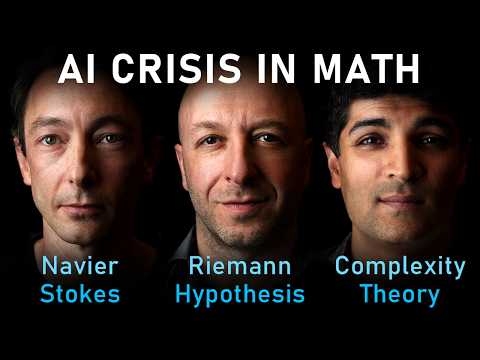
 Lex Fridman· 26. Okt. 2026Podcast · 4 StimmenAI, Mathematics, and the Meaning of a ProofGast: Steven Brunton, Ankur Moitra, Alex Kontorovich · Moderation: Lex FridmanLex Fridman and three mathematicians discuss recent AI-generated research, hard open problems and what human understanding contributes.
 3:36:56ENLex Fridman· 16. Sept. 2026PodcastPsychiatry Has Never Found Its PenicillinModeration: Lex FridmanHistorian Andrew Scull tells Lex Fridman why the field can ease symptoms, has never cured a major mental illness, and keeps paying for overconfidence with patients' lives.
 5:15:51ENLex Fridman· 26. Aug. 2026Podcast · 2 StimmenDHH Did Not Write a Line of Omarchy QuattroGast: DHH · Moderation: Lex FridmanThirteen months after a skeptical conversation with Lex Fridman, the Rails creator describes how Opus 4.5, a swarm of coding agents, and a one-minute Linux installer ended his era of hand-chiseled Ruby.
 3:12:58ENLex Fridman· 12. Aug. 2026Podcast · 2 StimmenOne Cold Shower, Twenty Champions: How Khabib Nurmagomedov Was ForgedGast: Khabib Nurmagomedov · Moderation: Lex FridmanIn a Makhachkala school gym, seventy men shared one shower, and the water was only cold.
 3:46:18ENLex Fridman· 28. Juli 2026Podcast · 2 StimmenIf You Take Slavery Out of the Picture, There Is No Civil WarGast: Gary Gallagher · Moderation: Lex FridmanIn 1860, enslaved people were worth more than every railroad and factory in the United States combined.
 3:51:47ENLex Fridman· 30. Juni 2026Podcast · 2 StimmenForty-Six Percent of Emperors Were Overthrown. The Empire Lasted AnywayGast: Anthony Kaldellis · Moderation: Lex FridmanHistorian Anthony Kaldellis walks Lex Fridman through 2,200 years of Roman history and argues that what we call Byzantium was Rome itself.