In 30 Sekunden
Matthew Berman presents six open-source projects: Unsloth, Diagram Design, Obsidian Skills, Buzz, ego-lite, and Modly. His demonstrations range from local model training to agents working alongside people and image-to-3D generation. The video is sponsored by Hostinger, which hosts the Hermes agent used in the diagram demonstration.
- 1Local model toolsBerman describes Unsloth as a point-and-click way to run and fine-tune models, with tools and an agent interface.
- 2Diagrams as an agent skillDiagram Design supplies diagram patterns to compatible agents. Berman demonstrates it with Hermes hosted by the video's sponsor, Hostinger.
- 3People and agents in one workspaceBuzz gives agents accounts alongside human teammates and uses a signed event log for messages and workflow activity.
- 4Browser access and 3D assetsego-lite shares logged-in browser state with agents; Modly generates a 3D mesh from an image on local hardware.
Das Wichtigste
- Unsloth combines local model inference and training with an agent interface.
- Diagram Design and Obsidian Skills give compatible agents instructions for visual diagrams and Markdown-based knowledge work.
- Buzz places people and agents in shared channels and records activity as signed events.
- ego-lite lets agents automate a browser using a user's logged-in state; Modly converts images into 3D meshes locally.
Den bearbeiteten Text nach Kapiteln lesen
Unsloth: models on your own machine
Berman introduces local inference, training, and an agent interface. He highlights a graphical fine-tuning workflow.
Here are six open-source projects worth exploring. The first is Unsloth, which began by making local large-language-model fine-tuning easier and has grown into a tool for inference, training, and more. It is available across Windows, macOS, and Linux, with support for a range of models and hardware.
Unsloth now also has an agent interface resembling a chat application. Berman highlights web search, tools, MCP, memory, and remote access alongside local model execution. A model running locally does not mean every connected feature stays offline: web searches and remote access involve network connections.
For someone new to fine-tuning, the appeal is a point-and-click interface that guides the user through settings rather than requiring them to write code. Berman says the tool also supports image and video models. Actual model support, performance, and training capacity depend on the version and hardware used.
Diagram Design
A diagram skill gives agents visual patterns for flowcharts and other diagrams. Berman demonstrates it with a cloud-hosted Hermes agent.
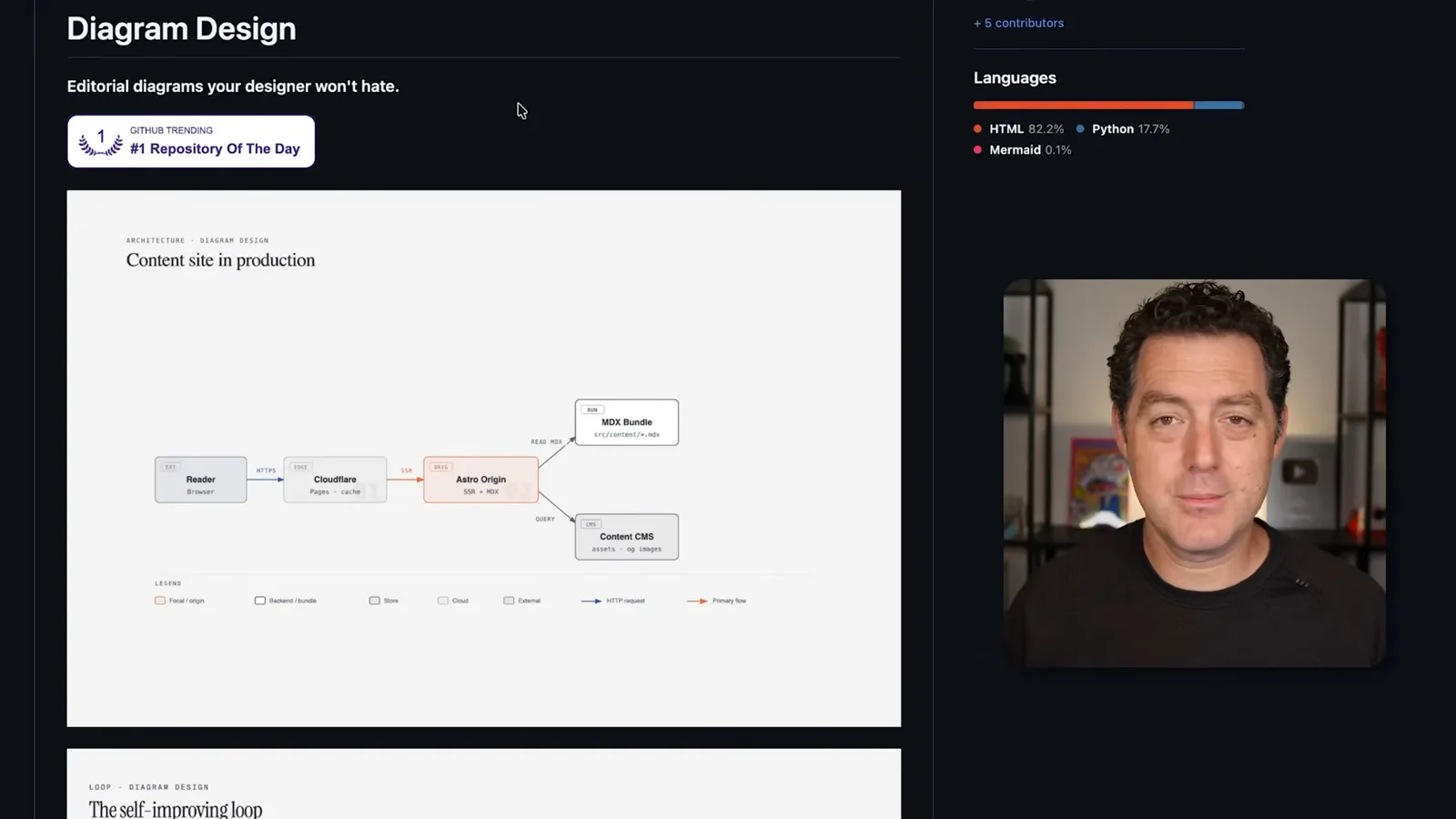
Diagram Design gives an agent patterns for producing clearer diagrams, including flowcharts, architecture diagrams, state machines, timelines, and quadrants. It can be installed as a skill or plugin for compatible agents. Berman demonstrates it with Hermes, asking the agent to make a diagram of its own architecture.
In the demonstration, Hermes runs on Hostinger, the video's sponsor. Berman supplies the project's GitHub URL for installation and then asks for an architecture diagram. He presents cloud hosting as a way to keep background processes running without leaving his own computer on.
Obsidian Skills
The skills connect agents to Markdown-based Obsidian notes. Berman describes using a vault as a knowledge base.
Obsidian is a note-taking application built around Markdown files. Berman likes the way its simple building blocks can become a wiki or a personal knowledge base, and says he syncs his notes across devices. Obsidian Skills gives compatible agents instructions for working with those notes and their features.
Because agents already work well with Markdown, Berman sees the vault as a potential knowledge base or 'brain' for an agent. Notes can be kept locally, while synchronization is also an option. Giving an agent access means deciding which notes and connected services it should be able to use.
Buzz
Block's open-source workspace puts agents and people in the same channels. Workflows and signed events extend it beyond chat.
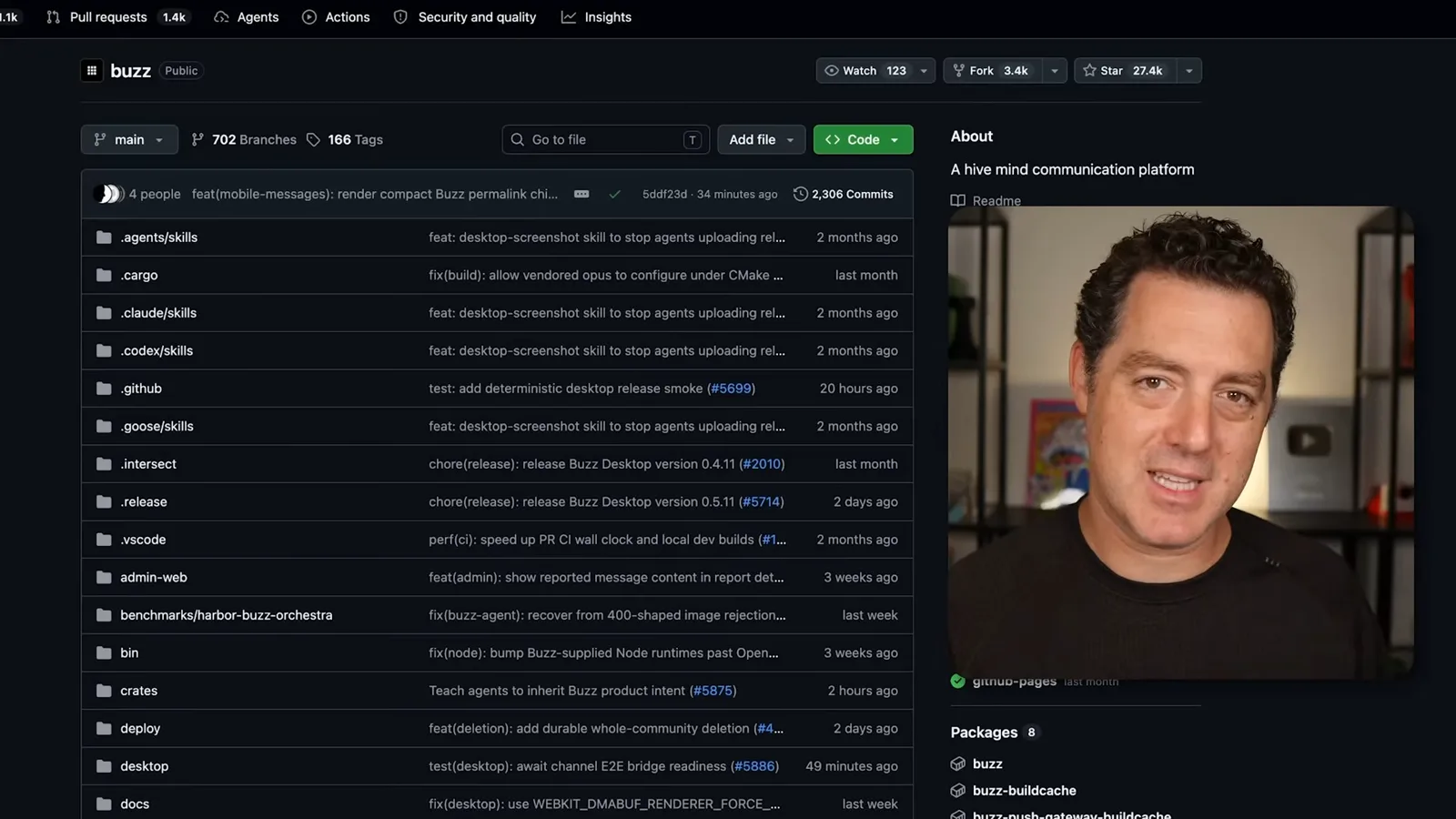
Buzz is an open-source, self-hostable collaboration tool from Block that Berman compares to Slack. Its distinctive idea is to make agents first-class participants alongside people in channels. The familiar interface includes replies, threads, reactions, and channels, while workflows and automation are built into the workspace.
Buzz records messages, reactions, workflow steps, reviews, and other activity as signed events using a Nostr relay. Berman likes having a common identity and audit trail for actions by people and processes, and says users can bring different hosted or local models. Self-hosting and an event log are design features, not a guarantee of security; deployment and permissions still matter.
ego-lite and Modly
ego-lite lets an agent operate a browser with existing login state. Modly turns an image into a 3D mesh locally.
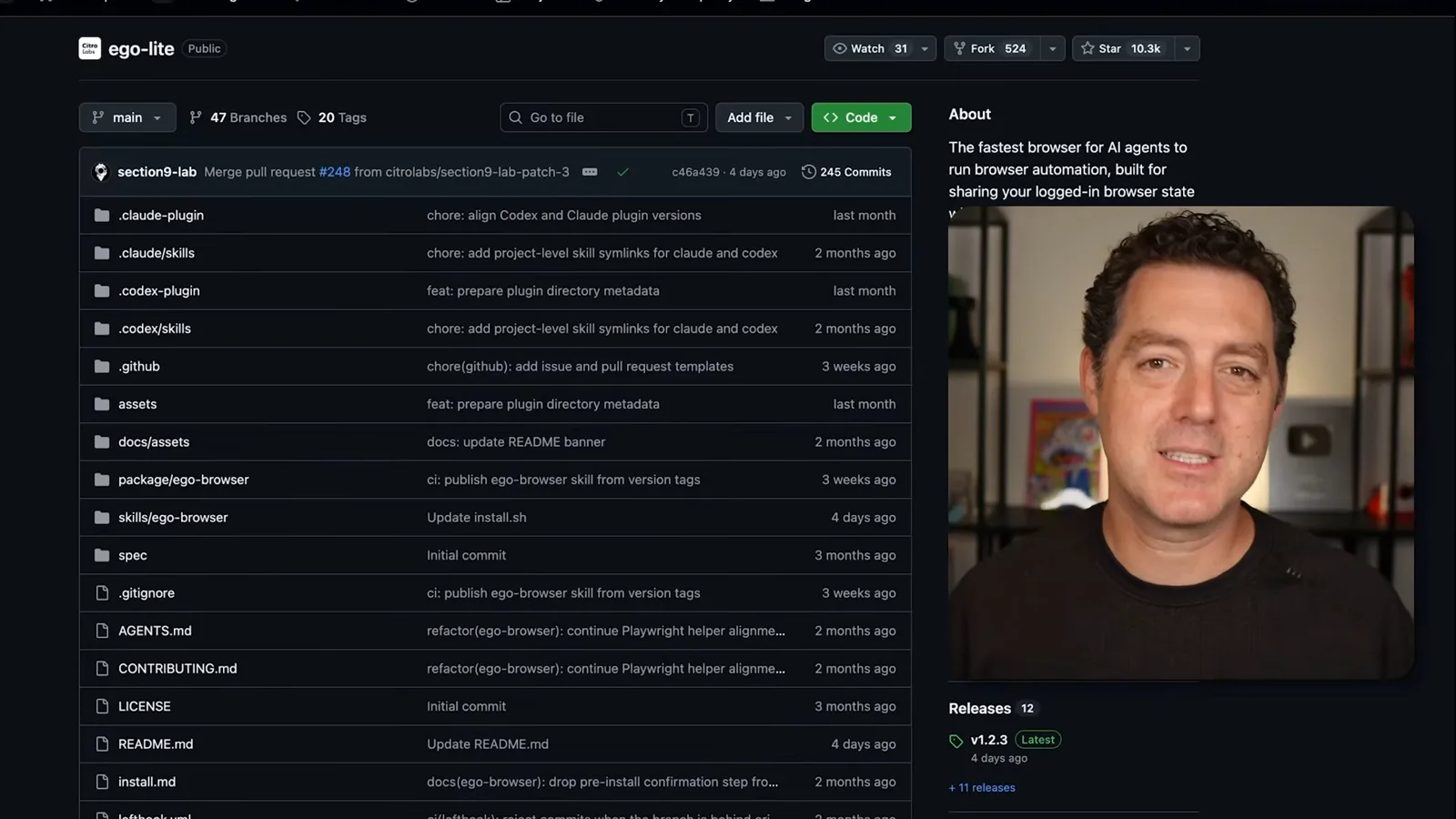
ego-lite is a browser automation project designed to let agents use an existing logged-in browser state without interrupting the user. Berman demonstrates invoking the browser from a coding agent and shows the cursor moving through a page. Since an agent can inherit access to signed-in accounts, users should consider the permissions and actions they are delegating.
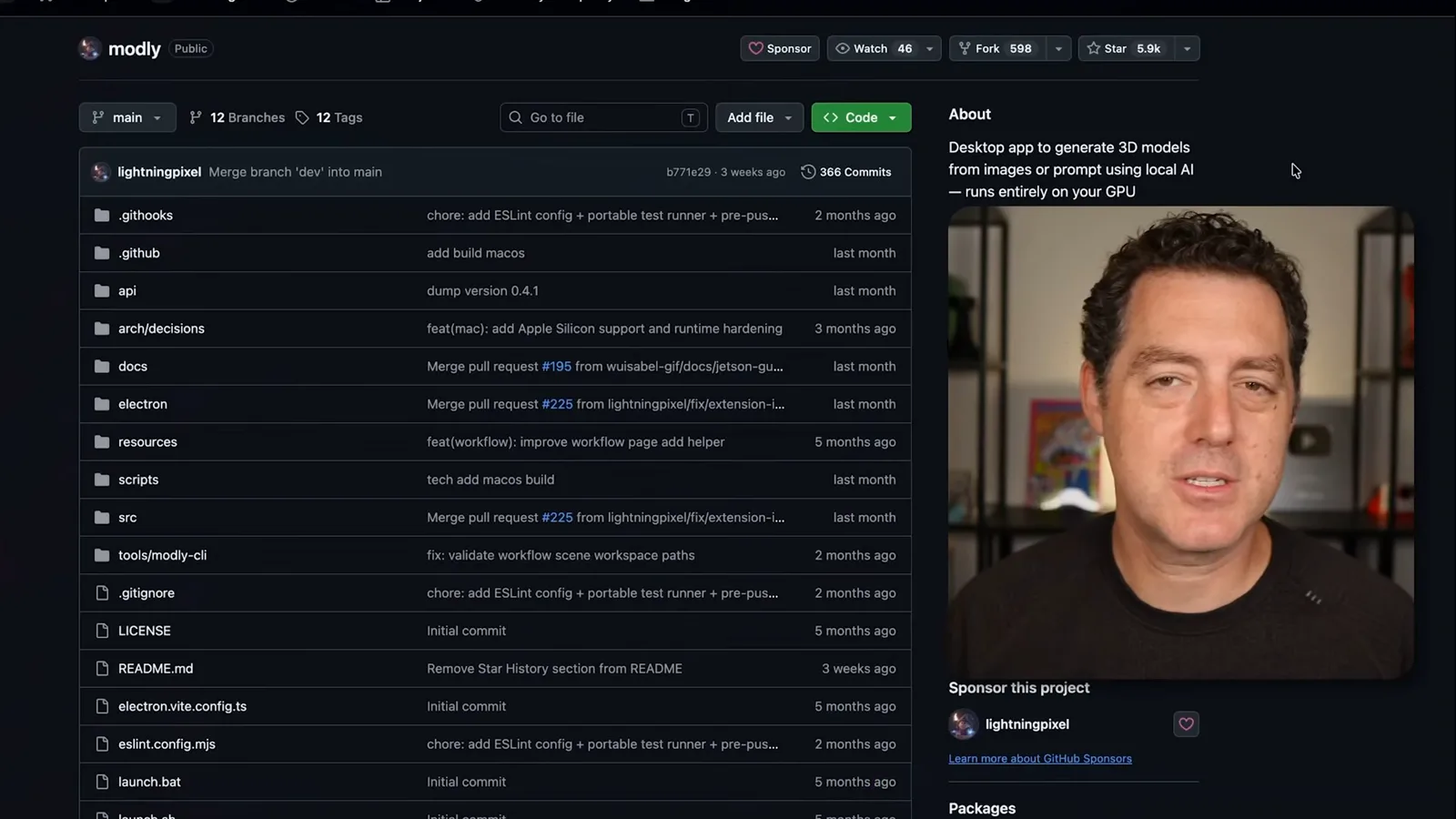
The final project, Modly, turns an image into a 3D mesh using local AI. Berman suggests the result could be useful for game assets or 3D printing and highlights support for several operating systems and GPUs. Hardware requirements and the quality or readiness of a generated mesh depend on the setup and the input, so he encourages viewers interested in 3D modeling to try it themselves.
Mehr aus diesem Kanal
 25:50EN
 32:20EN
 0:22EN
 45:08EN
 0:32EN
 12:14EN