In 30 Sekunden
Matthew Berman responds to Sam Altman’s 2024 essay “The Intelligence Age.” Altman suggests superintelligence could arrive in a few thousand days but may take longer; Berman is optimistic about AI’s benefits while discussing access and job disruption. These are forecasts, not established outcomes.
- 1AI as a new toolAltman imagines personal teams of virtual experts; Berman describes using AI to prepare questions while also consulting doctors.
- 2Personalized educationBerman hopes AI tutors will help children learn at their own pace and in formats suited to them.
- 3A tentative timelineAltman suggests superintelligence could arrive in a few thousand days, but explicitly says it might take longer.
- 4Scaling deep learningBerman discusses larger training runs and inference-time reasoning as two avenues for progress.
- 5Compute and accessAltman argues that energy, chips and infrastructure are needed to make AI broadly accessible.
- 6Jobs and uncertaintyBoth discuss disruption and new kinds of work; Berman’s prediction that human coders could eventually disappear is speculative.
Das Wichtigste
- Altman’s 2024 essay says superintelligence might arrive in a few thousand days, while acknowledging it may take longer.
- Berman sees both training-time and inference-time scaling as important to AI progress.
- The essay imagines personal AI teams, tutors and assistants, but their future capabilities remain uncertain.
- Altman argues abundant compute and energy matter for broad access, and anticipates labor-market disruption.
Den bearbeiteten Text nach Kapiteln lesen
The essay and human progress
Berman introduces Altman’s essay and its view of society as accumulated infrastructure. He discusses virtual experts and his own experience seeking health information.
Sam Altman’s 2024 essay “The Intelligence Age” presents an optimistic view of how AI might transform society. I want to read key passages and explain why I find them compelling. Altman argues that the ability of deep learning to improve with scale is central to the story.
Altman describes society as a kind of accumulated intelligence: each generation benefits from the infrastructure and discoveries built by others. He imagines AI adding to that scaffolding and eventually giving each person a team of virtual experts. I recently used ChatGPT to understand a health concern and prepare myself, while also working with human doctors.
Tutors and shared prosperity
He imagines personalized education and considers Altman’s vision of widespread prosperity.
One application that excites me is education. I have two young children, and I hope AI tutors can adapt to an individual child’s pace and preferred way of learning. I learn well through video; another student may benefit from a different format. These are aspirations, not guarantees of reliable tutoring.
Altman envisions shared prosperity greater than anything available today. I am optimistic that AI could help people, although prosperity alone does not ensure happiness. Not having enough money can itself create serious problems.
Altman recounts the chain of discoveries behind computer chips and modern AI. He writes that superintelligence could arrive in a few thousand days, while explicitly allowing that it may take longer. This is a prediction made in 2024, not a confirmed timetable.
Superintelligence and scaling
Berman examines Altman’s tentative timeline and discusses training and inference scaling.
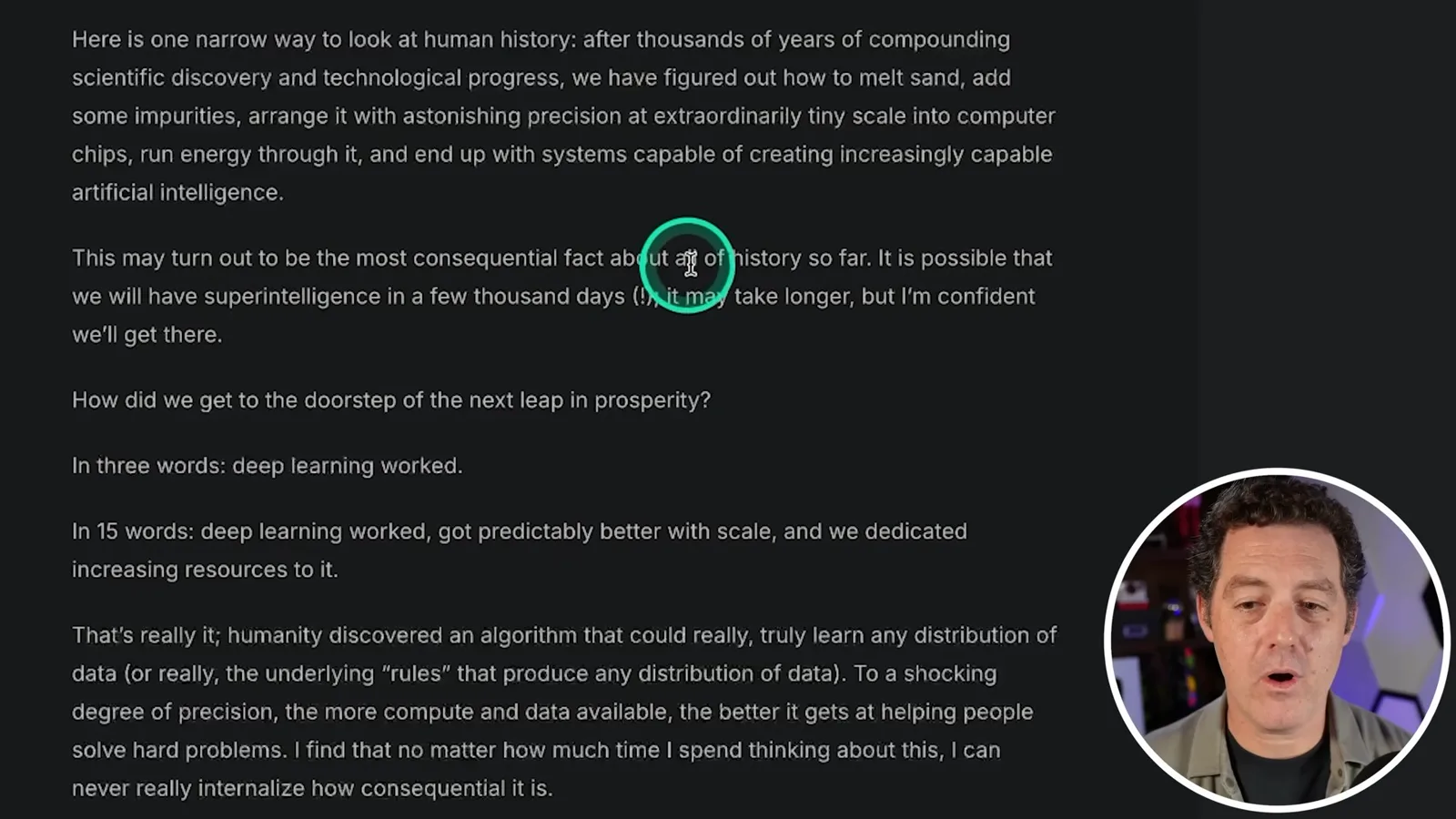
His explanation is that deep learning worked and improved as more resources were devoted to it. I see two important forms of scaling: training with more data and compute, and spending more compute at inference using reasoning techniques. The remaining technical questions and future returns to scaling are uncertain.
Agents and AI research
He discusses autonomous assistants and the possibility of AI contributing to future AI research.
Altman imagines autonomous personal assistants that coordinate tasks such as medical care. I would like agents to handle work such as reading and summarizing email, with appropriate oversight. He also anticipates AI helping develop future AI systems and advance science.
I imagine two routes to that feedback loop: models generating or labeling data for later models, and AI systems helping researchers find new techniques. I see this as a possible path to rapid improvement, but it is a scenario rather than a demonstrated inevitability.
Infrastructure, risks and work
Altman calls for abundant compute and warns about downsides. Berman considers labor disruption and the future of coding.
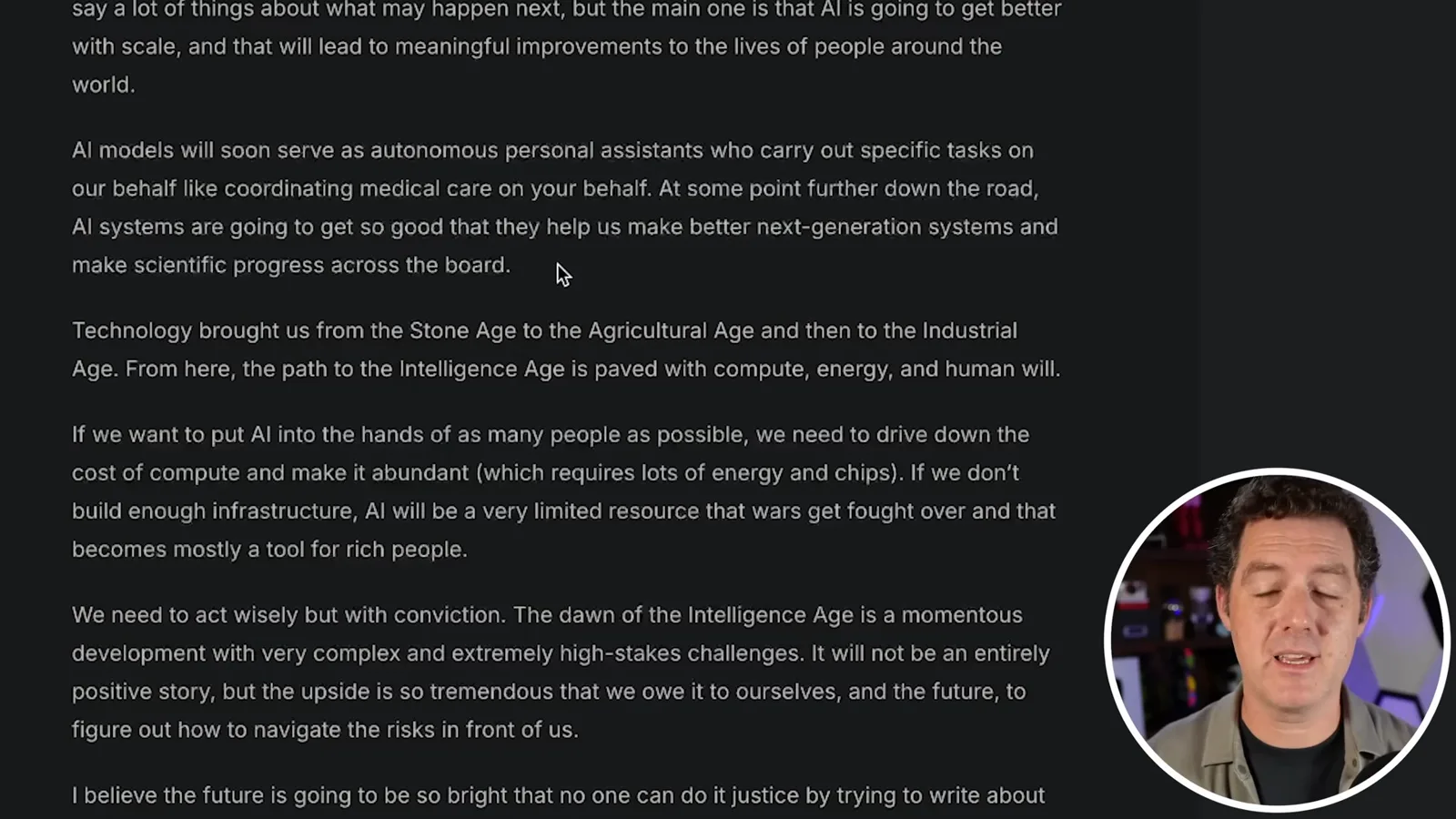
Altman argues that making compute abundant and affordable requires energy, chips and infrastructure; otherwise AI could become concentrated among the wealthy. He also says the transition will bring difficult risks. Access and how benefits are distributed are central questions.
Labor disruption is one example. Altman expects significant changes but thinks most jobs will change more slowly than some people anticipate. I hope new work emerges as old work changes, and I am enthusiastic about AI amplifying human creativity; those outcomes are not guaranteed.
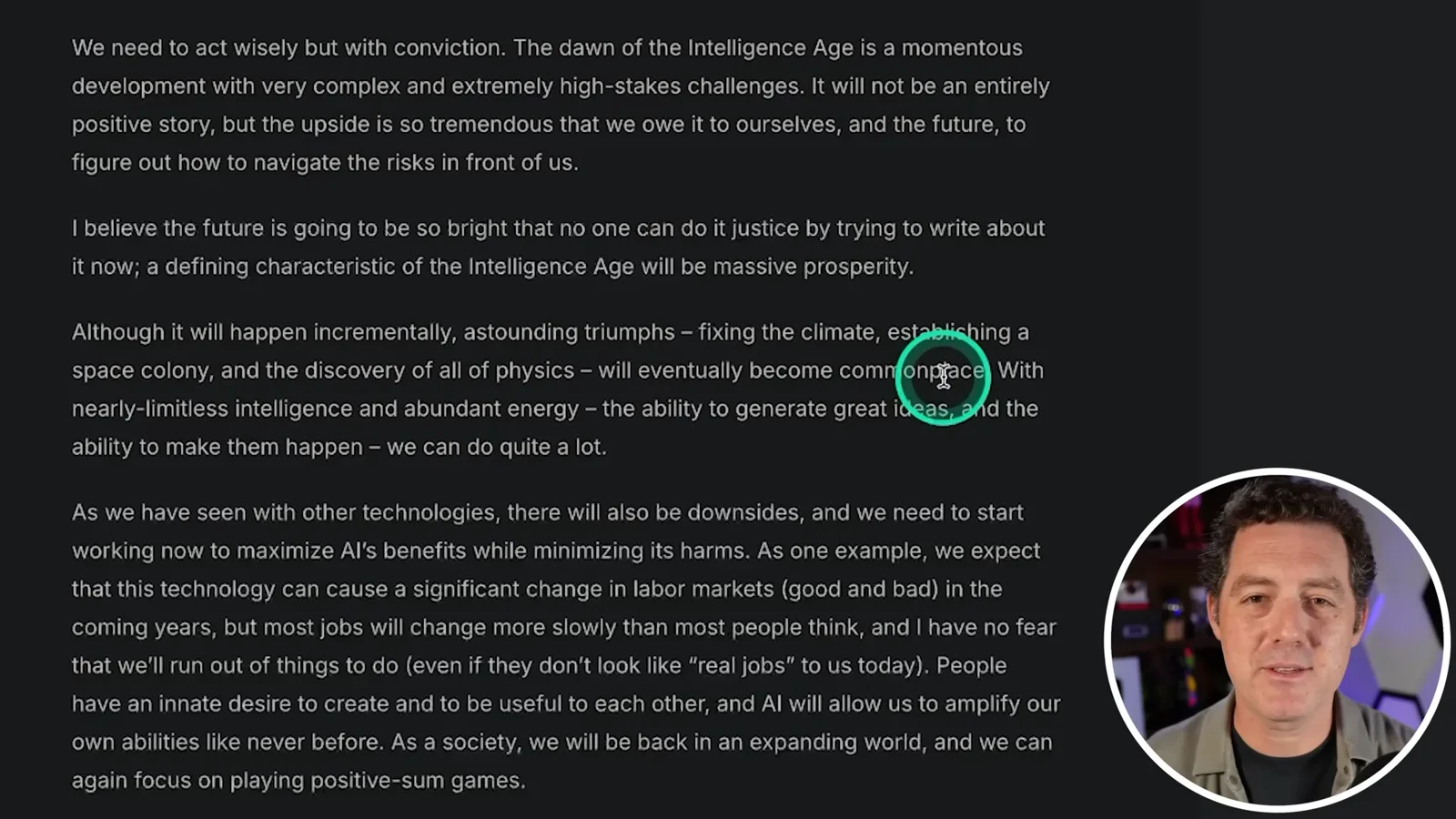
Altman compares today’s occupations with jobs that have disappeared over time. My own speculation is that human coding as we know it might eventually disappear, while new creative work appears. The timing and outcome remain open questions.
Mehr aus diesem Kanal
 25:50EN
 32:20EN
 45:08EN
 12:14EN
 10:36EN
 17:37EN