








Ergebnisse
64 ArtikelSortieren
 0:37EN
 Matthew Berman· 21. Sept. 2026A Fruit-Fly Connectome, Online Simulations and Questions About ExperienceMatthew Berman · Forward FutureMatthew Berman shows playful simulated-fly demonstrations and asks whether a future complete simulation could suffer. A neural wiring map and those demonstrations do not establish a conscious digital animal.
 0:58ENMatthew Berman· 11. Sept. 2026A Simulated Fruit Fly in Driving and Game DemosMatthew Berman · Forward FutureMatthew Berman shows virtual scenes of a fruit fly driving and playing games, then speculates about future brain simulations.
 31:39EN
 No Priors: AI, Machine Learning, Tech, & Startups· 20. Aug. 2026Podcast · 2 StimmenThe Skull Is Already the Vat: Max Hodak on Restoring SightModeration: Sarah Guo, Elad GilPatients blinded by macular degeneration put on laser-projector glasses, read books, and fill in Sudoku — because a chip under the retina is sending vision back into the brain.
 2:59:44EN
 Cognitive Revolution "How AI Changes Everything"· 3. Juni 2026PodcastTwo Endangered Languages Broke Transformers. Nested Learning Gave Models a Sleep Button.Moderation: Nathan LabenzGoogle researcher Ali Behrouz tells Nathan Labenz how stacking update frequencies — not just layers — and an offline sleep phase could give language models genuine continual learning.
 0:43ENMatthew Berman· 10. März 2026A Cultured-Neuron Interface Controls DoomMatthew Berman · Forward FutureMatthew Berman describes a Cortical Labs demonstration that connects activity in cultured human neurons to actions in a video game.
 3:18:09EN
 Lex Fridman· 30. Nov. 2025Podcast · 2 StimmenA Thing Is Alive When Its Goals Outrun Its PartsGast: Michael Levin · Moderation: Lex FridmanTufts biologist Michael Levin tells Lex Fridman that intelligence is a spectrum of persuadability, that even a bubble sort hosts unexpected goals, and that the brain is a thin client to a space physics does not own.
 2:42:06ENLex Fridman· 14. Okt. 2025Podcast · 2 StimmenThe word 'evil' ends the conversationGast: Julia Shaw · Moderation: Lex FridmanCriminal psychologist Julia Shaw talks with Lex Fridman about the dark tetrad, serial killers, jealousy, bisexuality, and why generative AI is the ultimate false-memory machine.
 1:13:23ENCognitive Revolution "How AI Changes Everything"· 12. Okt. 2024PodcastAn AI Found a GABA-Cancer Link. The Next Step Is Talking to the Cells.Moderation: Nathan LabenzMichael Levin and Leo Pio Lopez on a multilayer embedding that predicted melanoma, a cancer with no mutations, and why biology's real interface is cognitive.
 1:59:47ENCognitive Revolution "How AI Changes Everything"· 5. Okt. 2024PodcastBCI Would Take 30 Years. This Studio Pivoted to Alignment InsteadModeration: Nathan LabenzJudd Rosenblatt and Mike Vaiana of AE Studio describe two biologically inspired results that do not need interpretability breakthroughs to work.
 8:37:34ENLex Fridman· 2. Aug. 2024Podcast · 2 StimmenThe first Neuralink patient beat a world record with most of his electrodes goneGast: Elon Musk · Moderation: Lex FridmanLex Fridman talks with Elon Musk, the Neuralink team, and Noland Arbaugh about a wireless brain implant, the software that rescued it, and why bandwidth is Musk’s bet on living with AI.
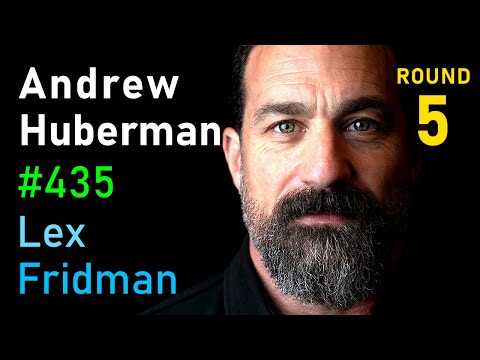 1:47:18ENLex Fridman· 27. Juni 2024Podcast · 2 StimmenA Cannabis Clip Sat Quiet for a Year. Then It Hit X.Gast: Andrew Huberman · Moderation: Lex FridmanAndrew Huberman talks with Lex Fridman about online pile-ons, still minds, sharks, ayahuasca, and the slow work of picking who you eat with.
 3:10:49ENLex Fridman· 25. Mai 2024Podcast · 2 StimmenMemory Is Not a Replay: Charan Ranganath on Forgetting, Imagination, and False MemoriesGast: Charan Ranganath · Moderation: Lex FridmanA UC Davis neuroscientist explains why the brain is a cheap prediction machine — and why forgetting is how memory works.
 1:29:14ENCognitive Revolution "How AI Changes Everything"· 29. Apr. 2024Podcast55% of People Have Had a Lucid Dream. Prophetic AI Wants the Rest to Have One Every NightModeration: Nathan LabenzProphetic AI co-founders Eric Wollberg and Wesley Berry tell Ate-a-Pi how a headband of EEG and focused ultrasound, steered by a neural transformer, is meant to light up the prefrontal cortex during REM.
 2:09:50ENCognitive Revolution "How AI Changes Everything"· 26. Apr. 2024PodcastHe stayed up all night playing Civilization 6 with his mindModeration: Nathan LabenzDean W. Ball surveys EEG, ultrasound stimulation, and Neuralink with Nathan Labenz, and argues that merging with machines started decades ago.
 2:50:44ENLex Fridman· 17. Apr. 2024Podcast · 2 StimmenThe Pirahã Have No Word for OneGast: Edward Gibson · Moderation: Lex FridmanMIT psycholinguist Ted Gibson tells Lex Fridman why related words sit together, why language is not thought, and why large language models ace form while missing meaning.
 1:34:11ENCognitive Revolution "How AI Changes Everything"· 17. Apr. 2024PodcastFrom forty hours in a scanner to one: reconstructing what you see from a shared brain spaceModeration: Nathan LabenzPaul Scotti explains how MindEye2 maps a new person's fMRI into CLIP with an hour of data, and why a linear layer plus better image generators changed the cost of reading minds.
 1:25:09ENCognitive Revolution "How AI Changes Everything"· 9. Feb. 2024PodcastTwo-Headed Worms, Regenerated Legs, and a Sort That Learned to WaitModeration: Nathan LabenzTufts biologist Michael Levin tells Cognitive Revolution why anatomy is rewritable software, and why he stopped a paper that might have made AI more alive.
 1:58:43ENCognitive Revolution "How AI Changes Everything"· 7. Feb. 2024PodcastA Worm With 302 Neurons Already Makes Trade-offs. AI Is Still on the Same Ladder.Moderation: Nathan LabenzMax Bennett maps 600 million years of brain evolution onto five breakthroughs — and asks which rungs today's models have actually reached.
 1:18:18ENCognitive Revolution "How AI Changes Everything"· 20. Juni 2023PodcastFifteen Thousand Brain Numbers Were Enough to Reconstruct What Someone SawModeration: Nathan LabenzTanishq Mathew Abraham walks through MindEye, the fMRI-to-image system that maps a handful of voxel values onto CLIP and diffusion models.
 7:41ENMatthew Berman· 5. Mai 2023Reconstructing Viewed Images From fMRI With Stable DiffusionMatthew Berman · Forward FutureMatthew Berman reviews a study combining brain scans with a pretrained image generator. The experiment reconstructed approximate images viewed by four participants under extensive scanning and training, not arbitrary thoughts.
 2:30:28ENLex Fridman· 21. Apr. 2023Podcast · 2 StimmenAI Only Has a Neocortex: Manolis Kellis on Evolutionary Baggage and Superintelligent PartnersGast: Manolis Kellis · Moderation: Lex FridmanOn his fifth Lex Fridman podcast, the MIT computational biologist argues that layered evolutionary history is what makes humans irreplaceable — and that alignment with AI has to run both ways.
 2:39:40ENLex Fridman· 5. Okt. 2022Podcast · 2 StimmenThe Self That Swoops In to Decide Is Not ThereGast: Annaka Harris · Moderation: Lex FridmanAnnaka Harris tells Lex Fridman why conscious will is an illusion, why a pea tendril is a better picture of choice than an inner agent, and why she now treats consciousness as a possible fundamental of physics.
 2:44:16ENLex Fridman· 14. Juli 2022Podcast · 2 StimmenIQ at Eleven Predicted Survival at Eighty. Richard Haier on the Finding Psychology Tried to BuryGast: Richard Haier · Moderation: Lex FridmanLex Fridman talks with psychologist Richard Haier about the g factor, The Bell Curve, group differences, and why intelligence research became the most radioactive topic in the field.
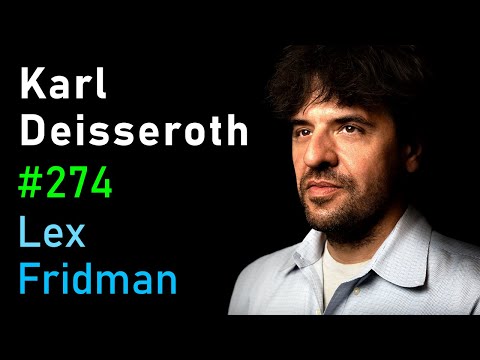 3:21:29ENLex Fridman· 7. Apr. 2022Podcast · 2 StimmenWhen something in the mind breaks, you see what it was forGast: Karl Deisseroth · Moderation: Lex FridmanStanford psychiatrist Karl Deisseroth talks with Lex Fridman about depression, schizophrenia, optogenetics, and why you can treat one symptom without a theory of everything.
Mehr laden24 von 64 angezeigt