








Ergebnisse
12 ArtikelSortieren
 1:02EN
 Matthew Berman· 15. Okt. 2026From Punched Cards to AI Software FactoriesMatthew Berman · Forward FutureMatthew Berman contrasts early programming with an AI-assisted workflow and promotes Factory’s development tools.
 2:15ENMatthew Berman· 18. Jan. 2026Elon Musk’s OpenAI Lawsuit: Founding Disputes, Discovery and the 2023 Board CrisisMatthew Berman · Forward FutureMatthew Berman discusses documents in the dispute over OpenAI’s structure, including Greg Brockman’s journal and questions about board governance.
 10:16ENMatthew Berman· 14. Jan. 2026Matthew Berman Reviews Disclosures in the Musk–OpenAI LawsuitMatthew Berman · Forward FutureEmails, messages and journal excerpts illuminate disputes over OpenAI’s early direction and the 2023 leadership crisis, while the underlying legal claims remain contested.
 8:16ENMatthew Berman· 12. Jan. 2026AI and Erdős Problem 397: A Verified Proof, Prior Work and the Prospect of Self-ImprovementMatthew Berman · Forward FutureMatthew Berman discusses AI-assisted mathematics and argues that algorithmic discoveries could accelerate AI development, while the history of problem 397 adds important context.
 12:03ENMatthew Berman· 6. Sept. 2024Reflection 70B: Self-Correction Claims and the Limits of a 2024 DemoMatthew Berman · Forward FutureMatthew Berman reviews a model trained to generate reflection steps. Its initial benchmark claims later proved difficult for independent evaluators to reproduce.
 3:37ENMatthew Berman· 18. Jan. 2024Mark Zuckerberg Announces Llama 3 Training and Meta’s AI PlansMatthew Berman, Mark Zuckerberg · Forward FutureIn January 2024, Matthew Berman reacts to Zuckerberg’s remarks on general intelligence, compute and AI devices.
 7:09ENMatthew Berman· 28. Juli 2023AI News in July 2023: SDXL, Worldcoin, and Biological ComputingMatthew Berman · Forward FutureMatthew Berman reviews a week of AI developments, from Google’s Gemini project and new generative models to biometric identity and experiments with cultured neurons.
 14:29ENMatthew Berman· 8. Mai 2023A 2023 Google Memo on Open Models, LoRA and AI’s Competitive MoatMatthew Berman · Forward FutureMatthew Berman reviews a leaked employee essay arguing that rapid community iteration could challenge proprietary AI labs, and traces the early LLaMA ecosystem.
 6:00ENMatthew Berman· 13. Feb. 2023Nothing, Forever: AI-Generated Comedy and the Future of TelevisionMatthew Berman · Forward FutureMatthew Berman examines the procedurally generated Seinfeld homage, its awkward comedy, moderation challenges and implications for future media.
 14:55EN
 Lex Fridman· 29. Okt. 2019Podcast · 2 StimmenKasparov on Deep Blue, AlphaZero, and Why Machines Win Closed Systems but Humans Still Choose the QuestionsGast: Garry Kasparov · Moderation: Lex FridmanGarry Kasparov revisits the 1997 loss to Deep Blue, explains why machines beat humans in closed systems, and argues that the human role is to pick the right questions and not interfere with superior machine knowledge.
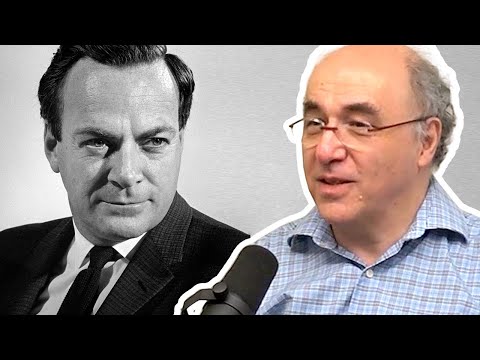 12:16ENLex FridmanPodcastRule 30 and Richard Feynman: Stephen Wolfram on Intuition Versus Computational ExperimentModeration: Lex FridmanWolfram recalls working with Feynman at Thinking Machines, why Feynman hid his calculations, and how building a computer language changed his approach to science.
 11:59ENLex FridmanPodcast · 2 StimmenFrom a Side Project to TensorFlow's Core: François Chollet on How Keras Came to BeGast: François Chollet · Moderation: Lex FridmanThe creator of Keras recalls why he built it in 2015 around recurrent networks, how it moved onto TensorFlow, and what TensorFlow 2.0 means for its design.