









Ergebnisse
218 ArtikelSortieren
 1:12:09EN
 Jane Street· 20. Apr. 2022Doug Patti on State Machine Replication at Jane StreetYaron Minsky, Doug Patti · Jane StreetHow Concord and Aria use ordered logs and deterministic state machines to build recoverable trading services.
 1:22:34ENJane Street· 5. Jan. 2022Stephen Dolan on Memory Management, Garbage Collection, and OCamlYaron Minsky, Stephen Dolan · Jane StreetFrom tracing and reference counting to prefetching, local allocation and unboxed types, Dolan explains the tradeoffs behind safe, efficient memory management.
 1:01:11ENJane Street· 3. Nov. 2021Anil Madhavapeddy on MirageOS and the Evolution of Operating SystemsYaron Minsky, Anil Madhavapeddy · Jane StreetFrom Xen and unikernels to OCaml's multicore research, a systems researcher explains how changing abstractions reshape infrastructure.
 1:00:04ENJane Street· 6. Okt. 2021Ty Overby on Bonsai and Building Functional User InterfacesYaron Minsky, Ty Overby · Jane StreetWhy Jane Street built a composable OCaml UI framework, and what its design reveals about incremental computation, browsers, and visual programming.
 3:05:24EN
 Lex Fridman· 22. Sept. 2021Podcast · 2 StimmenTravis Oliphant wrote NumPy in an empty semester — and still wants open source to payGast: Travis Oliphant · Moderation: Lex FridmanThe creator of NumPy, SciPy, and Anaconda tells Lex Fridman how array thinking, a priced book, and the packaging wars shaped scientific Python.
 2:21:27ENLex Fridman· 9. Sept. 2021Podcast · 2 StimmenThe IBM Manual Was So Bad He Became a Computer ScientistGast: Donald Knuth · Moderation: Lex FridmanDonald Knuth talks with Lex Fridman about first programs on an IBM 650, literate programming, the Knuth-Morris-Pratt algorithm, and the hardest theorem he ever proved.
 1:00:58ENJane Street· 1. Sept. 2021James Somers on Technical Writing, Software and RevisionYaron Minsky, James Somers · Jane StreetJane Street’s writer-in-residence discusses documentation as shared knowledge, the tools that keep it useful, and the craft of writing for real readers.
 1:02:52ENJane Street· 6. Nov. 2020Inside Jane Street’s Software Engineering InternshipYaron Minsky, Jeanne Van Briesen, Matt Else, Grace Zhang · Jane StreetThree former interns describe the real projects, mentorship and decisions that shaped their transition to full-time engineering.
 2:46:57ENLex Fridman· 18. Okt. 2020Podcast · 2 StimmenProgramming Languages Are Bicycles for the MindGast: Chris Lattner · Moderation: Lex FridmanChris Lattner talks with Lex Fridman about Swift, LLVM, RISC-V, and why the next leap in computing is as much a language problem as a silicon one.
 44:34ENJane Street· 14. Okt. 2020Chris Perl on Keeping Network Clocks in SyncYaron Minsky, Chris Perl · Jane StreetHow NTP, PTP and hardware timestamps work together to keep Jane Street’s clocks within a measurable error bound.
 59:33ENJane Street· 7. Okt. 2020Laurent Mazare on Python, OCaml and Machine LearningYaron Minsky, Laurent Mazare · Jane StreetA researcher compares exploratory notebooks with robust production systems, and explains how language interoperability and resource management connect the two.
 1:10:27ENJane Street· 30. Sept. 2020Greta Yorsh on Compiler Optimization and FeedbackYaron Minsky, Greta Yorsh · Jane StreetFrom formal verification and superoptimization to profile-guided code layout, a compiler engineer explains how performance work meets real users.
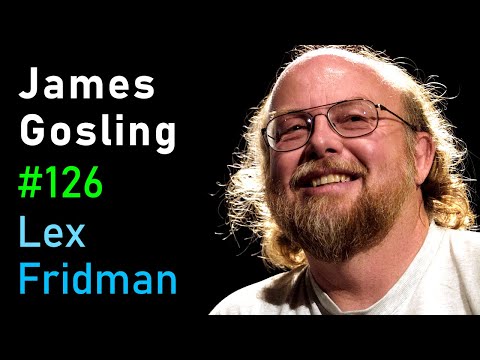 1:51:01ENLex Fridman· 24. Sept. 2020Podcast · 2 StimmenJames Gosling Built Java to Make Pointer Bugs Impossible. Chrome Still Has Them.Gast: James Gosling · Moderation: Lex FridmanIn a 2020 conversation with Lex Fridman, Java’s designer traces a line from a neglected PDP-8 to Emacs, the JVM, and a thirty-year war on memory errors.
 1:02:18ENJane Street· 23. Sept. 2020Brian Nigito on Multicast and the Architecture of MarketsYaron Minsky, Brian Nigito · Jane StreetWhy exchanges use ordered event streams, multicast and specialized networking to distribute market data quickly and fairly.
 59:26ENJane Street· 17. Sept. 2020Andy Ray on FPGAs, Hardware Design and HardcamlYaron Minsky, Andy Ray · Jane StreetJane Street’s hardware design lead explains why programmable circuits can improve performance and how software tooling makes them easier to build and test.
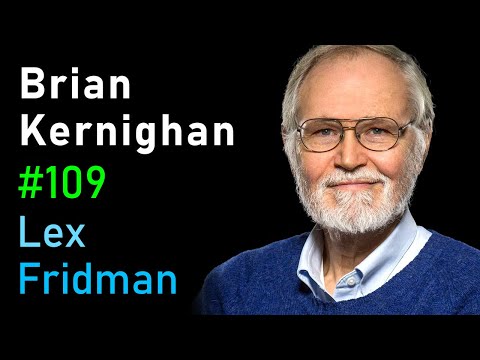 1:43:10ENLex Fridman· 18. Juli 2020Podcast · 2 StimmenKen Thompson's Wife Left for Three Weeks. He Wrote Unix.Gast: Brian Kernighan · Moderation: Lex FridmanBrian Kernighan walks Lex Fridman through Bell Labs, C, AWK, AMPL, and a lifetime of tools that millions of people still run — including all of his mistakes.
 1:05:06ENJane Street· 15. Apr. 2020Raph Levien: GPU Compute, Functional Design, and a 2D RendererRaph LevienA tour of GPU execution and memory explains why parallel rendering needs more than simply assigning one thread to every pixel.
 58:03ENJane Street· 18. Feb. 2020Matt Might on an Algorithm for Precision MedicineMatt Might · University of Alabama at BirminghamA computer scientist describes how genetic data, experimental models and logic programming can help clinicians investigate difficult cases.
 1:23:49ENJane Street· 31. Jan. 2020Steve Lee on PowerShell 7: Compatibility, New Features and the RoadmapSteve Lee · MicrosoftA historical look at the move from Windows PowerShell to cross-platform PowerShell, including demonstrations of the version 7 preview and its compatibility trade-offs.
 1:45:56ENLex Fridman· 30. Dez. 2019Podcast · 2 StimmenPoint eight is enough: Donald Knuth on algorithms, TeX, and a life in one chairGast: Donald Knuth · Moderation: Lex FridmanLex Fridman visits Donald Knuth at home for a conversation about the IBM 650, geek brains, literate programming, The Art of Computer Programming, TeX, P versus NP, and a happiness budget of 80 percent.
 49:48ENJane Street· 9. Dez. 2019Michael Sikorski on Reverse Engineering RansomwareMichael Sikorski · FireEyeA malware analyst traces the tools and decisions behind ransomware investigations, from encrypted files to the WannaCry and NotPetya outbreaks.
 1:47:13ENLex Fridman· 7. Nov. 2019Podcast · 2 StimmenWhen You Hit the Brakes, a Computer Is in the WayGast: Bjarne Stroustrup · Moderation: Lex FridmanBjarne Stroustrup on why C++ still sits between the pedal and the pads, and why an abstraction that costs extra has no place in the language.
 47:18ENJane Street· 24. Okt. 2019Unboxed Types and Memory Layouts for OCamlStephen Dolan · Jane StreetStephen explains a proposed type-system extension for controlling data representation while retaining OCaml’s fast separate compilation.
 1:05:59ENJane Street· 27. Sept. 2019Derek Dreyer: Proving the Safety of Rust with RustBelt and IrisDerek Dreyer · Max Planck Institute for Software SystemsRust combines safe interfaces with libraries that use unsafe code internally. Derek Dreyer explains how RustBelt verifies those libraries and why its proof needs an expressive logic for concurrency.
Mehr laden24 von 218 angezeigt