






Ergebnisse
43 ArtikelSortieren
 2:55:05EN
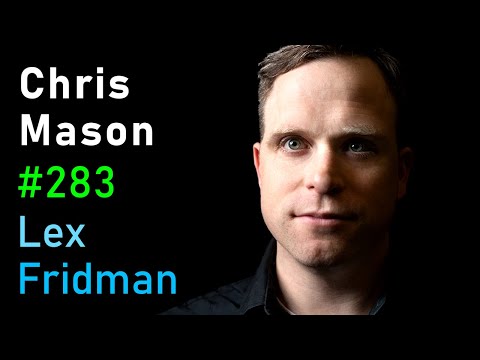
 Lex Fridman· 8. Mai 2022Podcast · 2 StimmenExtinction awareness is the human trait Mason wants to carry to the starsGast: Chris Mason · Moderation: Lex FridmanCornell geneticist Chris Mason on why seeing our own end creates a duty to engineer life for other worlds — and what a 500-year plan would actually require.
 1:26:53ENLex Fridman· 5. Nov. 2021Podcast · 2 StimmenFrancis Collins Cannot Exclude a Lab LeakGast: Francis Collins · Moderation: Lex FridmanThe outgoing NIH director talks with Lex Fridman about COVID origins, gain-of-function research, Anthony Fauci, vaccines, and why scientific certainty is the wrong pose.
 2:59:12ENLex Fridman· 20. Juni 2021Podcast · 2 StimmenNature Never Dealt This CardGast: Rob Reid · Moderation: Lex FridmanIn 2011 two labs independently engineered H5N1 so it could travel through the air between mammals — work Rob Reid tells Lex Fridman should never have been done, and still has not been stopped.
 1:41:34ENLex Fridman· 6. Juni 2021Podcast · 2 StimmenAging Is a Scratched Disc. David Sinclair Thinks the Body Kept a BackupGast: David Sinclair · Moderation: Lex FridmanThe Harvard geneticist tells Lex Fridman why aging is information loss, how three genes gave a blind mouse its sight back, and why skipping meals may beat the perfect diet.
 2:17:42ENLex Fridman· 11. Jan. 2021Podcast · 2 StimmenThe building block of life is a bead on a string, not the whole proteinGast: Dmitry Korkin · Moderation: Lex FridmanDmitry Korkin tells Lex Fridman why protein domains, a triangular spike, and a conservative viral shell matter more than the AlphaFold headline, and why a Nobel laureate once answered a midnight forum post.
 2:14:55ENLex Fridman· 30. Nov. 2020Podcast · 2 StimmenHis Wife Calls Him the RadioGast: Manolis Kellis · Moderation: Lex FridmanMIT computational biologist Manolis Kellis spends the first forty minutes of his fourth Lex Fridman conversation on the songs that formed him, then turns to 42, dinosaurs, and why hunting for meaning matters more than finding it.
 2:39:45ENLex Fridman· 25. Okt. 2020Podcast · 2 StimmenThe obesity gene was never the obesity geneGast: Manolis Kellis · Moderation: Lex FridmanManolis Kellis tells Lex Fridman how one nucleotide a million bases from FTO rewrote obesity biology, and why human genetics is now driving the study of disease.
 2:10:53ENLex Fridman· 12. Sept. 2020Podcast · 2 StimmenAll Your DNA Would Reach Jupiter a Hundred Times OverGast: Manolis Kellis · Moderation: Lex FridmanManolis Kellis talks Lex Fridman through the epigenome, Neanderthals, Europa, midlife, and why "are you happy?" is the wrong question.
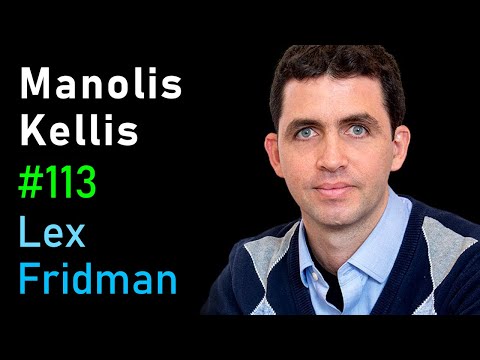 2:29:24ENLex Fridman· 31. Juli 2020Podcast · 2 StimmenWe Are the Descendants of the First Digital ComputerGast: Manolis Kellis · Moderation: Lex FridmanMIT computational biologist Manolis Kellis tells Lex Fridman why life is digital, why any two humans are 99.9 percent identical, and what evolutionary signatures reveal inside SARS-CoV-2.
 1:02:14ENLex Fridman· 30. Juni 2020Podcast · 2 StimmenThe 28-year wait: Robert Langer on rejection, polymers, and a thousand studentsGast: Robert Langer · Moderation: Lex FridmanThe MIT bioengineer talks with Lex Fridman about drug delivery, tissue engineering, patents, and the long path from a Folkman hypothesis to Avastin.
 1:12:03ENLex Fridman· 5. Mai 2020Podcast · 2 StimmenMice Don't Get Alzheimer's: Daphne Koller on Disease in a DishGast: Daphne Koller · Moderation: Lex FridmanThe Coursera co-founder and insitro CEO on why most diseases are not one disease, how to turn cells into data, and why overconfident neural nets can kill.
 2:09:02ENLex Fridman· 22. Apr. 2020Podcast · 2 StimmenA Hundred-Nanometer Machine That Is Not Quite AliveGast: Dmitry Korkin · Moderation: Lex FridmanDmitry Korkin walks through the structural genomics of SARS-CoV-2, from spike-ACE2 docking to drug-binding sites, vaccines, and cruise-ship simulations, recorded in the first spring of the pandemic.
 58:03EN
 Jane Street· 18. Feb. 2020Matt Might on an Algorithm for Precision MedicineMatt Might · University of Alabama at BirminghamA computer scientist describes how genetic data, experimental models and logic programming can help clinicians investigate difficult cases.
 57:42ENLex Fridman· 12. Aug. 2019Podcast · 2 StimmenA Brain Organoid Is Not a BrainGast: Paola Arlotta · Moderation: Lex FridmanHarvard developmental biologist Paola Arlotta on how the cerebral cortex is built, why timing and mechanical force are part of the code, and why a dish of stem cells is only a window onto that process.
 56:20EN
 No Priors: AI, Machine Learning, Tech, & StartupsPodcast · 2 StimmenBiohub's Bet: Building Open AI World Models of Biology From Proteins Up to CellsModeration: Sarah Guo, Elad GilMark Zuckerberg, Priscilla Chan and Alex Rives explain why Biohub pairs a frontier AI lab with frontier wet-lab biology, and why it releases tools like ESMFold2 as open source.
 11:51ENLex FridmanPodcastBuilding a Brain: Paola Arlotta on the Choreography of Human Brain DevelopmentModeration: Lex FridmanA Harvard stem cell biologist walks through how the embryo builds the cerebral cortex, why order and environment matter, and why development continues into our twenties.
 1:03:59EN
 Cognitive Revolution "How AI Changes Everything"PodcastBuilding a World Model of Life: Biohub's Alex Rives on Why Better Measurement Must Come Before Virtual CellsModeration: Nathan LabenzBiohub's head of science explains why today's virtual cell models fall short, how a $1.8 billion data push aims to fix it, and what a five-year information-level model of the cell could unlock.
 1:45:55ENCognitive Revolution "How AI Changes Everything"PodcastFrom Static Structures to Moving Molecules: Where AI for Protein Design Stands After AlphaFold 3Moderation: Nathan LabenzComputational biochemist Amelie Schreiber walks Nathan Labenz through six months of progress in structure prediction, molecular dynamics, peptide and antibody models, and early agent-driven design workflows.