









Neueste Artikel
4.485 ArtikelSortieren
 15:50EN
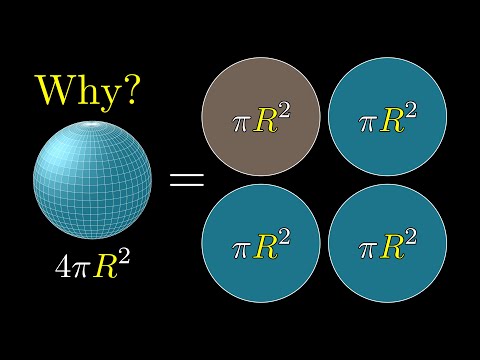
 3Blue1Brown· 2. Dez. 2018Why a Sphere’s Surface Area Is Four Times Its ShadowGrant Sanderson · 3Blue1BrownTwo geometric routes from a sphere to circles, and a generalization to convex shapes.
 1:20:09EN
 Lex Fridman· 29. Nov. 2018Podcast · 2 StimmenStack Overflow Was Never Designed for BeginnersGast: Jeff Atwood · Moderation: Lex FridmanOn Stack Overflow’s tenth birthday, Jeff Atwood talks with Lex Fridman about puzzles, leadership, Discourse, and why a software team’s health is how fast it can change one word.
 1:37:30EN
 Google DeepMind· 23. Nov. 2018Volodymyr Mnih: A Tour of Deep Reinforcement Learning AgentsVolodymyr Mnih · DeepMindFrom DQN and replay to A3C and IMPALA, a 2018 lecture traces the design choices behind deep RL agents.
 1:26:44ENLex Fridman· 22. Nov. 2018Podcast · 2 StimmenHe raised Python like a child, then set it freeGast: Guido van Rossum · Moderation: Lex FridmanIn a 2018 conversation with Lex Fridman, Guido van Rossum traces Python from electronics kits and Conway's Game of Life to the Thursday morning he resigned as benevolent dictator for life.
 54:03ENLex Fridman· 16. Nov. 2018Podcast · 2 StimmenThe Hardest Part of Learning Was Left Out of the TextbooksGast: Vladimir Vapnik · Moderation: Lex FridmanVladimir Vapnik tells Lex Fridman why intelligence is the work of inventing predicates that shrink the admissible set of functions, not of fitting a rule to a mountain of data.
 1:06:51EN
 Jane Street· 24. Okt. 2018Marius Eriksen: Reflow for Incremental Cloud Data ProcessingMarius Eriksen · GRAILA functional language and runtime turn data workflows into typed programs, reuse prior results and provision cloud resources on demand.
 42:18ENLex Fridman· 20. Okt. 2018Podcast · 2 StimmenAn Adult Can Change Last Year's Mind. A Network Still Cannot.Gast: Yoshua Bengio · Moderation: Lex FridmanYoshua Bengio tells Lex Fridman that the missing pieces of deep learning sit in credit assignment, training objectives, and a kind of compositionality borrowed from classical AI — not in ten thousand layers.
 37:53ENLex Fridman· 17. Okt. 2018Podcast · 2 StimmenSteven Pinker: Intelligence Is Not a Will to PowerGast: Steven Pinker · Moderation: Lex FridmanThe Harvard psychologist tells Lex Fridman why nuke analogies, paperclip stories, and AI-takeover fears mix up problem-solving with domination.
 57:54ENLex Fridman· 1. Sept. 2018Podcast · 2 StimmenA 2040 Siri That Passes Every Turing Test Still Wouldn't Be ConsciousGast: Christof Koch · Moderation: Lex FridmanNeuroscientist Christof Koch tells Lex Fridman why intelligence is function, consciousness is being, and a perfect brain simulation has no more inner life than a laptop simulating a black hole.
 1:22:58ENLex Fridman· 26. Aug. 2018Podcast · 2 StimmenIf NASA finds nothing on Mars, Max Tegmark cheersGast: Max Tegmark · Moderation: Lex FridmanThe MIT physicist behind Life 3.0 tells Lex Fridman why we may be the only advanced life in the observable universe, and why that makes AGI alignment a cosmic responsibility rather than a science-fiction subplot.
 1:14:23ENJane Street· 24. Aug. 2018Cristina Rosu: Building Dynamic OCaml Web Apps with Incr_domCristina Rosu · Jane StreetA practical introduction to the Elm architecture, virtual DOM and incremental computation, followed by a live counter-app demonstration.
 14:26EN3Blue1Brown· 19. Mai 2018Derivatives as Transformations and Fixed-Point StabilityGrant SandersonA local scaling view explains a continued fraction and its two fixed points.
 1:02:34ENJane Street· 10. Mai 2018Andy Ray on Designing and Running OCaml on FPGAsAndy Ray · Jane StreetHardCaml turns OCaml into a hardware design language. Andy Ray explains FPGA fundamentals, simulation and verification, then demonstrates an OCaml software stack running on a soft CPU.
 1:03ENLex Fridman· 21. Apr. 2018Podcast · 2 StimmenGeoffrey Hinton’s 2016 Vision for Document UnderstandingGast: Geoffrey Hinton · Moderation: Lex FridmanA historical prediction about translation and meaning-based search.
 25:26EN3Blue1Brown· 20. Apr. 2018A Geometric Proof of the Wallis Product for πRoots of unity, distances on a circle and a careful limit explain an infinite product.
 1:14:37ENJane Street· 5. Apr. 2018Adding an Effect System to OCamlLeo White · Jane StreetA prototype brings algebraic effects into OCaml’s type system and explores how to track exceptions, I/O and locally mutable state.
 1:08:43ENJane Street· 19. März 2018Ron Minsky on Types and Why They Matter in SoftwareYaron Minsky · Jane StreetType systems can make programs faster, catch mistakes and guide large refactorings, but their value depends on the language and the work. Ron Minsky explains the trade-offs through practical examples.
 39:42ENGoogle DeepMind· 7. März 2018Shane Legg on Measuring Machine IntelligenceShane Legg · Google DeepMindA 2010 proposal for defining general intelligence and approximating it through tests across many environments.
 1:10:18ENJane Street· 28. Feb. 2018Shriram Krishnamurthi on Designing Computing Curricula for Real ClassroomsShriram Krishnamurthi · Brown UniversityThe Bootstrap project treats curriculum design as an engineering problem: start with goals and constraints, then support teachers and measure learning.
 45:48EN
 GOTO Conferences· 21. Feb. 2018Kotlin Multiplatform in 2017: Shared Logic Across TiersDmitry JemerovDmitry Jemerov explains the early expect/actual model, JavaScript integration and native plans.
 1:06:49ENJane Street· 30. Jan. 2018Bryan Cantrill on Finding the Butterfly Behind a Performance HurricaneBryan Cantrill · JoyentSmall defects can produce vast performance failures across layers of abstraction. Bryan Cantrill explains how to investigate them with questions, instrumentation and visualization.
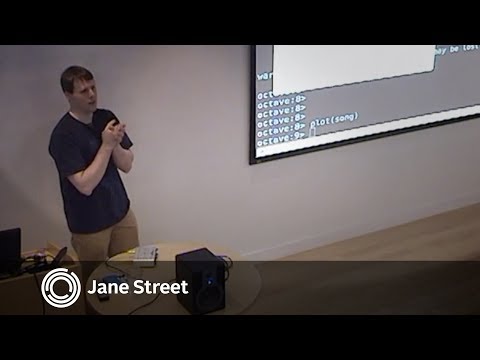 56:12ENJane Street· 16. Jan. 2018Echoes of Fourier: From Sound Waves to Fast ConvolutionChristopher HardinA practical introduction to Fourier transforms, convolution, and the mathematics of placing a recording in real or imagined acoustic spaces.
 1:00:38ENLex Fridman· 6. Dez. 2017PodcastThe Race Car and the Rulebook: Chris Gerdes on Automated Vehicle SafetyModeration: Lex FridmanA Stanford engineer and former DOT innovation chief explains how autonomous racing, voluntary safety guidance, and data sharing could shape safer self-driving cars.
 56:06ENJane Street· 4. Dez. 2017How Jane Street Reviews Code with IronIan Henry · Jane StreetJane Street's internal review tool tracks what each reviewer has actually read, keeps feedback in the code, and enforces review obligations before release.
Mehr laden24 von 4.485 angezeigt