









筛选结果
9 篇排序
 1:04:26EN
 Sequoia Capital· 2026年10月6日播客At 100,000 Accelerators, Something Fails Every HourGoogle AI infrastructure chief Amin Vahdat tells Sequoia's Sonya Huang why FLOPS is a vanity metric, why the TPU line split in two, and why he would rather wait on a utility than build his own gigawatt.
 45:33ENSequoia Capital· 2026年5月26日播客Cursor Ships 1TB of Composer Weights Across Oceans in Under a MinuteFederico Cassano and Fireworks' Dima walk through the globally split RL stack that trained Composer 2 on a sparse trillion-parameter MoE.
 41:32ENSequoia Capital· 2025年10月28日播客Moore's Law Is Slowing. Nvidia's CTO Still Wants 10× a YearMichael Kagan on why Nvidia's $7 billion Mellanox deal, not just more transistors, is how you turn a data center into one computer.
 1:56:38EN → 简体中文
 Cognitive Revolution "How AI Changes Everything"· 2025年3月8日播客o3 把 ARC 得分从 20% 拉到 87%,Nathan Labenz 勾勒早期超级智能主持 Nathan Labenz在 Consistently Candid 节目里,《The Cognitive Revolution》的主持人认为,到 2026 年数学和编程就会达到超人水平;而一个推理核心,加上专门掌握“直觉物理”的专家模型,可能已经够用了。
 2:16:17ENCognitive Revolution "How AI Changes Everything"· 2025年2月5日播客A 10B Model Trained Across Three Continents — and an H200 for $1.49 an Hour主持 Nathan LabenzPrime Intellect's founders lay out a four-step plan to turn spare global GPUs into collectively owned intelligence, and argue that reinforcement learning just made their job easier.
 46:35ENSequoia Capital· 2024年11月13日播客They trained a real-time video model in 20 hours and skipped the game engineDecart CEO Dean Leitersdorf tells Sequoia how Oasis runs live on H100s, why ChatGPT is a fallen wall rather than a pain point, and why the next trillion-dollar company may be a generated experience.
 42:42EN
 No Priors: AI, Machine Learning, Tech, & Startups· 2024年8月22日播客 · 2 人对谈Ethereum Once Held Two Thousand GPT-3 Clusters of GPUs主持 Sarah Guo, Elad GilFoundry CEO Jared Quincy Davis on idle H100s, why today's AI cloud is still colocation, and how compound systems move work off giant interconnected clusters.
 1:01:26ENCognitive Revolution "How AI Changes Everything"· 2023年7月25日播客AlexNet Used Two GPUs. GPT-4 Took Twenty Thousand. The Shortage Will Be Back.主持 Nathan LabenzRun:ai CTO Ronen Dar on filling idle accelerators, why H100s can be cheaper per experiment, and why Llama 2 undercuts compute governance.
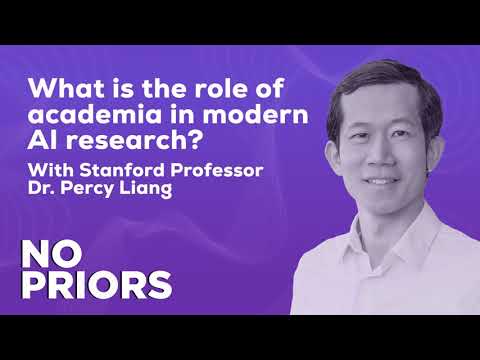 53:37ENNo Priors: AI, Machine Learning, Tech, & Startups· 2023年3月9日播客 · 2 人对谈30 models, 42 scenarios, 7 metrics: Percy Liang's public checkup for language models主持 Sarah Guo, Elad GilA PubMed-only model once led the U.S. medical licensing exam — until a system roughly 200 times larger overtook it.