







筛选结果
8 篇排序
 13:30EN → 简体中文
 3Blue1Brown· 2025年8月17日AlphaGeometry 如何结合逻辑证明与创造性作图Aleph0Aleph0 讲解了符号几何求解器如何在不使用 AI 的情况下解决大量难题,以及语言模型如何提供辅助作图,让系统达到奥数竞赛水平。
 12:42EN
 Lex Fridman· 2020年3月28日播客 · 2 人对谈The Experience Machine: What Our Refusal to Plug In Says About What We Value嘉宾 Nick Bostrom · 主持 Lex FridmanNick Bostrom unpacks Robert Nozick's experience machine, the status quo effect behind our answers, and whether a simulation convincing enough to feel real would have to contain real minds.
 11:11ENLex Fridman播客 · 2 人对谈Yann LeCun on Benchmarks, Interactive Environments, and Why Human Intelligence Is Not General嘉宾 Yann Lecun · 主持 Lex FridmanIn a 2019 clip, LeCun defends benchmarks as a test of AI claims, explains why interactive environments break the usual train-test protocol, and argues that "general intelligence" is a misnomer.
 14:41ENLex Fridman播客 · 2 人对谈Talking for 20 Minutes: How the Alexa Prize Turns Real Customers into a Testbed for Conversational AI嘉宾 Rohit Prasad · 主持 Lex FridmanRohit Prasad, head scientist of Amazon Alexa, explains the Alexa Prize grand challenge, how it is judged and why true conversation still needs reasoning.
 11:41ENLex Fridman播客 · 2 人对谈Teaching Machines Humility: Stuart Russell on Escaping the King Midas Problem嘉宾 Stuart Russell · 主持 Lex FridmanIn a short clip from a 2018 conversation, Berkeley's Stuart Russell explains why fixed objectives make superintelligent AI dangerous and why uncertainty about our goals is the fix.
 10:16ENLex Fridman播客 · 2 人对谈Reasoning Without Logic: Yann LeCun on Teaching Neural Networks to Think嘉宾 Yann Lecun · 主持 Lex FridmanYann LeCun explains why he believes neural networks can reason, and what memory, recurrence and continuous representations would need to look like.
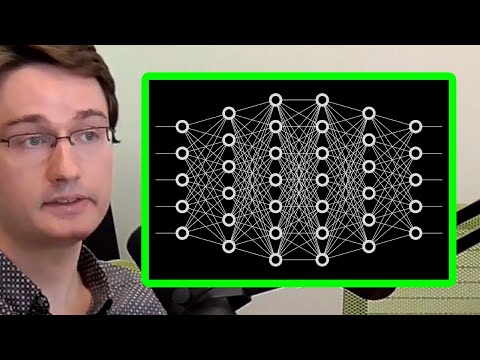 10:34ENLex Fridman播客 · 2 人对谈Why Deep Learning Needs Rules: Chollet on Interpolation, Abstraction and Hybrid AI嘉宾 François Chollet · 主持 Lex FridmanFrançois Chollet explains why neural networks only interpolate between points they have seen, and why the best AI systems pair them with symbolic rules.
 11:23ENLex Fridman播客 · 2 人对谈Science Is a Self-Improving System That Isn't Exploding: Chollet on the Limits of an Intelligence Explosion嘉宾 François Chollet · 主持 Lex FridmanFrançois Chollet uses the history of science to argue that recursive self-improvement meets exponential friction and yields linear, not explosive, progress.