









筛选结果
320 篇排序
 1:20:21EN → 简体中文
 Lex Fridman· 2019年1月19日播客 · 2 人对谈爱因斯坦曾是五名博士生里最差的一个嘉宾 Tomaso Poggio · 主持 Lex FridmanMIT 神经科学家 Tomaso Poggio 谈智能为何是科学中最深的难题,以及大脑仍有什么要教给机器的东西。
 46:25ENLex Fridman· 2019年1月17日播客Deep Learning at the Edge of 2019: BERT, Autopilot, and the Ideas That Broke Through主持 Lex FridmanA tour of the architectural, applied, and automation breakthroughs that defined deep learning in 2018 and set up 2019.
 1:19:59EN → 简体中文Lex Fridman· 2018年12月23日播客 · 2 人对谈Schmidhuber 的赌注:真正的元学习改写的是学习者本身,而不只是最后一层嘉宾 Juergen Schmidhuber · 主持 Lex FridmanJürgen Schmidhuber 向 Lex Fridman 讲述,哥德尔机、把压缩当作科学、Power Play、LSTM 和世界模型,如何都源于一个少年时的计划:把一个人的好奇心放大,造出一个比他本人强得多的物理学家。
 42:45EN → 简体中文Lex Fridman· 2018年12月16日播客 · 2 人对谈单腿机器人只凭“这个更好”学会了后空翻嘉宾 Pieter Abbeel · 主持 Lex FridmanPieter Abbeel 对 Lex Fridman 说明,为什么偏好比较、自我对弈、十分钟示范,以及杂乱的模拟器组合,是深度强化学习(RL)的切实路径。
 54:03EN → 简体中文Lex Fridman· 2018年11月16日播客 · 2 人对谈教科书略去了学习中最难的那部分嘉宾 Vladimir Vapnik · 主持 Lex FridmanVladimir Vapnik 在与 Lex Fridman 的对谈中认为,智能的核心工作是发明能缩小可容许函数集的谓词,在一大堆数据上拟合规则做不到这一点。
 42:18EN → 简体中文Lex Fridman· 2018年10月20日播客 · 2 人对谈成年人能改变去年的想法,网络却做不到嘉宾 Yoshua Bengio · 主持 Lex FridmanYoshua Bengio 对 Lex Fridman 说,深度学习缺的那几块,在于信用分配、训练目标,以及从经典 AI 借来的一种组合性,靠堆出一万层网络补不上。
 1:29:03ENLex Fridman· 2016年9月27日播客From Word Vectors to Memory Networks: The Building Blocks of Deep NLP主持 Lex FridmanRichard Socher explains how word embeddings, recurrent models, GRUs, pointer mixtures, and dynamic memory networks turn language tasks into trainable end-to-end systems.
 1:00:51ENLex Fridman播客Deep Learning From the Ground Up: Hugo Larochelle's One-Hour Tour of Neural Network Foundations主持 Lex FridmanA fast, equation-level walk through feed-forward networks, backpropagation, practical training tricks, dropout and batch normalization, from the 2016 Deep Learning School.
 1:56:35EN
 Cognitive Revolution "How AI Changes Everything"播客From Autocomplete to Alien Optimizer: Riley Goodside on Three Eras of Prompting主持 Nathan LabenzScale AI's first staff prompt engineer traces how language models went from pure text prediction to instruction following to RLHF, and what that means for building with them.
 1:07:29ENLex Fridman播客Deep Reinforcement Learning from First Principles: Rewards, Q-Learning, Policy Gradients and AlphaZero主持 Lex FridmanLex Fridman's MIT 6.S091 opening lecture walks from the basic RL framework through DQN, actor-critic methods and AlphaZero to the unsolved problem of moving from simulation to the real world.
 24:22ENLex Fridman播客 · 2 人对谈Craftsmanship, First Principles and the Road to Self-Driving: Jim Keller on Working with Elon Musk嘉宾 Jim Keller · 主持 Lex FridmanThe veteran chip architect explains why he thinks autonomous driving is a tractable engineering problem, how Tesla's cost constraints shaped its hardware, and what he took from Musk's way of thinking.
 9:59ENLex Fridman播客Is Language or Vision Harder? Ilya Sutskever on the Unity of Machine Learning主持 Lex FridmanIn a short clip from his 2020 conversation with Lex Fridman, Ilya Sutskever explains why vision, language and reinforcement learning share the same few principles, and why asking which problem is harder is the wrong question.
 15:01ENLex Fridman播客 · 2 人对谈Deep Learning Is a System 1 Machine: Daniel Kahneman on What AI Still Lacks嘉宾 Daniel Kahneman · 主持 Lex FridmanThe Nobel-winning psychologist tells Lex Fridman how his fast-and-slow thinking framework maps onto deep learning, and why driving among pedestrians may require understanding people.
 56:20EN
 No Priors: AI, Machine Learning, Tech, & Startups播客 · 2 人对谈Biohub's Bet: Building Open AI World Models of Biology From Proteins Up to Cells主持 Sarah Guo, Elad GilMark Zuckerberg, Priscilla Chan and Alex Rives explain why Biohub pairs a frontier AI lab with frontier wet-lab biology, and why it releases tools like ESMFold2 as open source.
 1:25:16ENLex Fridman播客From Hand-Built Features to ResNets: Andrej Karpathy's Crash Course in Convolutional Networks主持 Lex FridmanA 2016 Deep Learning School talk covering how convnets work, how the ImageNet winners evolved, and how to apply them without being a hero.
 1:28:53ENLex Fridman播客 · 2 人对谈Machine Learning for Business Students: Powerful, Narrow, and Easier to Fool Than You Think嘉宾 MIT Sloan · 主持 Lex FridmanLex Fridman's non-technical MIT Sloan lecture explains how machine learning works, why it is so capable at perception, and where it still breaks in the real world.
 11:11ENLex Fridman播客 · 2 人对谈Yann LeCun on Benchmarks, Interactive Environments, and Why Human Intelligence Is Not General嘉宾 Yann Lecun · 主持 Lex FridmanIn a 2019 clip, LeCun defends benchmarks as a test of AI claims, explains why interactive environments break the usual train-test protocol, and argues that "general intelligence" is a misnomer.
 1:24:43ENLex Fridman播客From Sparse Coding to GANs: A Tour of Unsupervised Deep Learning in 2016主持 Lex FridmanRuslan Salakhutdinov walks through autoencoders, Boltzmann machines, variational autoencoders and adversarial networks at the Deep Learning School, with candid notes on what did and did not work.
 1:17:38ENLex Fridman播客 · 2 人对谈Brains Are Body Regulators: Lisa Feldman Barrett on Why Emotions Are Constructed, Not Detected嘉宾 Lisa Feldman Barrett · 主持 Lex FridmanIn a guest talk for MIT's AGI course, neuroscientist Lisa Feldman Barrett explains why faces don't display emotions, why brains exist to run bodies, and what that means for building human-like AI.
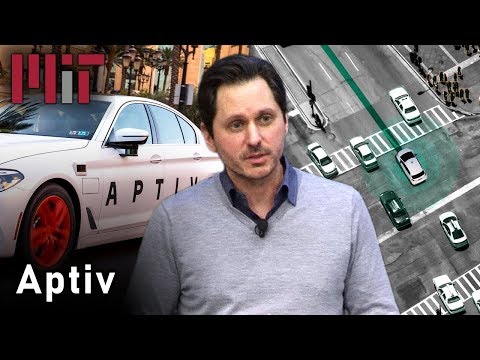 58:46ENLex Fridman播客Caging the Neural Network: How Aptiv Thinks About Safe Self-Driving主持 Lex FridmanAptiv Autonomous Mobility's Karl Iagnemma and Oscar Beijbom explain why end-to-end learning is hard to trust in cars, and show how PointPillars and nuScenes push lidar perception forward.
 1:23:18ENCognitive Revolution "How AI Changes Everything"播客From GPT-2 to GPT-3 Moments in Robotics: Six DeepMind Papers on Bridging Robots and the Internet主持 Nathan LabenzKeerthana Gopalakrishnan and Ted Xiao walk through RT-2, RT-X, RT-Trajectory, AutoRT, Learning to Learn Faster and PIVOT, and say what is still missing for general-purpose robots.
 1:15:59ENLex Fridman播客Steering Through Time: How Recurrent Networks and LSTMs Learn from Sequences主持 Lex FridmanLex Fridman's MIT 6.S094 lecture walks from backpropagation basics to LSTMs and the way they are used to predict steering in self-driving cars.
 1:03:59ENCognitive Revolution "How AI Changes Everything"播客Building a World Model of Life: Biohub's Alex Rives on Why Better Measurement Must Come Before Virtual Cells主持 Nathan LabenzBiohub's head of science explains why today's virtual cell models fall short, how a $1.8 billion data push aims to fix it, and what a five-year information-level model of the cell could unlock.
 18:46ENLex Fridman播客Deep Learning Plus One Idea: Ilya Sutskever on Building AGI主持 Lex FridmanIn a May 2020 conversation, Sutskever discusses self-play, simulation, bodies and consciousness, tests of intelligence, and how an AGI might be governed and aligned.
加载更多已显示 24 篇,共 320 篇