









필터 결과
15개정렬
 2:35:24EN
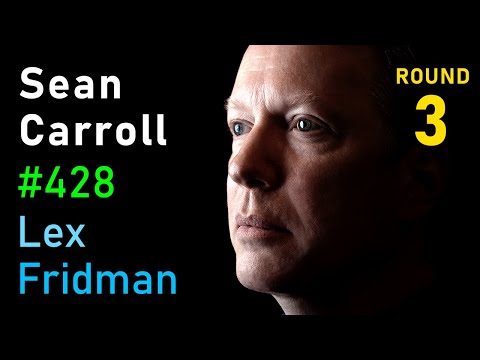
 Lex Fridman· 2024년 4월 22일팟캐스트 · 2명The Equation Was Smarter Than Einstein게스트 Sean Carroll · 진행자 Lex FridmanSean Carroll tells Lex Fridman why general relativity is the most beautiful theory in physics, and why its equation predicted black holes, gravitational waves, and the Big Bang before anyone, including Einstein, understood them.
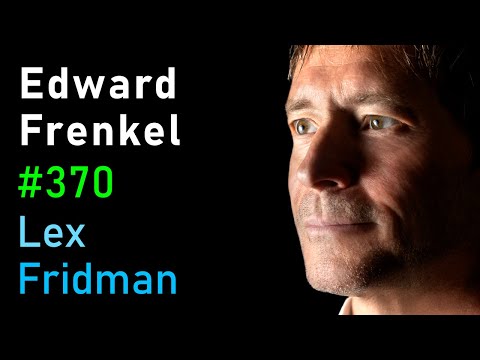 3:46:39ENLex Fridman· 2023년 4월 9일팟캐스트 · 2명He Hated School Math Until a Professor Opened the Book to Quarks게스트 Edward Frenkel · 진행자 Lex FridmanEdward Frenkel talks with Lex Fridman about Soviet childhood, the Langlands program, Gödel, AI, and why every hard objective theory still ends with an observer.
 2:22:55ENLex Fridman· 2021년 8월 23일팟캐스트 · 2명LIGO measures a thousandth of a proton — then a thousand physicists stayed quiet for a month게스트 Barry Barish · 진행자 Lex FridmanNobel laureate Barry Barish tells Lex Fridman how gravitational waves were predicted, doubted, and finally heard with the most precise machine ever built.
 2:22:20ENLex Fridman· 2021년 5월 29일팟캐스트 · 2명The closer quarks get, the weaker they pull게스트 Frank Wilczek · 진행자 Lex FridmanNobel physicist Frank Wilczek talks with Lex Fridman about asymptotic freedom, beauty, dark matter, consciousness, and whether a theory of everything would even help.
 2:44:19ENLex Fridman· 2021년 2월 23일팟캐스트 · 2명Speech Was a Bundle, and the Internet Unbundled It게스트 Eric Weinstein · 진행자 Lex FridmanOn his fourth Lex Fridman Podcast appearance, Eric Weinstein talks through digital speech, reputation as a control tool, gauge-theoretic economics, and the unfinished physics he calls geometric unity.
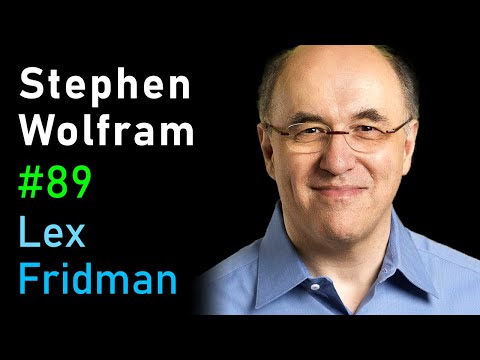 3:11:09ENLex Fridman· 2020년 4월 18일팟캐스트 · 2명In the computational universe, the animals are always smarter than you게스트 Stephen Wolfram · 진행자 Lex FridmanStephen Wolfram talks with Lex Fridman about Rule 30, computational irreducibility, a hypergraph model of physics, and why Wolfram Language is a notation for talking about the world.
 1:35:00ENLex Fridman· 2019년 12월 25일팟캐스트 · 2명NASA Once Spent 5 Percent of the Economy to Go 250,000 Miles. Mars Is a Hundred Times Farther.게스트 Jim Gates · 진행자 Lex FridmanTheorist S. James Gates Jr. talks with Lex Fridman about Mars budgets, supersymmetry, error-correcting codes hiding in equations, and why string theory is not yet a theory.
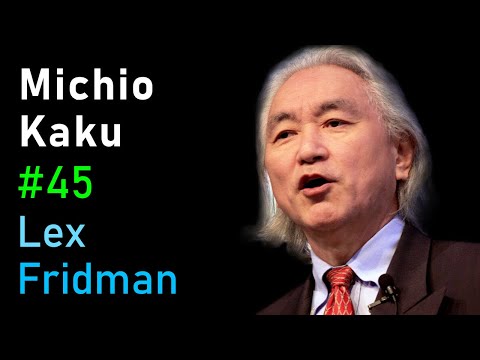 1:01:00ENLex Fridman· 2019년 10월 22일팟캐스트 · 2명A Hundred Billion Galaxies, and We're Still a Type 0.7 Civilization게스트 Michio Kaku · 진행자 Lex FridmanTheoretical physicist Michio Kaku talks with Lex Fridman about aliens, string theory, digital immortality, and why fusion and Mars are the next civilizational steps.
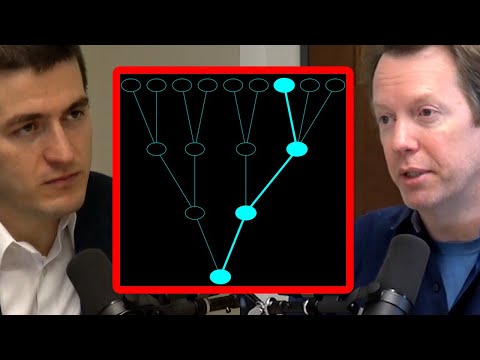 18:45ENLex Fridman팟캐스트 · 2명Why Sean Carroll Thinks Many-Worlds Is the Cleanest Version of Quantum Mechanics게스트 Sean Carroll · 진행자 Lex FridmanThe Caltech physicist explains how Everett's idea works, answers the energy-conservation objection, and compares it with its rivals.
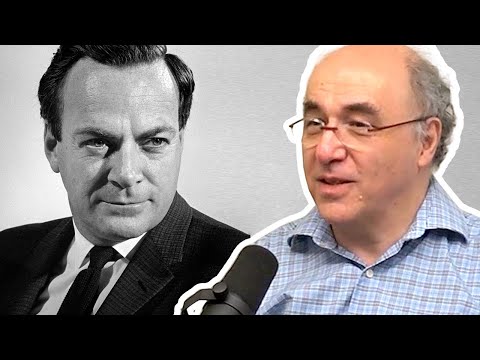 12:16ENLex Fridman팟캐스트Rule 30 and Richard Feynman: Stephen Wolfram on Intuition Versus Computational Experiment진행자 Lex FridmanWolfram recalls working with Feynman at Thinking Machines, why Feynman hid his calculations, and how building a computer language changed his approach to science.
 11:11ENLex Fridman팟캐스트 · 2명Filling the Empty Quadrants: Jim Gates on Supersymmetry and the Beauty of Broken Symmetry게스트 Jim Gates · 진행자 Lex FridmanTheoretical physicist Jim Gates explains supersymmetry with a four-slice pie, recalls how he chose it for his thesis in the 1970s, and connects it to the way physics moves from mathematics to experiment.
 12:52ENLex Fridman팟캐스트 · 2명Roger Penrose on a Universe That Restarts: When the Far Future Becomes the Next Big Bang게스트 Roger Penrose · 진행자 Lex FridmanPenrose explains conformal cyclic cosmology, in which the remote future of one cosmic eon is mathematically the same as the Big Bang of the next.
 22:17ENLex Fridman팟캐스트What Is Real? Lee Smolin on Realism, Science and Storytelling진행자 Lex FridmanThe theoretical physicist explains why he believes in a world independent of our perception, why he doubts there is a single scientific method, and where realism meets quantum mechanics.
 26:23ENLex Fridman팟캐스트Time Is Real, Space Is Emergent: Lee Smolin on Finishing Einstein's Revolution진행자 Lex FridmanTheoretical physicist Lee Smolin explains why quantum theory and general relativity remain unreconciled, and why he thinks causality is fundamental and locality is not.
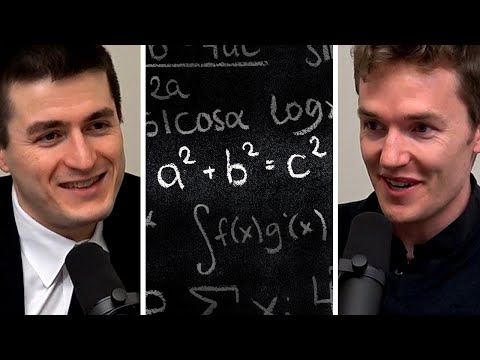 11:34ENLex Fridman팟캐스트Neither Discovered Nor Invented: Grant Sanderson on the Cycle Between Math and the World진행자 Lex Fridman3Blue1Brown's Grant Sanderson tells Lex Fridman that mathematics feeds on a loop of discovery and invention, and wonders why the universe's laws are so compressible.