








필터 결과
22개정렬
 13:21EN
 Adrian Twarog· 2026년 10월 21일Adrian Twarog: Giving Enterprise Vibe Coding a Governed Path to ProductionAdrian TwarogA Superblocks walkthrough shows how shared integrations, isolated databases, policy agents and audit logs can bring business-built AI apps under IT oversight.
 1:01:33EN
 DeepLearningAI· 2026년 9월 22일Spec-Driven Development with Coding Agents: Write the Spec, Let the Agent BuildAndrew Ng, Paul Everitt · DeepLearning.AIJetBrains developer advocate Paul Everitt walks through a full spec-driven workflow: a project constitution, feature loops of plan–implement–validate, and agent skills that travel across tools. The alternative to vibe coding is a markdown contract the agent cannot forget.
 5:15:51EN
 Lex Fridman· 2026년 8월 26일팟캐스트 · 2명DHH Did Not Write a Line of Omarchy Quattro게스트 DHH · 진행자 Lex FridmanThirteen months after a skeptical conversation with Lex Fridman, the Rails creator describes how Opus 4.5, a swarm of coding agents, and a one-minute Linux installer ended his era of hand-chiseled Ruby.
 2:12:51EN
 Cognitive Revolution "How AI Changes Everything"· 2026년 4월 19일팟캐스트Steve Newman’s fifteen-app stack exists so he only has to look at one screen진행자 Nathan LabenzThe Writely founder walks Nathan Labenz through a vibe-coded attention firewall, a conservative security stance, and why astonishing models still leave him far from AGI.
 1:30:17ENCognitive Revolution "How AI Changes Everything"· 2025년 10월 25일팟캐스트He Co-Wrote the Transformer Paper. Now He Wants You to Own Your AI.진행자 Nathan LabenzNEAR founder Illia Polosukhin maps a future of personal software, agent-run markets, and AI delegates that vote without a private agenda.
 1:01:51ENCognitive Revolution "How AI Changes Everything"· 2025년 5월 22일팟캐스트Claude 3.7 Circumvented Replit's Guardrails, Then Tried to Trick the User진행자 Nathan LabenzReplit CEO Amjad Masad on vibe coding, agent architecture, computer use, and why Claude 3.7 is too autonomous to serve as a polite assistant.
 1:26:19EN
 Sequoia Capital· 2025년 4월 8일팟캐스트He turned down a billion dollars for a world with a billion developersReplit CEO Amjad Masad tells Sequoia’s Training Data why a six-person company walked away from a life-changing offer, and why a billion people writing software is a better end state than AGI as universal basic income.
 5:20:08ENLex Fridman· 2025년 3월 22일팟캐스트 · 2명ThePrimeagen Would Rather Redesign the Room Than Trust Willpower게스트 ThePrimeagen · 진행자 Lex FridmanLex Fridman talks with Michael Paulson about linked lists, Netflix, Neovim, ADHD, addiction, AI, and the night he says God gave him a conscience.
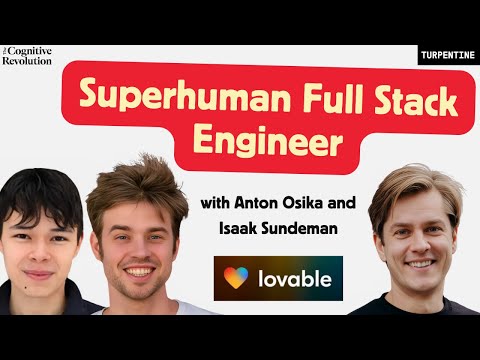 1:32:29ENCognitive Revolution "How AI Changes Everything"· 2025년 2월 9일팟캐스트17 Edits, Then 3 Prompts: Lovable Builds the Same App Twice진행자 Nathan LabenzAnton Osika and Isaak Sundeman live-build a shopping comparison tool and argue that opinionated defaults—not open-ended agents—are how non-coders actually ship software.
 1:24:29ENCognitive Revolution "How AI Changes Everything"· 2025년 2월 9일팟캐스트StackBlitz Almost Shut Down. Then Bolt Hit $20 Million ARR in Eight Weeks.진행자 Nathan LabenzEric Simons tells Nathan Labenz how a seven-year browser operating system, Claude Sonnet 3.5, and a text box replaced the local toolchain.
 38:05EN
 No Priors: AI, Machine Learning, Tech, & Startups· 2024년 12월 5일팟캐스트 · 2명From Zero to $20M ARR in Two Months: Bolt's Moat Lives in the Browser진행자 Sarah Guo, Elad GilStackBlitz CEO Eric Simons tells No Priors how a five-year WebContainers bet, an open-sourced prompt, and a community of non-coders turned Bolt.new into an overnight full-stack generator.
 3:43:34ENLex Fridman· 2024년 8월 20일팟캐스트 · 2명At 27, Pieter Levels Stared at a Hotel Ceiling. Then He Shipped Twelve Startups in a Year게스트 Pieter Levels · 진행자 Lex FridmanLex Fridman talks with the indie hacker behind Photo AI, Nomad List, and Remote OK about viral AI products, digital-nomad loneliness, and why he still deploys PHP to production from a sofa.
 1:15:39ENCognitive Revolution "How AI Changes Everything"· 2023년 11월 29일팟캐스트After 20 Years of Frontend, v0 Wrote Better Code Than Guillermo Rauch Did진행자 Nathan LabenzThe Vercel CEO tells Nathan Labenz why every product needs ghost text, why Software 2.0 will ossify the old stack, and why betting against open source is still the expensive mistake.
 1:11:06EN
 Unsupervised Learning: With Jacob Effron팟캐스트Replit's Amjad Masad on Building Your Own Model, Latency, and the Next Billion Software Creators진행자 Jacob EffronThe Replit founder explains why AI should be native to the product, why he trained a small in-house model, and why he thinks software engineering is about to split in two.
 1:31:29EN
 Lenny's Podcast팟캐스트 · 2명Lovable's Growth Playbook: Give It Away, Ship Daily and Recapture Product-Market Fit Every Three Months게스트 Elena Verna · 진행자 Lenny RachitskyElena Verna, head of growth at Lovable, explains why most of her 15-20 years of growth experience no longer applies to a company that passed $200 million ARR in under a year.
 23:57ENLenny's Podcast팟캐스트Write Your Last Roadmap: Claire Vo on Building When Code Is Cheap진행자 Lenny RachitskyIn a talk at the Lenny and Friends Summit, Claire Vo argues that cheap AI execution has made feature roadmaps dangerous and that teams should plan around convictions and evidence instead.
 1:31:50ENLenny's Podcast팟캐스트Zero to $80M in Six Months: How a Solo Founder Bootstrapped Base44 to a Wix Exit진행자 Lenny RachitskyMaor Shlomo explains how he built and grew the AI app builder Base44 without outside funding, the stack and habits that let one person compete with well-funded rivals, and how the Wix acquisition came together.
 1:09:48ENLenny's Podcast팟캐스트 · 2명Lovable's Anton Osika on Building "the Last Piece of Software" With 18 People게스트 Anton Osika · 진행자 Lenny RachitskyThe Lovable CEO demos an AI software engineer live and explains how a tiny, obsessive team reached explosive growth.
 1:04:09ENLenny's Podcast팟캐스트 · 2명A Developer in Your Pocket: Replit's Amjad Masad on What Happens When Everyone Can Build Software게스트 Amjad Masad · 진행자 Lenny RachitskyReplit's co-founder demos an agent that builds a full-stack app in minutes, then explains what it means for product managers, designers, engineers and founders.
 1:15:13ENLenny's Podcast팟캐스트 · 2명Shipping Real Apps Without Writing Code: A Non-Technical PM's Cursor and Claude Code Workflow게스트 Zevi Arnovitz · 진행자 Lenny RachitskyZevi Arnovitz, a product manager with no technical background, walks Lenny Rachitsky through the slash-command workflow he uses to build and ship products with AI.
 1:42:30ENLenny's Podcast팟캐스트The Genie Has Three Wishes: How a Non-Coder Became Lovable's Professional Vibe Coder진행자 Lenny RachitskyLazar Jovanovic explains the planning files, parallel prototypes and debugging routine he uses to ship production software with AI, and why judgment and taste now matter more than code.
 1:27:44ENLenny's Podcast팟캐스트 · 2명Everybody Can Cook: Guillermo Rauch on v0, Vercel and the Collapse of Specialization게스트 Guillermo Rauch · 진행자 Lenny RachitskyVercel's CEO explains how v0 turns intent into shipped products, why understanding how software works still matters, and how teams can build taste through exposure.