









필터 결과
26개정렬
 1:30:54EN
 Cognitive Revolution "How AI Changes Everything"· 2026년 10월 3일팟캐스트Humanoids Outran Usain Bolt. DeepMind Still Scores Robotics as GPT-2진행자 Nathan LabenzGoogle DeepMind's Gemini Robotics lead on why sprinting is easy, frying an egg is hard, and one brain should drive any body.
 1:55:02ENCognitive Revolution "How AI Changes Everything"· 2025년 8월 30일팟캐스트A hundred experiments a day, and the valley of death in materials진행자 Nathan LabenzRadical AI’s co-founders tell Nathan Labenz how a closed loop of frontier models and a self-driving lab is meant to collapse a forty-year materials cycle into less than a decade.
 1:07:32EN
 Unsupervised Learning: With Jacob Effron· 2024년 12월 18일팟캐스트o1 Is a New Generation — and the Day AGI Arrives Will Feel Boring진행자 Jacob EffronOpenAI’s former chief research officer Bob McGrew on why o1 is a 100x leap, why agents stall on reliability, and why AGI may land as office tedium rather than a single dramatic moment.
 1:50:08ENCognitive Revolution "How AI Changes Everything"· 2024년 8월 7일팟캐스트Waymo's Injury Rate Is Five Times Lower. It Still Loses to a Lyft.진행자 Nathan LabenzHuman drivers average one fatal crash per 100 million miles — and that bar still defines the self-driving debate.
 1:16:11ENCognitive Revolution "How AI Changes Everything"· 2024년 7월 11일팟캐스트Scooping Food Into Boxes Is 70 Percent of Plant Labor진행자 Nathan LabenzChef Robotics CEO Rajat Bhageria on 20 million plated meals, a foundation model for food, and why the kitchen may leave the house.
 1:40:07ENCognitive Revolution "How AI Changes Everything"· 2023년 7월 4일팟캐스트Thirty thousand voltage updates a second: inside Skydio’s autonomy stack진행자 Nathan LabenzHayk Martiros walks Nathan Labenz through a two-pound drone that sees in every direction, runs more than ten neural nets on board, and will not be weaponized.
 1:01:17ENCognitive Revolution "How AI Changes Everything"· 2023년 5월 9일팟캐스트The $300 million Gates refused, and the $10 billion that went to OpenAI진행자 Nathan LabenzRobert Scoble and Ben Tossell talk with Nathan Labenz about AI scouting, Apple's still-sleeping neural engines, and whether incumbents or AI-first startups will win.
 1:29:31ENCognitive Revolution "How AI Changes Everything"· 2023년 3월 30일팟캐스트130,000 Teleop Demos: Google's GPT Playbook for Robots진행자 Nathan LabenzKeerthana Gopalakrishnan of Google Robotics tells Nathan Labenz how RT-1, SayCan, and PaLM-E turn language-model scaling into kitchen-ready mobile manipulators.
 1:00:38EN
 Lex Fridman· 2017년 12월 6일팟캐스트The Race Car and the Rulebook: Chris Gerdes on Automated Vehicle Safety진행자 Lex FridmanA Stanford engineer and former DOT innovation chief explains how autonomous racing, voluntary safety guidance, and data sharing could shape safer self-driving cars.
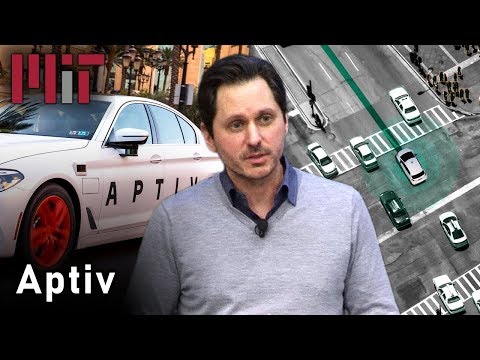 58:46ENLex Fridman팟캐스트Caging the Neural Network: How Aptiv Thinks About Safe Self-Driving진행자 Lex FridmanAptiv Autonomous Mobility's Karl Iagnemma and Oscar Beijbom explain why end-to-end learning is hard to trust in cars, and show how PointPillars and nuScenes push lidar perception forward.
 1:23:18ENCognitive Revolution "How AI Changes Everything"팟캐스트From GPT-2 to GPT-3 Moments in Robotics: Six DeepMind Papers on Bridging Robots and the Internet진행자 Nathan LabenzKeerthana Gopalakrishnan and Ted Xiao walk through RT-2, RT-X, RT-Trajectory, AutoRT, Learning to Learn Faster and PIVOT, and say what is still missing for general-purpose robots.
 1:07:22ENLex Fridman팟캐스트Cars That Drive Empty: Emilio Frazzoli on Why Self-Driving Needs Rules, Not Just Data진행자 Lex FridmanThe nuTonomy CTO explains why full autonomy and shared fleets are where the value lies, and why the hardest open problem is deciding how vehicles should behave.
 1:10:19ENUnsupervised Learning: With Jacob Effron팟캐스트The Robot That Folded the Laundry: Physical Intelligence’s Three Frontiers진행자 Jacob EffronKarol Hausman and Danny Driess explain how robot foundation models moved from coded primitives to web-scale pretraining, and why performance is now the hard gate.
 1:24:24EN
 Lenny's Podcast팟캐스트Intelligence for Heavy Machines: Qasar Younis on Why Physical AI Will Change Farms, Mines and Roads First진행자 Lenny RachitskyThe Applied Intuition co-founder explains why the biggest near-term AI impact is in vehicles and industrial machines, and shares the values, reading habits and management philosophy behind a quiet $15 billion company.
 1:13:18ENLex Fridman팟캐스트Human-Centered or Fully Autonomous? Lex Fridman's Case for Collaboration Between Driver and Machine진행자 Lex FridmanLecture 2 of MIT's 2018 course on deep learning for self-driving cars covers the two paths to autonomy, how sensors compare, who is building what, and where deep learning can help.
 1:18:48ENLex Fridman팟캐스트Data Movement, Not Math: How to Make Deep Learning Fit on Robots and Phones진행자 Lex FridmanMIT professor Vivienne Sze explains why moving data dominates the energy cost of neural networks and how co-designing hardware and algorithms can cut it by orders of magnitude.
 1:05:15ENLex Fridman팟캐스트Taming the Long Tail: How Waymo Builds a Self-Driving Factory진행자 Lex FridmanWaymo principal scientist Drago Anguelov explains how machine learning infrastructure, hybrid design and smart simulated agents tackle the rare events of autonomous driving.
 1:27:15ENLex Fridman팟캐스트Policy Gradients vs. Q-Learning: John Schulman's Field Guide to Deep Reinforcement Learning진행자 Lex FridmanOpenAI's John Schulman walks through the core methods of deep RL, from the score function estimator to TRPO and DQN, and says when each one is worth using.
 1:13:22ENLex Fridman팟캐스트The Second 90%: What It Really Takes to Put Deep Learning on a Driverless Car진행자 Lex FridmanWaymo's Sacha Arnoud walks MIT students through Waymo's history, its perception stack, and the industrial-scale labeling, compute and testing behind it.
 37:18ENLex Fridman팟캐스트From Intelligent Copilots to Aurora: Sterling Anderson on Shared Control and Building a Self-Driving Company진행자 Lex FridmanA guest lecture in MIT's 6.S094 course tracing Anderson's path from shared human-machine control research, through Tesla Autopilot, to co-founding Aurora.
 1:39:10ENLenny's Podcast팟캐스트After the Keyboard: Why Physical AI Is the Next Frontier, According to a Veteran Hardware Leader진행자 Lenny RachitskyCaitlin Kalinowski, who has built products at Apple, Meta and OpenAI, explains why robotics is heating up, what actually gates it, and how to build hardware that ships.
 1:13:40ENUnsupervised Learning: With Jacob Effron팟캐스트The Long Tail, the World Model, and the 1995 Problem: Inside Waymo's Scaling Phase and Robotics' Missing Moment진행자 Jacob EffronVincent, a distinguished engineer at Waymo, explains how foundation models became teachers for self-driving, why the long tail and causality are the real frontier, and where robotics still lacks its generalist proof point.
 1:19:34ENLenny's Podcast팟캐스트Fei-Fei Li on ImageNet, World Models and Why Everyone Has a Role in AI진행자 Lenny RachitskyThe scientist often called the godmother of AI traces how big data sparked deep learning, explains why spatial intelligence is the next frontier, and shows what World Labs' first product, Marble, can do.
 1:48:13ENCognitive Revolution "How AI Changes Everything"팟캐스트Robotics Hits Its GPT-3.5 Moment: Inside Gemini Robotics, From Embodied Reasoning to Origami진행자 Nathan LabenzGoogle DeepMind researchers Keerthana Gopalakrishnan and Ted Xiao explain how Gemini Robotics works, what it can and cannot do, and where the field goes next.
더 보기26개 중 24개 표시