









필터 결과
46개정렬
 1:28:08EN
 Cognitive Revolution "How AI Changes Everything"· 2026년 10월 1일팟캐스트The same H100 costs 3x at AWS, and a four-month-old lab is catching genes the top sequencers missed진행자 Nathan LabenzA Cognitive Revolution weekly briefing on a possible U.S.–China AI hotline, why hyperscalers charge two to three times as much for identical chips, co-writing a novel with frontier models, and an AI loop that re-diagnosed a child a premier prenatal lab had cleared.
 31:39EN
 No Priors: AI, Machine Learning, Tech, & Startups· 2026년 8월 20일팟캐스트 · 2명The Skull Is Already the Vat: Max Hodak on Restoring Sight진행자 Sarah Guo, Elad GilPatients blinded by macular degeneration put on laser-projector glasses, read books, and fill in Sudoku — because a chip under the retina is sending vision back into the brain.
 47:22EN
 Sequoia Capital· 2026년 8월 4일팟캐스트From One in a Thousand to 15 Percent: Chai Discovery Treats Drug Design as a Scaling ProblemJoshua Meier and Matthew McPartlon tell Sequoia’s Training Data why antibody design is an engineering problem, not a bespoke science, and why they sell a molecular CAD suite instead of their own drugs.
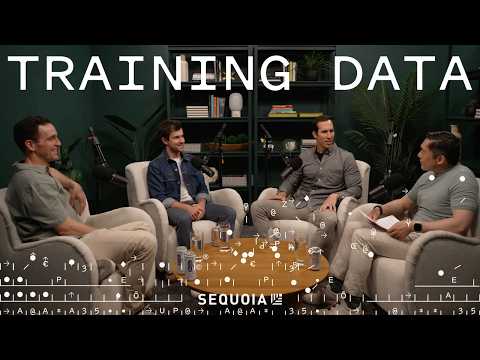 55:19ENSequoia Capital· 2026년 7월 7일팟캐스트The drone is 15% of Zipline: 140 million miles, zero incidentsKeller Rinaudo Cliffton and Eric Watson explain why the aircraft is the small part of an automated logistics system now cheaper than a car.
 1:44:15ENCognitive Revolution "How AI Changes Everything"· 2026년 4월 1일팟캐스트Nathan Labenz's p(doom) Is 10 to 90 Percent. He Is More Optimistic Anyway진행자 Nathan LabenzFive years ago, expecting AGI by 2035 made you an extremist. On The Intelligence Horizon, the Cognitive Revolution host explains why the same forecast now sounds bearish, and why he still thinks a defense-in-depth strategy might keep society on the rails.
 2:03:56ENCognitive Revolution "How AI Changes Everything"· 2026년 2월 25일팟캐스트260 Doctors and 49,000 Criteria: How OpenAI Built Attending-Level Health AI진행자 Nathan LabenzKaran Singhal tells Nathan Labenz how ChatGPT Health was evaluated with physicians, walled off from model training, and aimed at raising both the floor and the ceiling of human health.
 2:25:42ENCognitive Revolution "How AI Changes Everything"· 2026년 2월 14일팟캐스트The experts argued through the coffee break — and never agreed whether AI can build AI진행자 Nathan LabenzOn a marathon Cognitive Revolution live show, a cancer-AI researcher, a former OpenAI board member, and a national-security analyst each hit a different wall in the boom.
 1:04:51ENCognitive Revolution "How AI Changes Everything"· 2026년 2월 1일팟캐스트125 million cells took a decade. The next billion takes months진행자 Nathan LabenzMark Zuckerberg and Priscilla Chan on pairing a frontier biology lab with a frontier AI lab so models train on data that was designed for them.
 48:14ENNo Priors: AI, Machine Learning, Tech, & Startups· 2025년 11월 13일팟캐스트 · 2명A New Drug Burns $2 Billion and 10 Years. Benchling's CEO Wants AI to Cut That to Three진행자 Sarah Guo, Elad GilMost medicines fail in years seven to ten, after hundreds of millions have already gone into the clinic—and Sajith Wickramasekara thinks sending things to space may already be easier.
 1:29:30ENCognitive Revolution "How AI Changes Everything"· 2025년 10월 14일팟캐스트2,500 Compounds and a 51 Percent Hit Rate: How a Small Graph Net Found New Antibiotics진행자 Nathan LabenzMIT's Jim Collins tells Nathan Labenz how a bootlegged 2018 project, a binary growth-inhibition label, and Chemprop graph networks pulled novel antibiotics out of chemical space that labs could never screen by hand.
 44:49ENNo Priors: AI, Machine Learning, Tech, & Startups· 2025년 9월 5일팟캐스트 · 2명How OpenEvidence Became the Clinical OS for 40% of U.S. Doctors진행자 Sarah Guo, Elad GilFounder Daniel Nadler tells No Priors how a free search tool for physicians, not an answer engine for patients, took high-stakes clinical knowledge in 18 months.
 1:28:48ENCognitive Revolution "How AI Changes Everything"· 2025년 7월 10일팟캐스트Doctors code at 45%. The model beat them by 12 points — then 4,000 physicians had to try it once.진행자 Nathan LabenzAmbience Healthcare and Cleveland Clinic walk through the AI scribe that cut pajama time, climbed ICD-10 with reinforcement fine-tuning, and won 75% voluntary use.
 49:27ENNo Priors: AI, Machine Learning, Tech, & Startups· 2025년 7월 3일팟캐스트 · 2명From 0.1% to 20%: Chai-2 Turns Antibody Design Into Prompt Engineering진행자 Sarah Guo, Elad GilChai Discovery co-founders Joshua Meier and Jack Dent tell Sarah Guo how a generative model now designs antibodies that bind on the first 24-well plate.
 1:26:21ENCognitive Revolution "How AI Changes Everything"· 2025년 4월 10일팟캐스트For under $10, Google's AI independently recovered a lab result nobody had published진행자 Nathan LabenzVivek Natarajan and Anil Palepu tell Nathan Labenz how AMIE beats primary-care doctors on treatment plans, and how Co-Scientist matched Imperial College's unpublished bacterial-resistance mechanism.
 38:43ENNo Priors: AI, Machine Learning, Tech, & Startups· 2025년 3월 27일팟캐스트 · 2명Two in Five Doctors Want Out. An On-Call Cardiologist Built the Note That Lets Them Stay진행자 Sarah Guo, Elad GilAbridge CEO Shiv Rao on treating the doctor-patient conversation as healthcare's source of truth, and why the company ran straight at the hardest health systems.
 1:31:35ENCognitive Revolution "How AI Changes Everything"· 2025년 3월 6일팟캐스트Thirty Years of Research, Collapsed into One Sentence진행자 Nathan LabenzImmunologist Derya Unutmaz on writing a medical patent in half an hour, treating o1 Pro as a professor-level collaborator, and why he no longer trusts his own expertise until he asks the model.
 1:04:52ENSequoia Capital· 2025년 3월 4일팟캐스트The Consumer Playbook That Put Medical AI in 100,000 Exam RoomsOpenEvidence CEO Daniel Nadler explains how a free App Store product, trained only on peer-reviewed literature, reached as much as a quarter of U.S. physicians in a year.
 1:33:01ENCognitive Revolution "How AI Changes Everything"· 2025년 1월 15일팟캐스트Rare Diseases Are Common: How a Harvard Gene Hunter Uses o1-pro on the Cases Sequencing Already Missed진행자 Nathan LabenzDr. Catherine Brownstein of Boston Children's Hospital explains why cheap genomes made her job harder, why data sharing still beats any model, and where ChatGPT Pro actually gives her hours back.
 1:32:45ENCognitive Revolution "How AI Changes Everything"· 2024년 7월 27일팟캐스트He doubled a company with AI — then asked the labs to pause hyperscaling진행자 Nathan LabenzOn the Nick Halaris Show, Cognitive Revolution host Nathan Labenz argues for adopting today's models fast and slowing the race to systems more powerful than we are.
 1:37:07ENCognitive Revolution "How AI Changes Everything"· 2024년 6월 22일팟캐스트A Text-Only AI Outdiagnosed GPs. Google Still Won't Ship It.진행자 Nathan LabenzGoogle researchers Vivek Natarajan and Khaled Saab walk Nathan Labenz through five medical-AI papers, from radiology reports to an AI doctor that still has to earn trust.
 1:01:55ENCognitive Revolution "How AI Changes Everything"· 2024년 6월 1일팟캐스트A $9 AI nurse, an 86 on the medical boards, and a 10% extinction line진행자 Nathan LabenzNathan Labenz’s solo scouting report walks from medical state of the art through how models actually learn, then to live players, scaling trends, and a control plan that still does not exist.
 1:59:15ENCognitive Revolution "How AI Changes Everything"· 2024년 5월 25일팟캐스트A Protein Backbone in a Minute: The Real Progress, Bottlenecks, and Risks of AI Biology진행자 Nathan LabenzThe White House set a thousand-fold lower reporting bar for biological models than for language models—and this conversation shows why that gap already looks prescient.
 3:04:52ENCognitive Revolution "How AI Changes Everything"· 2024년 5월 1일팟캐스트Doctors Chose AI on Eight of Nine Dimensions: A GPT-4 Red-Teamer's Scouting Report진행자 Nathan LabenzNathan Labenz tells 80,000 Hours what late-2023 systems can already do, which thresholds still matter, and why a polarized policy fight is a gift to heavy-handed regulation.
 39:02ENCognitive Revolution "How AI Changes Everything"· 2023년 8월 10일팟캐스트AI’s product advantage is consistency. Its real weakness is getting conned.진행자 Nathan LabenzNathan Labenz updates the Cognitive Revolution scouting report: jailbreaks, resume automation, Med-PaLM’s 40% radiology win, and what might follow Transformers.
더 보기46개 중 24개 표시