







필터 결과
217개정렬
 32:22EN
 Matthew Berman· 2025년 10월 16일Qwen Image Edit Plus Compared With Nano Banana, Seedream and GPT Image 1Matthew Berman · Forward FutureMatthew Berman compares four image-editing models across compositing, precise edits, style transfer, object removal and weather effects.
 1:29:30EN
 Cognitive Revolution "How AI Changes Everything"· 2025년 10월 14일팟캐스트2,500 Compounds and a 51 Percent Hit Rate: How a Small Graph Net Found New Antibiotics진행자 Nathan LabenzMIT's Jim Collins tells Nathan Labenz how a bootlegged 2018 project, a binary growth-inhibition label, and Chemprop graph networks pulled novel antibiotics out of chemical space that labs could never screen by hand.
 36:58EN
 No Priors: AI, Machine Learning, Tech, & Startups· 2025년 10월 9일팟캐스트 · 2명STaR's Author Wants Models With EQ, Not Just More IQ진행자 Sarah Guo, Elad GilEric Zelikman, the Stanford and xAI researcher behind STaR and Quiet-STaR, launches humans& on the bet that three years of IQ scaling left models emotionally unintelligent.
 1:01:49ENCognitive Revolution "How AI Changes Everything"· 2025년 10월 2일팟캐스트ChatGPT's Co-Creator Left to Put Nature in the Reward Loop진행자 Nathan LabenzLiam Fedus and Ekin Dogus Cubuk on why language models still fail at physics, why literature data is too noisy to train on, and why Periodic Labs is aiming at a 200K superconductor.
 1:22:07ENCognitive Revolution "How AI Changes Everything"· 2025년 9월 25일팟캐스트Every payment is a frame in a movie. Stripe’s foundation model took card-testing detection from 59% to 97%진행자 Nathan LabenzEmily Sands, Stripe’s head of data and AI, explains how a domain-specific payments model, shared embeddings, and mixed rules turn a $1.4 trillion network into compounding advantage.
 2:02:17ENCognitive Revolution "How AI Changes Everything"· 2025년 8월 27일팟캐스트SAEs Find the Nouns. Parameter Decomposition Looks for the Verbs진행자 Nathan LabenzGoodfire's Lee Sharkey argues that sparse autoencoders recover a network's variables, not the algorithms those variables run, and shows how stochastic parameter decomposition tries to recover the computations themselves.
 57:52EN
 Unsupervised Learning: With Jacob Effron· 2025년 8월 13일팟캐스트They Aimed for 1%. The Lab Hit 20%. Chai Discovery Moved Antibody Design Onto the Computer.진행자 Jacob EffronJoshua Meier on three waves of AI drug discovery, why Chai-2 behaves like Photoshop for molecules, and why a 1% hit rate was supposed to be enough to change the industry.
 40:32ENMatthew Berman· 2025년 8월 7일Mark Chen on GPT-5, Synthetic Data and the Future of AI ResearchMatthew Berman, Mark Chen · Forward FutureOpenAI’s head of research discusses training, agents, open-weight releases and evaluation with Matthew Berman in August 2025.
 30:11EN
 Sequoia Capital· 2025년 7월 30일팟캐스트From 12 Percent on AIME to IMO Gold in Two MonthsAlex Wei, Sheryl Hsu, and Noam Brown tell Sequoia's Sonya Huang how a three-person OpenAI sprint used general-purpose reinforcement learning, not Lean, to reach gold-level on the 2025 International Mathematical Olympiad.
 1:07:41EN
 20VC with Harry Stebbings· 2025년 7월 21일팟캐스트 · 2명Edwin Chen on Building Surge and the Data Behind AI Models게스트 Edwin Chen · 진행자 Harry StebbingsThe Surge founder discusses a bootstrapped business, training-data quality and the limits he sees in AI benchmarks and synthetic data.
 47:05ENMatthew Berman· 2025년 7월 21일Logan Kilpatrick on AI Developers, Interfaces, and the Future of ModelsMatthew Berman, Logan Kilpatrick · Forward FutureIn a July 2025 conversation, Google’s Logan Kilpatrick discusses Windsurf, agent interfaces, coding skills, Veo, and the shifting boundary between models and application scaffolding.
 49:55ENMatthew Berman· 2025년 7월 17일Aravind Srinivas on Comet, AI Browsers and the Future of WorkMatthew Berman, Aravind Srinivas · Forward FuturePerplexity’s CEO explains why the company built a browser, how it evaluates models and why he expects AI to disrupt jobs.
 38:10ENCognitive Revolution "How AI Changes Everything"· 2025년 7월 16일팟캐스트Plus Five for Format, Plus Ten if It Compiles진행자 Nathan LabenzPredibase CEO Dev Rishi explains how reinforcement fine-tuning, production feedback, and narrow specialist models turn one-off training into systems that keep learning.
 1:42:06ENCognitive Revolution "How AI Changes Everything"· 2025년 7월 8일팟캐스트Every Frontier Lab Is Spending a Billion a Year on Data. Here Is Where It Goes진행자 Nathan LabenzLabelbox CEO Manu Sharma on the $15 billion Scale deal, RL “gyms,” $250,000 trainers, and why post-training now eats the budget that used to belong to pre-training.
 1:37:05ENCognitive Revolution "How AI Changes Everything"· 2025년 6월 19일팟캐스트An Algebraic Geometer Quit Tenure Because the Bowl-Shaped Loss Plot Is a Lie진행자 Nathan LabenzJesse Hoogland and Daniel Murfet of Timaeus argue that singularities in the loss landscape — not the smooth valleys in every slide deck — are what actually govern how neural networks learn, generalize, and go wrong.
 48:51ENSequoia Capital· 2025년 6월 17일팟캐스트The Breakthroughs for AGI Are Already Done, Says OpenAI’s Former Research HeadBob McGrew tells Sequoia’s Training Data that 2025 is the year of reasoning, agents will be priced at the cost of compute, and nothing fundamental will be added to the stack by 2035.
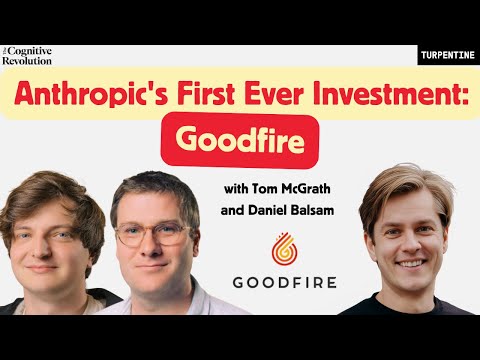 1:54:08ENCognitive Revolution "How AI Changes Everything"· 2025년 5월 29일팟캐스트Why Anthropic's first check went to a company building microscopes for neural nets진행자 Nathan LabenzGoodfire's Dan Balsam and Tom McGrath argue that mechanistic interpretability now has a proto-paradigm, two stubborn gaps, and three products worth shipping today.
 2:12:00ENCognitive Revolution "How AI Changes Everything"· 2025년 5월 15일팟캐스트Gradient Descent at Test Time: Titans Pushes LLM Context to 10 Million Tokens진행자 Nathan LabenzA Cornell PhD student's neural memory module holds about 70% accuracy where GPT-4's scores fall off a cliff.
 47:00ENUnsupervised Learning: With Jacob Effron· 2025년 5월 8일팟캐스트An Eval Lasts Three Months — and a Frozen Frontier Would Still Feed Startups for a Decade진행자 Jacob EffronOpenAI’s GPT-4.1 post-training lead Michelle Pokrass tells Unsupervised Learning how the team spent three months on evals before training, why agents fail on wiring more than intelligence, and when to reach for RFT.
 38:10ENNo Priors: AI, Machine Learning, Tech, & Startups· 2025년 5월 1일팟캐스트 · 2명o3 should wait exactly as long as the answer takes진행자 Sarah Guo, Elad GilOpenAI researchers Eric Mitchell and Brandon McKinzie tell No Priors why o3's leap is a chain of tools during reasoning — and why you should send the same prompt a hundred times.
 58:11ENSequoia Capital· 2025년 4월 15일팟캐스트Patrick Hsu Wants an App Store for Biology, Not Just Better DrugsThe Arc Institute co-founder argues that Evo 2, trained on genomes rather than proteins, should underpin tools for every step of the scientific method.
 2:29:41ZH
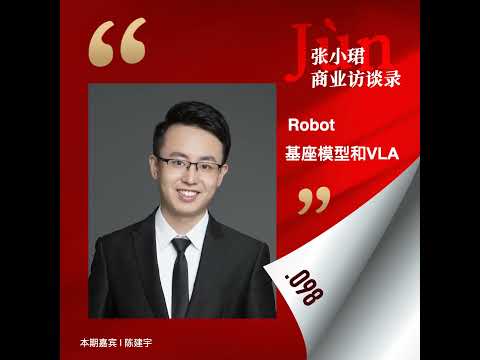
 Zhang Xiaojun Podcast· 2025년 4월 7일팟캐스트 · 4명陈建宇:机器人基座模型如何走向通用 VLA게스트 陈建宇 · 진행자 张小珺从 SayCan、RT-2 到 Diffusion Policy,清华助理教授、星动纪元创始人陈建宇梳理机器人模型从借用语言模型到端到端 VLA 的路线。关键难题仍是多样化数据、跨本体泛化和高频动作控制。
 1:14:11ENCognitive Revolution "How AI Changes Everything"· 2025년 4월 5일팟캐스트The Reasoning Curve Was Smooth All Along: Gemini 2.5's Jack Rae on Thinking, Memory, and AGI진행자 Nathan LabenzDeepMind's thinking-and-inference lead explains why RL-for-reasoning felt sudden, why Gemini shows raw chain of thought, and why a million-token window still is not memory.
 1:43:54ENCognitive Revolution "How AI Changes Everything"· 2025년 3월 23일팟캐스트A Year to Grow a Brain Organoid, an Hour to Simulate It진행자 Nathan LabenzStanford postdoc Siyu He tells Nathan Labenz how Squidiff and CORAL move single-cell and spatial experiments into the computer — and where the models still cannot go.
더 보기217개 중 24개 표시