









필터 결과
163개정렬
 4:13:30EN
 Lex Fridman· 2022년 6월 9일팟캐스트 · 2명Humanity showed up 10^18 times too early게스트 Robin Hanson · 진행자 Lex FridmanRobin Hanson tells Lex Fridman why our date in cosmic history is data, and why an empty sky means the loud aliens are coming fast.
 2:04:58ENLex Fridman· 2022년 4월 29일팟캐스트 · 2명We're Not Homo Sapiens Anymore, Grimes Says. Call Us Homo Techno게스트 Grimes · 진행자 Lex FridmanLex Fridman rarely records after midnight. This episode is the exception: Grimes, eight hours late, on music, memes, motherhood, and why consciousness might be sacred even if humans are not.
 2:37:03ENLex Fridman· 2022년 2월 13일팟캐스트 · 2명No One Knows How to Make a Pencil게스트 Tim Urban · 진행자 Lex FridmanWait But Why's Tim Urban spent five years on a book about why society is tearing itself apart, then sat down with Lex Fridman to talk aliens, Musk, Neuralink, and the war inside a procrastinator's head.
 2:46:40ENLex Fridman· 2021년 12월 23일팟캐스트 · 2명The Tools That Fit in a Head Were Built by People Who Fit in a Van게스트 Peter Wang · 진행자 Lex FridmanAnaconda's Peter Wang talks with Lex Fridman about Python, cybernetic systems, and why sharing software creates value that scarcity economics still cannot price.
 2:52:56ENLex Fridman· 2021년 9월 15일팟캐스트 · 2명Douglas Lenat's 37-Year Bet That Common Sense Can Be Written Down게스트 Douglas Lenat · 진행자 Lex FridmanSince 1984, Cyc has been encoding the unstated rules of the world so machines can reason instead of merely pattern-match.
 2:24:52ENLex Fridman· 2021년 9월 3일팟캐스트 · 2명Judge a robot by the environment it forces to change, not by the demo게스트 Rodney Brooks · 진행자 Lex FridmanRodney Brooks tells Lex Fridman why faces are promises, why computation is an overworked metaphor, and why robot companies die on price, expectation, and habit.
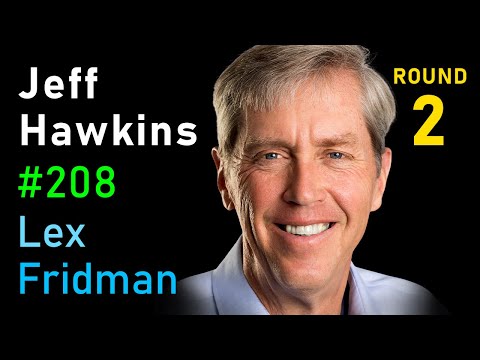 2:18:29ENLex Fridman· 2021년 8월 8일팟캐스트 · 2명Your Cortex Is 150,000 Brains Voting on a Coffee Cup게스트 Jeff Hawkins · 진행자 Lex FridmanJeff Hawkins tells Lex Fridman that intelligence is learning a model of the world, the neocortex is tens of thousands of independent maps that vote, and the fastest path to machine intelligence is reverse-engineering that sheet.
 2:39:15ENLex Fridman· 2021년 2월 18일팟캐스트 · 2명Craftsmanship, Graphs and Consciousness: Jim Keller on Building Computers That Think게스트 Jim Keller · 진행자 Lex FridmanLegendary chip architect Jim Keller talks with Lex Fridman about design philosophy, the future of AI hardware, the human mind and how to live well.
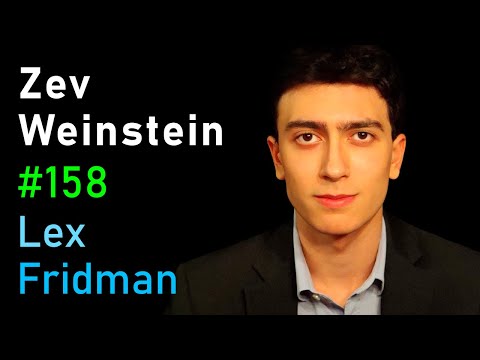 1:44:32ENLex Fridman· 2021년 2월 5일팟캐스트 · 2명The Philosopher’s Risk: Zev Weinstein on Stagnation, Truth, and the Courage to Change Your Mind게스트 Zev Weinstein · 진행자 Lex FridmanZev Weinstein talks with Lex Fridman about why radical thought is both dangerous and necessary, and how truth, language, media, mathematics and mortality shape a meaningful life.
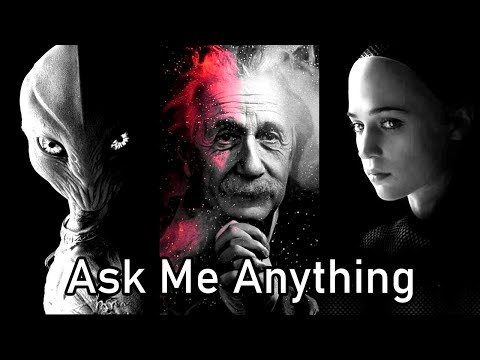 1:18:35ENLex Fridman· 2021년 1월 27일팟캐스트An AI That Walks Among Us May Have to Know Depression진행자 Lex FridmanIn a January 2021 AMA, Lex Fridman answers listeners on suffering machines, immigration, aliens, career pivots, and why happiness is a signal rather than a goal.
 2:01:07ENLex Fridman· 2020년 12월 12일팟캐스트 · 2명Michael Littman isn’t waiting for a runaway god. He’s watching us.게스트 Michael Littman · 진행자 Lex FridmanThe Brown reinforcement-learning researcher tells Lex Fridman why accidental superintelligence feels like a 747 assembling itself — and why social media, rote language, and theory of mind worry him more.
 2:34:20ENLex Fridman· 2020년 8월 30일팟캐스트 · 2명Intelligence Is How Efficiently You Acquire Skills You Were Not Prepared For게스트 François Chollet · 진행자 Lex FridmanFrançois Chollet tells Lex Fridman why skill is not intelligence, why GPT-3 is still pattern matching, and why a grid puzzle called ARC still separates children from machines.
 4:08:58ENLex Fridman· 2020년 6월 22일팟캐스트 · 2명The Man Who Named AGI Wants Superintelligence Raised on Compassion게스트 Ben Goertzel · 진행자 Lex FridmanLex Fridman talks with Ben Goertzel for four hours about OpenCog, Sophia, SingularityNET, and why a bigger neural net is not a mind.
 3:00:18ENLex Fridman· 2020년 6월 13일팟캐스트 · 2명Only a Simulation Can Be Conscious게스트 Joscha Bach · 진행자 Lex FridmanJoscha Bach tells Lex Fridman why a neuron cannot feel anything, why existence is the default, and why this dying world is still the best level of the game.
 1:29:02ENLex Fridman· 2020년 5월 28일팟캐스트 · 2명You Are Your Own Existence Proof게스트 Karl Friston · 진행자 Lex FridmanKarl Friston walks Lex Fridman from brain imaging to the free energy principle, arguing that anything which keeps a boundary looks as if it is doing Bayesian inference.
 1:37:28ENLex Fridman· 2020년 5월 8일팟캐스트 · 2명We Are Still Massively Underestimating Deep Learning게스트 Ilya Sutskever · 진행자 Lex FridmanIlya Sutskever tells Lex Fridman why 2012 was about conviction, why bigger models can get worse before they get better, and what he would do with an AGI.
 1:07:21ENLex Fridman· 2020년 4월 9일팟캐스트 · 2명Complex Things Have to Grow게스트 Richard Dawkins · 진행자 Lex FridmanRichard Dawkins talks with Lex Fridman about alien minds, memes, morality, and why even a simulated world would still need Darwin.
 1:48:01ENLex Fridman· 2020년 4월 3일팟캐스트 · 2명David Silver: AlphaGo Won by Taking Human Knowledge Out게스트 David Silver · 진행자 Lex FridmanThe DeepMind researcher behind AlphaGo and AlphaZero tells Lex Fridman how an unclaimed million-dollar Go prize, a BBC Micro at age seven, and a honeymoon insight led to superhuman self-play.
 1:27:57ENLex Fridman· 2020년 3월 31일팟캐스트 · 2명The Brain's Best Computer Has No Inner Life게스트 Roger Penrose · 진행자 Lex FridmanRoger Penrose tells Lex Fridman why HAL raises a moral problem the field will not name, why the cerebellum wrecks the computational theory of mind, and why gravity, Gödel, and an infinite cosmos all hang on the same kind of understanding.
 1:39:56ENLex Fridman· 2020년 2월 26일팟캐스트 · 2명Why Marcus Hutter Treats Compression as Intelligence Itself게스트 Marcus Hutter · 진행자 Lex FridmanThe DeepMind researcher behind AIXI tells Lex Fridman why a Wikipedia compression contest, Solomonoff induction, and an incomputable formula belong in the same conversation.
 1:38:49ENLex Fridman· 2020년 1월 29일팟캐스트 · 2명Even a simulation would still be real게스트 David Chalmers · 진행자 Lex FridmanDavid Chalmers tells Lex Fridman why a simulated world would still count as reality, and why the hard problem of consciousness still will not go away.
 1:52:40ENLex Fridman· 2019년 12월 28일팟캐스트 · 2명Without Analogies, There Can Be No Concepts게스트 Melanie Mitchell · 진행자 Lex FridmanMelanie Mitchell talks with Lex Fridman about why analogy sits at the core of thought, why scaled-up learning still fails at common sense, and why she thinks human-level AI is more than a century away.
 1:23:01ENLex Fridman· 2019년 12월 11일팟캐스트 · 2명You Cannot Ask a Question You Have No Words For게스트 Judea Pearl · 진행자 Lex FridmanA teenager spent three days in bed with a fever after learning that geometry could be done in algebra — then spent a career giving cause and effect a mathematics.
 14:55ENLex Fridman· 2019년 10월 29일팟캐스트 · 2명Kasparov on Deep Blue, AlphaZero, and Why Machines Win Closed Systems but Humans Still Choose the Questions게스트 Garry Kasparov · 진행자 Lex FridmanGarry Kasparov revisits the 1997 loss to Deep Blue, explains why machines beat humans in closed systems, and argues that the human role is to pick the right questions and not interfere with superior machine knowledge.
더 보기163개 중 24개 표시