








필터 결과
50개정렬
 1:59:49EN
 Lex Fridman· 2019년 9월 14일팟캐스트 · 2명Intelligence is not the height of a building: François Chollet on Keras, deep learning, and why AGI will not explode게스트 François Chollet · 진행자 Lex FridmanThe Keras creator tells Lex Fridman that intelligence lives in a brain, a body, and a problem, that science already is a recursively self-improving superhuman system with linear output, and that the real near-term danger is the newsfeed.
 1:15:58ENLex Fridman· 2019년 8월 31일팟캐스트 · 2명Human Intelligence Is a Ridiculously Narrow Sliver게스트 Yann Lecun · 진행자 Lex FridmanYann LeCun tells Lex Fridman why giant nets plus gradient descent broke the textbooks, why "AGI" is the wrong word, and why the next leap is a world model learned like a baby.
 1:44:11ENLex Fridman· 2019년 8월 27일팟캐스트 · 2명A Single GPU Is Enough: Jeremy Howard on Teaching Deep Learning게스트 Jeremy Howard · 진행자 Lex FridmanThe fast.ai founder tells Lex Fridman why domain experts, not more papers or more TPUs, will decide whether deep learning actually helps people.
 2:09:42ENLex Fridman· 2019년 7월 1일팟캐스트 · 2명The Brain Does Not Classify Images. It Navigates Maps.게스트 Jeff Hawkins · 진행자 Lex FridmanJeff Hawkins tells Lex Fridman why the neocortex stores the world as thousands of voting reference frames, and why scaling today's networks will not get us there.
 1:08:37ENLex Fridman· 2019년 4월 18일팟캐스트 · 2명A Bar in Montreal, Then a Night of Code: Ian Goodfellow on Why GANs Work게스트 Ian Goodfellow · 진행자 Lex FridmanLex Fridman talks with Ian Goodfellow about the 2014 invention of generative adversarial networks, adversarial examples as a security problem, and what still has to be built before machines can hold a fact the way a person does.
 1:01:24ENLex Fridman· 2019년 3월 12일팟캐스트 · 2명Leslie Kaelbling: You Buy the Ticket Before You Can Plan the Airport게스트 Leslie Kaelbling · 진행자 Lex FridmanThe MIT roboticist tells Lex Fridman why abstractions, belief-space control, and built-in bias matter more than picking a tribe of symbols or neural nets.
 1:20:21ENLex Fridman· 2019년 1월 19일팟캐스트 · 2명Einstein Was the Worst of Five Ph.D. Students게스트 Tomaso Poggio · 진행자 Lex FridmanMIT neuroscientist Tomaso Poggio on why intelligence is science's deepest problem, and what brains still have to teach machines.
 1:19:59ENLex Fridman· 2018년 12월 23일팟캐스트 · 2명Schmidhuber’s bet: true meta-learning rewrites the learner, not the last layer게스트 Juergen Schmidhuber · 진행자 Lex FridmanJürgen Schmidhuber tells Lex Fridman how Gödel machines, compression-as-science, Power Play, LSTMs, and world models all descend from a teenage plan to multiply one person’s curiosity into a better physicist than he could ever be.
 42:45ENLex Fridman· 2018년 12월 16일팟캐스트 · 2명A one-legged robot learned a backflip from "this is better"게스트 Pieter Abbeel · 진행자 Lex FridmanPieter Abbeel tells Lex Fridman why preference comparisons, self-play, ten-minute demos, and messy ensembles of simulators are the practical path through deep reinforcement learning.
 1:26:21ENLex Fridman· 2018년 12월 9일팟캐스트 · 2명The Machine Should Never Treat Its Objective as Gospel게스트 Stuart Russell · 진행자 Lex FridmanStuart Russell talks with Lex Fridman about metareasoning, self-driving reliability, and why uncertainty about human goals is the core of the control problem.
 54:03ENLex Fridman· 2018년 11월 16일팟캐스트 · 2명The Hardest Part of Learning Was Left Out of the Textbooks게스트 Vladimir Vapnik · 진행자 Lex FridmanVladimir Vapnik tells Lex Fridman why intelligence is the work of inventing predicates that shrink the admissible set of functions, not of fitting a rule to a mountain of data.
 42:18ENLex Fridman· 2018년 10월 20일팟캐스트 · 2명An Adult Can Change Last Year's Mind. A Network Still Cannot.게스트 Yoshua Bengio · 진행자 Lex FridmanYoshua Bengio tells Lex Fridman that the missing pieces of deep learning sit in credit assignment, training objectives, and a kind of compositionality borrowed from classical AI — not in ten thousand layers.
 15:01ENLex Fridman팟캐스트 · 2명Deep Learning Is a System 1 Machine: Daniel Kahneman on What AI Still Lacks게스트 Daniel Kahneman · 진행자 Lex FridmanThe Nobel-winning psychologist tells Lex Fridman how his fast-and-slow thinking framework maps onto deep learning, and why driving among pedestrians may require understanding people.
 1:28:53ENLex Fridman팟캐스트 · 2명Machine Learning for Business Students: Powerful, Narrow, and Easier to Fool Than You Think게스트 MIT Sloan · 진행자 Lex FridmanLex Fridman's non-technical MIT Sloan lecture explains how machine learning works, why it is so capable at perception, and where it still breaks in the real world.
 11:11ENLex Fridman팟캐스트 · 2명Yann LeCun on Benchmarks, Interactive Environments, and Why Human Intelligence Is Not General게스트 Yann Lecun · 진행자 Lex FridmanIn a 2019 clip, LeCun defends benchmarks as a test of AI claims, explains why interactive environments break the usual train-test protocol, and argues that "general intelligence" is a misnomer.
 1:22:36EN
 Lenny's Podcast팟캐스트 · 2명Stop Chasing AI News: Chip Huyen on What Actually Makes AI Products Better게스트 Chip Huyen · 진행자 Lenny RachitskyAuthor of AI Engineering walks through pre-training, post-training, RL, evals and RAG, then explains what separates companies that get value from AI from those that stall.
 34:57EN
 No Priors: AI, Machine Learning, Tech, & Startups팟캐스트 · 2명It's Six Months In: Misconceptions About AI, Regulation, Context Windows and Incumbents진행자 Sarah Guo, Elad GilSarah Guo and Elad Gil answer listener questions on what the market gets wrong about generative AI, from the nuclear-regulation analogy to where startups can still beat incumbents.
 10:16ENLex Fridman팟캐스트 · 2명Reasoning Without Logic: Yann LeCun on Teaching Neural Networks to Think게스트 Yann Lecun · 진행자 Lex FridmanYann LeCun explains why he believes neural networks can reason, and what memory, recurrence and continuous representations would need to look like.
 1:08:06ENLex Fridman팟캐스트 · 2명Deep Learning in One Lecture: From Perceptrons to AutoML and the Limits of Learning게스트 Deep Learning Basics · 진행자 Lex FridmanLex Fridman's opening lecture for MIT's 6.S094 course surveys why deep learning took off, how neural networks learn, and where the technique still falls short.
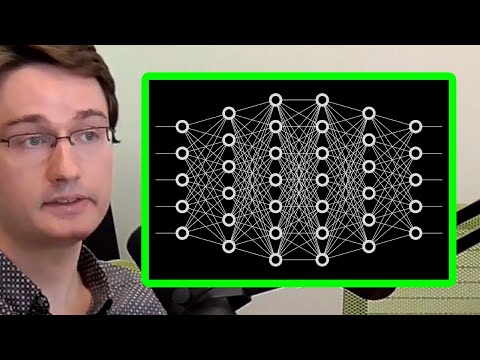 10:34ENLex Fridman팟캐스트 · 2명Why Deep Learning Needs Rules: Chollet on Interpolation, Abstraction and Hybrid AI게스트 François Chollet · 진행자 Lex FridmanFrançois Chollet explains why neural networks only interpolate between points they have seen, and why the best AI systems pair them with symbolic rules.
 1:00:15ENLex Fridman팟캐스트 · 2명Circuit Search, Hindsight and Self-Play: Ilya Sutskever's Case for Where Learning Is Going게스트 Ilya Sutskever · 진행자 Lex FridmanIn an MIT AGI lecture, OpenAI's co-founder explains why deep learning works, then walks through meta-learning, hindsight experience replay, sim-to-real transfer, self-play and learning goals from human feedback.
 1:35:09ENLex Fridman팟캐스트 · 2명Reverse-Engineering the Child: Josh Tenenbaum's Case for Human-Like AI게스트 MIT AGI · 진행자 Lex FridmanMIT cognitive scientist Josh Tenenbaum argues that real machine intelligence needs models of the world, built by studying how babies think and learn, not just better pattern recognition.
 11:59ENLex Fridman팟캐스트 · 2명From a Side Project to TensorFlow's Core: François Chollet on How Keras Came to Be게스트 François Chollet · 진행자 Lex FridmanThe creator of Keras recalls why he built it in 2015 around recurrent networks, how it moved onto TensorFlow, and what TensorFlow 2.0 means for its design.
 26:45ENLex Fridman팟캐스트 · 2명Start Small, Build Habits, Pick Your Team: Andrew Ng's Practical Advice for Learning Deep Learning게스트 Andrew Ng · 진행자 Lex FridmanIn a clip from the Lex Fridman Podcast, Andrew Ng explains how to begin in deep learning, how to study effectively, and how to choose a career path.