









필터 결과
13개정렬
 1:59:52EN
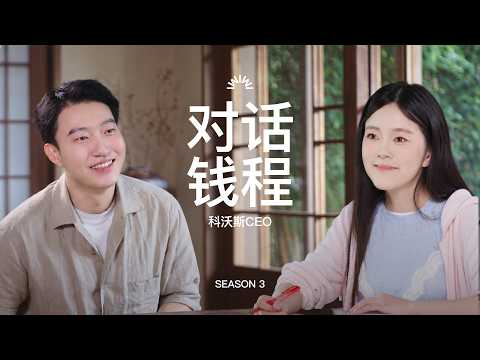
 Zhang Xiaojun Podcast· 2026년 10월 21일팟캐스트 · 2명David Qian on Succession, Robotics, and Finding His Own Ambition게스트 David Qian (Qian Cheng) · 진행자 张小珺Ecovacs CEO David Qian reflects on inheriting a founder-built company, learning to lead through mistakes, and choosing a patient path in robotics. His account treats succession as an ongoing effort to build the company for a new era, not a finish line.
 2:51:18ENZhang Xiaojun Podcast· 2026년 10월 15일팟캐스트 · 2명Lindon Gao on Building Dyna Robotics and Finding a Path Through the Fog게스트 Lindon Gao · 진행자 张小珺Dyna Robotics CEO Lindon Gao explains why his company builds intelligence through real workflows, how hardware and research must evolve together, and how a founder can find clarity by letting go of the need to be right.
 2:51:18ZHZhang Xiaojun Podcast· 2026년 10월 15일팟캐스트 · 2명Dyna Robotics 创始人 Lindon Gao:从折叠任务到完整工作流게스트 Lindon Gao · 진행자 张小珺从无人零售到机器人创业,Gao 讲述产品研究、真实部署的难题和在不确定性中寻找方向。
 3:36:13ENZhang Xiaojun Podcast· 2026년 8월 13일팟캐스트 · 2명NVIDIA’s Ming-Yu Liu on Cosmos, Physical AI, and Creating New Markets게스트 Ming-Yu Liu · 진행자 张小珺NVIDIA research VP Ming-Yu Liu explains how a decade of generative-model research led to Cosmos 3, a world foundation model for Physical AI. He also shares what he learned from Jensen Huang about long-term bets, teamwork, and building markets instead of fighting over existing ones.
 3:36:13ZHZhang Xiaojun Podcast· 2026년 8월 12일팟캐스트 · 2명刘洺堉:Cosmos 世界模型与物理 AI 的长期路线게스트 刘洺堉 · 진행자 张小珺从图像生成、研究管理到 Cosmos 3,英伟达研究负责人讨论如何为物理 AI 构建基础。
 3:46:12ENZhang Xiaojun Podcast· 2026년 7월 16일팟캐스트 · 2명Kay Ke on Physical Intelligence, Robot Learning, and the Future of Robotics게스트 Kay Ke · 진행자 张小珺Physical Intelligence researcher Kay Ke traces the field's research lineages and explains Pi's progression from π₀ to π*₀.₆. She also reflects on education, fiction, ambition, and what it means to build robots that work beyond a demo.
 2:36:50ENZhang Xiaojun Podcast· 2026년 3월 31일팟캐스트 · 2명Xie Chen on the Data Pyramid Behind Robotics and AI게스트 Xie Chen · 진행자 张小珺The Guanglun Intelligence founder explains how real-robot experience, simulation and human demonstrations could work together, and why evaluation matters as much as data volume.
 2:06:16ZHZhang Xiaojun Podcast· 2025년 11월 28일팟캐스트 · 2명谭捷:机器人通用智能的瓶颈在数据,通用形态仍需时间게스트 谭捷 · 진행자 张小珺Google DeepMind 机器人研究科学家谭捷回顾了从计算机图形学到机器人、从强化学习到 Gemini Robotics 的研究路径。他认为机器人基础模型尚未成为独立学科,数据规模与覆盖度、跨本体迁移、实时推理和安全仍是走向真实应用的关键。
 1:48:46ZHZhang Xiaojun Podcast· 2025년 11월 18일팟캐스트 · 2명刘先明:拆掉语言,让物理 AI 回到数据与动作게스트 刘先明 · 진행자 张小珺小鹏自动驾驶中心负责人刘先明解释,为什么 VLA 训练中间的语言监督会成为效率瓶颈,以及他如何推动小鹏从自动驾驶团队转向物理 AI。访谈也谈到规模化数据、组织变革、量产安全与自动驾驶的下一阶段。
 2:57:07ZHZhang Xiaojun Podcast· 2025년 7월 7일팟캐스트 · 2명余凯:从人工智能研究到地平线的创业十年게스트 余凯 · 진행자 张小珺地平线创始人余凯回顾三十年的研究与创业经历,讲述如何选择技术方向、聚焦汽车市场,以及他对人工智能未来的判断。
 2:29:41ZHZhang Xiaojun Podcast· 2025년 4월 7일팟캐스트 · 4명陈建宇:机器人基座模型如何走向通用 VLA게스트 陈建宇 · 진행자 张小珺从 SayCan、RT-2 到 Diffusion Policy,清华助理教授、星动纪元创始人陈建宇梳理机器人模型从借用语言模型到端到端 VLA 的路线。关键难题仍是多样化数据、跨本体泛化和高频动作控制。
 53:07ZHZhang Xiaojun Podcast· 2025년 2월 17일팟캐스트 · 2명张亚勤:信息智能、物理智能与生物智能的 AGI 路线图게스트 张亚勤 · 진행자 张小珺张亚勤把 AGI 的发展分为信息、物理和生物三类智能:信息智能可能在五年内接近人类,通用机器人约需十年,生物智能则可能在二十年后扩展人的记忆与健康。他也讨论大模型如何为自动驾驶和机器人补上数据、常识与行动能力。
 49:41ZHZhang Xiaojun Podcast· 2024년 8월 17일팟캐스트 · 3명傅盛:大模型是生产力革命,机器人迎来新的窗口게스트 傅盛 · 진행자 张小珺傅盛认为,大模型的核心是逻辑与推理能力,它带来的变化更像蒸汽机,而不是一次普通的互联网迭代。从平民化模型、服务机器人到创业者如何面对低谷,他也回看了自己的判断与心境。