









필터 결과
43개정렬
 17:19EN
 Lex Fridman· 2020년 3월 17일팟캐스트Money Is a Game of Points: Vitalik Buterin on Coordination, Public Goods, and Quadratic Funding진행자 Lex FridmanVitalik Buterin explains money as a social point system, why value can survive without physical backing, and how quadratic funding tries to fix public-good underfunding.
 16:03ENLex Fridman· 2020년 2월 22일팟캐스트 · 2명Quantum Supremacy Is a Well-Defined Speedup, Not a Useful Task게스트 Scott Aaronson · 진행자 Lex FridmanScott Aaronson explains what Google's 53-qubit experiment actually demonstrated, how it was verified, and why complexity theory can offer evidence but not proof against classical spoofing.
 26:02ENLex Fridman· 2020년 2월 9일팟캐스트Moore’s Law Is Not Dead—It Is a Cascade of S-Curves진행자 Lex FridmanJim Keller explains why transistor scaling keeps outrunning its obituary, and how exponential hardware changes the mathematics AI can attempt.
 20:44ENLex Fridman· 2020년 1월 5일팟캐스트 · 2명The Staff Job That Became a Dictatorship: Stalin's Improbable Road to Power게스트 Stephen Kotkin · 진행자 Lex FridmanStephen Kotkin traces how war, revolution, contingency, and a new administrative post let Stalin build a personal dictatorship inside the Bolshevik regime.
 20:34ENLex Fridman· 2019년 10월 26일팟캐스트 · 2명Teaching Machines the Frameworks Humans Take for Granted게스트 David Ferrucci · 진행자 Lex FridmanDavid Ferrucci explains why AI needs shared interpretive frameworks, not just data and pattern matching, to reason and communicate like humans.
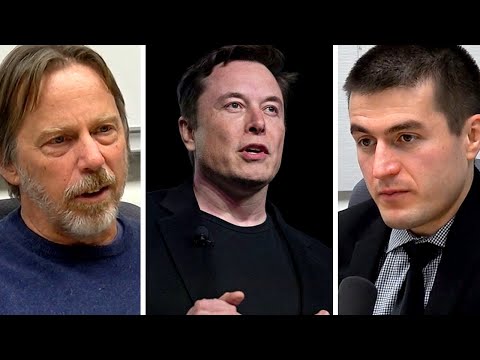 24:22ENLex Fridman팟캐스트 · 2명Craftsmanship, First Principles and the Road to Self-Driving: Jim Keller on Working with Elon Musk게스트 Jim Keller · 진행자 Lex FridmanThe veteran chip architect explains why he thinks autonomous driving is a tractable engineering problem, how Tesla's cost constraints shaped its hardware, and what he took from Musk's way of thinking.
 19:24ENLex Fridman팟캐스트Lex Fridman's 30-Day Challenge: 20,000 Push-ups and Pull-ups, With Advice From David Goggins진행자 Lex FridmanLex Fridman explains how a tweet became a month-long physical and mental test, and what David Goggins told him about suffering, injuries and habit.
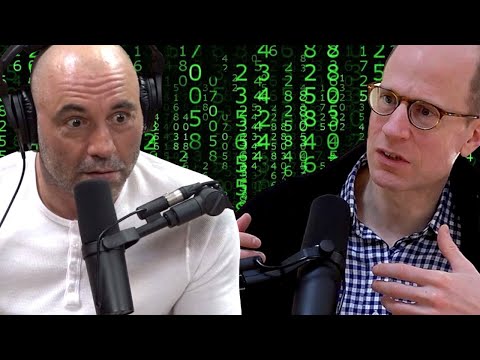 21:41ENLex Fridman팟캐스트From Simulated Majorities to "You Are Probably Simulated": Bostrom on the Missing Step in the Simulation Argument진행자 Lex FridmanNick Bostrom explains to Lex Fridman why the simulation argument rests on a much weaker assumption than the Doomsday argument, and where its physical limits might lie.
 21:43ENLex Fridman팟캐스트 · 2명Rented Cars, 27 Rejections and the Love Quotient: Arianna Huffington on Obsession and Recharging게스트 Arianna Huffington · 진행자 Lex FridmanThe Thrive Global and Huffington Post founder talks to Lex Fridman about mortality, failure, work obsession, polarized media and balancing ambition with love.
 15:01ENLex Fridman팟캐스트 · 2명Deep Learning Is a System 1 Machine: Daniel Kahneman on What AI Still Lacks게스트 Daniel Kahneman · 진행자 Lex FridmanThe Nobel-winning psychologist tells Lex Fridman how his fast-and-slow thinking framework maps onto deep learning, and why driving among pedestrians may require understanding people.
 20:07ENLex Fridman팟캐스트 · 2명The Hard Problem and the Case for a Conscious Universe: David Chalmers on Consciousness게스트 David Chalmers · 진행자 Lex FridmanDavid Chalmers explains what consciousness is, why the hard problem resists physical explanation, and why he takes panpsychism seriously.
 25:06ENLex Fridman팟캐스트Living Inside the Brain's Story: Joscha Bach on Simulation, Self and Consciousness진행자 Lex FridmanIn a clip from his conversation with Lex Fridman, Joscha Bach argues that consciousness, identity and even God are software-like patterns, and that we exist inside a narrative our brain generates.
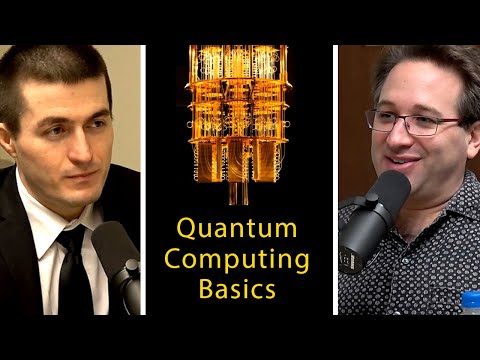 21:55ENLex Fridman팟캐스트 · 2명Quantum Computing Without the Hype: Amplitudes, Interference and the Long Road to Error Correction게스트 Scott Aaronson · 진행자 Lex FridmanScott Aaronson explains what a quantum computer really is, why it is not just trying every answer at once, and why noise is the field's central obstacle.
 23:37ENLex Fridman팟캐스트Pave Your Own Path: Lex Fridman on Impostor Syndrome, Envy and Gratitude진행자 Lex FridmanIn an Ask Me Anything episode, Lex Fridman answers listeners' questions about self-doubt by arguing against comparison, for finding your own passion, and for pairing self-criticism with gratitude.
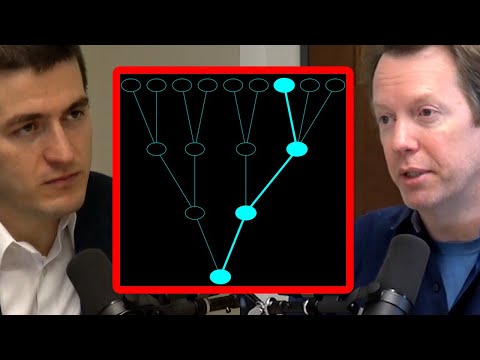 18:45ENLex Fridman팟캐스트 · 2명Why Sean Carroll Thinks Many-Worlds Is the Cleanest Version of Quantum Mechanics게스트 Sean Carroll · 진행자 Lex FridmanThe Caltech physicist explains how Everett's idea works, answers the energy-conservation objection, and compares it with its rivals.
 29:54ENLex Fridman팟캐스트Seven Levels of a Pandemic: Pain, Challenge and Hope From Biology to Philosophy진행자 Lex FridmanLex Fridman maps the coronavirus onto seven levels of attack on society and proposes a response and a reason for hope at each one.
 18:46ENLex Fridman팟캐스트Deep Learning Plus One Idea: Ilya Sutskever on Building AGI진행자 Lex FridmanIn a May 2020 conversation, Sutskever discusses self-play, simulation, bodies and consciousness, tests of intelligence, and how an AGI might be governed and aligned.
 22:59ENLex Fridman팟캐스트Penrose on Why Consciousness Can't Be a Computation진행자 Lex FridmanRoger Penrose explains how a dissatisfaction with AI optimism, a tip about microtubules and a rethink of quantum mechanics led him to Orch OR.
 15:41ENLex Fridman팟캐스트Abolishing Involuntary Death: Ben Goertzel on Immortality, Pain and the Meaning of Life진행자 Lex FridmanIn a clip from Lex Fridman's podcast, AI researcher Ben Goertzel argues that death and pain should be optional, and sketches what it would take to fund a serious attack on aging.
 21:52ENLex Fridman팟캐스트The Secret Seminar: Eric Weinstein on What Happens When Academia Meets Someone It Can't Categorize진행자 Lex FridmanIn a clip from the Lex Fridman Podcast, mathematician Eric Weinstein recounts discovering a hidden seminar at Harvard and explains why he thinks institutions fail on novel cases.
 17:40ENLex Fridman팟캐스트From AlphaGo Zero to MuZero: How Self-Play Strips Knowledge Out of AI진행자 Lex FridmanDeepMind's David Silver explains why removing human knowledge made AlphaZero stronger and more general, and how MuZero extended the idea to worlds with unknown rules.
 28:53ENLex Fridman팟캐스트Take Back MIT: Eric Weinstein on Broken Institutions and the Scientists Who Should Reclaim Them진행자 Lex FridmanIn a clip from their longer conversation, Eric Weinstein and Lex Fridman argue over whether MIT can be won back from its administrators, and what it means to be betrayed by the institutions we trust.
 17:10ENLex Fridman팟캐스트Bitcoin’s puzzle is a Byzantine agreement machine진행자 Lex FridmanVitalik Buterin explains how proof of work turns a fault-tolerance thought experiment into a shared ledger, and why a 50 percent attack and quantum mining are less simple than they sound.
 16:41ENLex Fridman팟캐스트AlphaFold 2 and the Protein-Folding Breakthrough: Why Lex Fridman Calls It a Landmark for AI and Biology진행자 Lex FridmanA quick explainer on DeepMind's CASP14 result, how protein folding works, how AlphaFold 1 and 2 likely differ, and what the advance could unlock.
더 보기43개 중 24개 표시