









絞り込み結果
88 件並び順
 1:47:38EN
 Cognitive Revolution "How AI Changes Everything"· 2026年7月4日ポッドキャスト19 Neurons Can Drive a Car. Liquid AI Wants Foundation Models on Every Chipホスト Nathan LabenzRamin Hasani traces liquid neural networks from a worm's 300-cell brain to a 600-megabyte model that will talk from inside a Mercedes, and explains why architecture search now beats architecture avengers.
 2:59:44ENCognitive Revolution "How AI Changes Everything"· 2026年6月3日ポッドキャストTwo Endangered Languages Broke Transformers. Nested Learning Gave Models a Sleep Button.ホスト Nathan LabenzGoogle researcher Ali Behrouz tells Nathan Labenz how stacking update frequencies — not just layers — and an offline sleep phase could give language models genuine continual learning.
 1:21:56EN
 Unsupervised Learning: With Jacob Effron· 2026年5月15日ポッドキャストYann LeCun Left Meta Because LLMs Will Not Get You to Intelligenceホスト Jacob EffronThe Turing Award winner tells Jacob Effron why he spun AMI Labs out of Meta, why JEPA-style world models beat pixel generators, and why he thinks Hinton changed his mind in 2023.
 41:36EN
 Sequoia Capital· 2025年11月18日ポッドキャストFour Months to Drive Tokyo: How Wayve Bet the Company on One End-to-End NetworkWayve CEO Alex Kendall tells Sequoia’s Training Data why AV 2.0 ditches HD maps and hand-written stacks for a foundation model that can adapt to a new car and a new country in weeks.
 2:02:17ENCognitive Revolution "How AI Changes Everything"· 2025年8月27日ポッドキャストSAEs Find the Nouns. Parameter Decomposition Looks for the Verbsホスト Nathan LabenzGoodfire's Lee Sharkey argues that sparse autoencoders recover a network's variables, not the algorithms those variables run, and shows how stochastic parameter decomposition tries to recover the computations themselves.
 1:54:08ENCognitive Revolution "How AI Changes Everything"· 2025年5月29日ポッドキャストWhy Anthropic's first check went to a company building microscopes for neural netsホスト Nathan LabenzGoodfire's Dan Balsam and Tom McGrath argue that mechanistic interpretability now has a proto-paradigm, two stubborn gaps, and three products worth shipping today.
 1:43:54ENCognitive Revolution "How AI Changes Everything"· 2025年3月23日ポッドキャストA Year to Grow a Brain Organoid, an Hour to Simulate Itホスト Nathan LabenzStanford postdoc Siyu He tells Nathan Labenz how Squidiff and CORAL move single-cell and spatial experiments into the computer — and where the models still cannot go.
 1:40:22ENCognitive Revolution "How AI Changes Everything"· 2025年1月22日ポッドキャストTwenty-atom crystals taught an AI the physics of a heartbeatホスト Nathan LabenzOrbital Materials' Jonathan Godwin and Tim Duignan tell Nathan Labenz how a neural network trained on tiny crystals simulated a potassium ion channel on a single 2017 GPU.
 41:42ENSequoia Capital· 2024年10月22日ポッドキャストNeural Networks Are Still Waiting for Their ThermodynamicsOpenAI researcher Dan Roberts on why physicists keep migrating into AI, and why the field still lacks the equivalent of the ideal gas law.
 1:42:16ENCognitive Revolution "How AI Changes Everything"· 2024年7月4日ポッドキャスト267 Papers in Seven Months: Albert Gu Explains the State Space Model Revolutionホスト Nathan LabenzThe Mamba co-author walks through five years of recurrent-model work, why selective compression beats a growing KV cache, and what Mamba 2 trades away to train faster.
 1:54:01ENCognitive Revolution "How AI Changes Everything"· 2024年6月26日ポッドキャストA Tiny Network Grew a Salt Crystal the Training Data Never Showedホスト Nathan LabenzTim Duignan trained tens of thousands of parameters on salt water. The model invented a crystal — and a continuum solvent theory he had spent a PhD failing to write by hand.
 1:52:18ENCognitive Revolution "How AI Changes Everything"· 2024年5月6日ポッドキャストTwo Weeks, Thirty Compiles: How Adam Majmudar Wrote a GPU From Scratchホスト Nathan LabenzA Cognitive Revolution walkthrough of TinyGPU, from SIMD kernels and memory latency to an open-source chip flow that runs on a laptop.
 1:19:24ENCognitive Revolution "How AI Changes Everything"· 2024年4月5日ポッドキャストA Gibberish Prompt Unlocks What GPT-J Plans Three Tokens Aheadホスト Nathan LabenzNortheastern’s Bau Lab shows that a 40,000-parameter soft prompt can read a model’s future words, and that about ten attention heads carry the task itself.
 2:30:06ENCognitive Revolution "How AI Changes Everything"· 2023年12月22日ポッドキャストTrained on a Thirtieth of GPT-4's Tokens, Mamba Beat Transformers on Home Turfホスト Nathan LabenzIn a solo emergency episode, Nathan Labenz argues that Albert Gu and Tri Dao's selective state space model is the first architecture since 2017 that deserves to share the Transformer’s throne.
 35:24EN
 No Priors: AI, Machine Learning, Tech, & Startups· 2023年8月24日ポッドキャスト · 2 人The Author of Attention Is All You Need Now Compiles mRNA Like Bytecodeホスト Sarah Guo, Elad GilJakob Uszkoreit on why Transformers won, why models spend compute on the wrong things, and why drug discovery has to become generation rather than screening.
 1:40:07ENCognitive Revolution "How AI Changes Everything"· 2023年7月4日ポッドキャストThirty thousand voltage updates a second: inside Skydio’s autonomy stackホスト Nathan LabenzHayk Martiros walks Nathan Labenz through a two-pound drone that sees in every direction, runs more than ten neural nets on board, and will not be weaponized.
 1:52:46ENCognitive Revolution "How AI Changes Everything"· 2023年6月27日ポッドキャストCharge Neural Nets by Connection Length, and the Black Box Splits Into Modules You Can Seeホスト Nathan LabenzMIT physicist Ziming Liu walks Nathan Labenz through BIMT, a brain-inspired training trick that sparsifies networks until you can read them by looking.
 1:21:20ENCognitive Revolution "How AI Changes Everything"· 2023年3月9日ポッドキャストFreeze the eyes and the brain. Train only the optic nerve.ホスト Nathan LabenzJunnan Li and Dongxu Li tell Nathan Labenz how BLIP cleaned noisy web captions, and how BLIP-2 connected a frozen vision model to a frozen language model in under ten days on one A100.
 3:28:47EN
 Lex Fridman· 2022年10月29日ポッドキャスト · 2 人Karpathy Calls Trained Neural Nets Complicated Alien Artifactsゲスト Andrej Karpathy · ホスト Lex FridmanOn Lex Fridman's podcast, Andrej Karpathy refuses the brain analogy, walks the Fermi paradox through Nick Lane's chemistry, and treats the Transformer as a general-purpose differentiable computer.
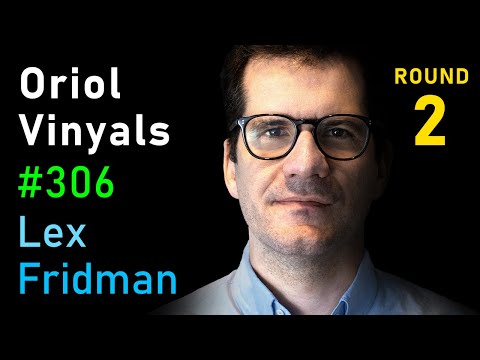 2:10:08ENLex Fridman· 2022年7月26日ポッドキャスト · 2 人Gato Is Only the Beginningゲスト Oriol Vinyals · ホスト Lex FridmanDeepMind's Oriol Vinyals talks with Lex Fridman about generalist agents, thrown-away weights, and whether human-level AGI arrives in his lifetime.
 2:45:10ENLex Fridman· 2022年1月22日ポッドキャスト · 2 人A Teenager Learns to Drive in Twenty Hours. A Car Still Cannot.ゲスト Yann Lecun · ホスト Lex FridmanYann LeCun tells Lex Fridman why self-supervised world models are the missing dark matter of intelligence, and why machines are not even at the level of a house cat.
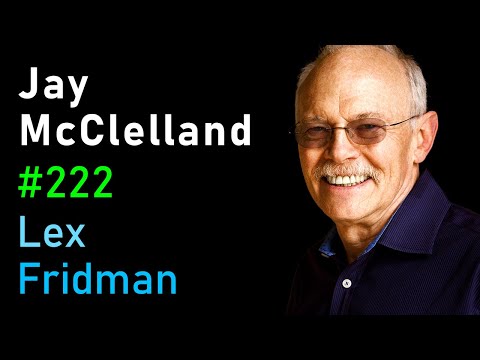 2:31:57ENLex Fridman· 2021年9月20日ポッドキャスト · 2 人Jay McClelland on How Thought Emerges From Neural Networksゲスト Jay McClelland · ホスト Lex FridmanThe Stanford cognitive scientist talks with Lex Fridman about connectionism, backpropagation, David Rumelhart, and why intuition discovers what logic later proves.
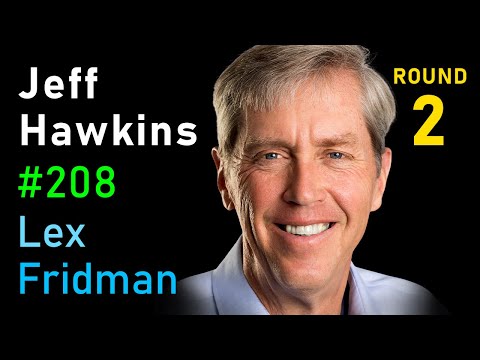 2:18:29ENLex Fridman· 2021年8月8日ポッドキャスト · 2 人Your Cortex Is 150,000 Brains Voting on a Coffee Cupゲスト Jeff Hawkins · ホスト Lex FridmanJeff Hawkins tells Lex Fridman that intelligence is learning a model of the world, the neocortex is tens of thousands of independent maps that vote, and the fastest path to machine intelligence is reverse-engineering that sheet.
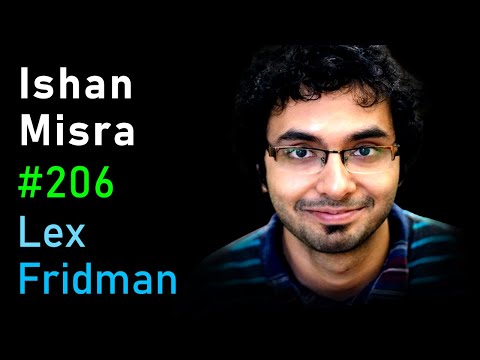 2:30:30ENLex Fridman· 2021年7月31日ポッドキャスト · 2 人The Fallacy of the Successful First Stepゲスト Ishan Misra · ホスト Lex FridmanBerkeley's Jitendra Malik explains why computer vision still looks easy, why fully autonomous driving is not near, and what children know that today's networks do not.
もっと見る88 件中 24 件を表示