







絞り込み結果
57 件並び順
 55:13EN
 Sequoia Capital· 2024年7月2日ポッドキャストThe Best AI Scores 39% on This Test. Zapier’s Co-Founder Put $1 Million on Beating ItFrançois Chollet designed ARC to measure skill-acquisition efficiency; five years later humans still crush it and frontier models do not.
 17:03EN
 Matthew Berman· 2024年6月8日Qwen2 0.5B and 72B: A Hands-On ComparisonMatthew Berman · Forward FutureMatthew Berman tests coding, arithmetic and reasoning prompts on the smallest and largest Qwen2 models in a 2024 demonstration.
 1:03:12EN
 20VC with Harry Stebbings· 2024年6月5日ポッドキャスト · 2 人Aravind Srinivas on Reasoning, Model Economics and Building Perplexityゲスト Aravind Srinivas · ホスト Harry StebbingsThe Perplexity co-founder discusses AI scaling, foundation-model competition, advertising and the challenges of building a search product.
 17:12ENMatthew Berman· 2024年4月30日Testing the Mystery 'gpt2-chatbot' Model in April 2024Matthew Berman · Forward FutureMatthew Berman tries an anonymous model on coding, arithmetic and reasoning tasks while its identity remains uncertain.
 22:17ENMatthew Berman· 2024年3月21日Q* Rumors, Energy-Based Models, and Research on ReasoningMatthew Berman, Yann Lecun · Forward FutureMatthew Berman examines an anonymous, unverified account of Q* and compares its ideas with published research on teaching language models to reason.
 1:22:59EN
 Cognitive Revolution "How AI Changes Everything"· 2023年12月2日ポッドキャストIf Your Agent Is Right 80% of the Time, Ten Steps Leave You With 10%ホスト Nathan LabenzImbue CTO Josh Albrecht tells Nathan Labenz how a 27-person, pre-product research company is putting $200 million and 10,000 H100s toward agents that can actually finish a long job.
 2:00:19ENCognitive Revolution "How AI Changes Everything"· 2023年6月6日ポッドキャスト1.5 Million GPT-4 Fairy Tales Let a 33-Million-Parameter Model Out-Reason GPT-2ホスト Nathan LabenzTry this fill-in: Lily likes cats and dogs. She asked her mom for a dog. Mom said no, so she asked for a…
 1:00:36EN
 No Priors: AI, Machine Learning, Tech, & Startups· 2023年2月2日ポッドキャスト · 2 人Forty games of Diplomacy, and nobody spotted the bot: Noam Brown’s 100,000x lessonホスト Sarah Guo, Elad GilMeta’s Noam Brown tells Sarah Guo and Elad Gil how Cicero negotiated in English for 40 games on a tiny web community — and why thinking at decision time beat three years of scaling.
 1:26:21EN
 Lex Fridman· 2018年12月9日ポッドキャスト · 2 人The Machine Should Never Treat Its Objective as Gospelゲスト Stuart Russell · ホスト Lex FridmanStuart Russell talks with Lex Fridman about metareasoning, self-driving reliability, and why uncertainty about human goals is the core of the control problem.
 1:45:49ENCognitive Revolution "How AI Changes Everything"ポッドキャストTrust at Scale: Elicit's Founders on Reasoning Languages, World Models and Automating the Companyホスト Nathan LabenzAndreas Stuhlmüller and Jungwon Byun explain how Elicit keeps frontier models checkable for high-stakes science, and where they think AI reasoning is heading.
 15:01ENLex Fridmanポッドキャスト · 2 人Deep Learning Is a System 1 Machine: Daniel Kahneman on What AI Still Lacksゲスト Daniel Kahneman · ホスト Lex FridmanThe Nobel-winning psychologist tells Lex Fridman how his fast-and-slow thinking framework maps onto deep learning, and why driving among pedestrians may require understanding people.
 10:16ENLex Fridmanポッドキャスト · 2 人Reasoning Without Logic: Yann LeCun on Teaching Neural Networks to Thinkゲスト Yann Lecun · ホスト Lex FridmanYann LeCun explains why he believes neural networks can reason, and what memory, recurrence and continuous representations would need to look like.
 58:57ENCognitive Revolution "How AI Changes Everything"ポッドキャストWhen the Model Learns to Look Around: Apollo Research on Testing o1 for Schemingホスト Nathan LabenzApollo Research founder Marius Hobbhahn explains how his team probed OpenAI's o1 for deception, what it found, and why the trajectory worries him more than the model itself.
 57:25EN
 Unsupervised Learning: With Jacob EffronポッドキャストFrom RAG to Reasoning: Why the Future of AI Is a System, Not a Modelホスト Jacob EffronDouwe Kiela explains what OpenAI's o1 reveals about test-time compute, why enterprise AI must be specialized, and where post-training and evaluations are heading.
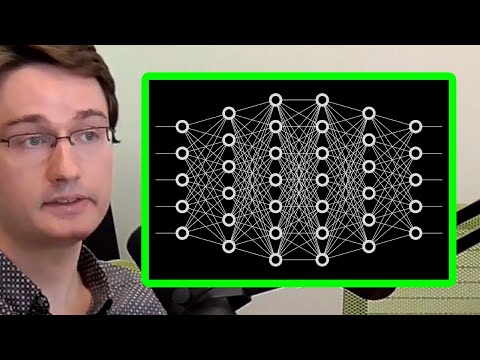 10:34ENLex Fridmanポッドキャスト · 2 人Why Deep Learning Needs Rules: Chollet on Interpolation, Abstraction and Hybrid AIゲスト François Chollet · ホスト Lex FridmanFrançois Chollet explains why neural networks only interpolate between points they have seen, and why the best AI systems pair them with symbolic rules.
 1:03:10ENCognitive Revolution "How AI Changes Everything"ポッドキャストPause Tokens, Analogical Prompts and Ring Attention: A Tour of the Transformer's Next Upgradesホスト Nathan LabenzNathan Labenz and Trey Kollmer walk through five recent papers on pausing, backspacing, prompting, streaming and long-context training, and sketch how they might combine into a more capable model.