








絞り込み結果
46 件並び順
 1:18:18EN
 Cognitive Revolution "How AI Changes Everything"· 2023年6月20日ポッドキャストFifteen Thousand Brain Numbers Were Enough to Reconstruct What Someone Sawホスト Nathan LabenzTanishq Mathew Abraham walks through MindEye, the fMRI-to-image system that maps a handful of voxel values onto CLIP and diffusion models.
 1:25:35ENCognitive Revolution "How AI Changes Everything"· 2023年5月21日ポッドキャストTwo and a Half Years From 33.3% to 86.5%: Google Sent Foundation Models to Medical Schoolホスト Nathan LabenzVivek Natarajan walks Nathan Labenz through Med-PaLM and Med-PaLM 2: the data-light techniques, the nine-axis clinician evals, and why a high USMLE-style score is the wrong trophy.
 42:18EN
 No Priors: AI, Machine Learning, Tech, & Startups· 2023年5月18日ポッドキャスト · 2 人Ten Percent of Search Is Health — and the Doctor Is Googling Tooホスト Sarah Guo, Elad GilGoogle researcher Karan Singhal on Med-PaLM 2, the real bar for medical language models, and why medicine is a harder alignment lab than chatbots.
 1:28:43ENCognitive Revolution "How AI Changes Everything"· 2023年5月16日ポッドキャストClinical Guidelines Are 11% Evidence. Curai’s Founder Still Wants GPT-4 in the Exam Roomホスト Nathan LabenzNeal Khosla of Curai Health argues that large language models already match median U.S. physicians on today’s tests — and that the real work is scaffolding, supervision, and a doctor’s signature.
 58:24ENCognitive Revolution "How AI Changes Everything"· 2023年5月11日ポッドキャストAmong 100 Random Doctors, Zak Kohane Would Be Surprised If One Beat GPT-4ホスト Nathan LabenzHarvard's biomedical informatics chair on a rare newborn case, why drug-style trials will not certify a general medical model, and why the AI should still work for the patient.
 46:57ENNo Priors: AI, Machine Learning, Tech, & Startups· 2023年3月2日ポッドキャスト · 2 人95% of Drug Programs Fail. Daphne Koller Is Betting Machine Learning on the First Decisionホスト Sarah Guo, Elad GilA new medicine still takes more than a decade and well over a billion dollars — and Insitro's founder argues the expensive failures start with the wrong target, indication, or patient.
 50:12ENNo Priors: AI, Machine Learning, Tech, & Startups· 2023年2月20日ポッドキャスト · 2 人The Drone Is Only 15 Percent of the Problemホスト Sarah Guo, Elad GilZipline CEO Keller Rinaudo Cliffton on why blood delivery in Rwanda, not a cooler airplane, built the world's largest commercial autonomous system.
 2:43:51EN
 Lex Fridman· 2022年6月25日ポッドキャスト · 2 人Two Tubes, Millimeters Apart: Jonathan Reisman on the Honest Design of the Human Bodyゲスト Jonathan Reisman · ホスト Lex FridmanThe emergency physician and author of The Unseen Body walks Lex Fridman from the throat to the Arctic, arguing that anatomy is mostly brilliant, sometimes a near-miss, and always a story written in scars.
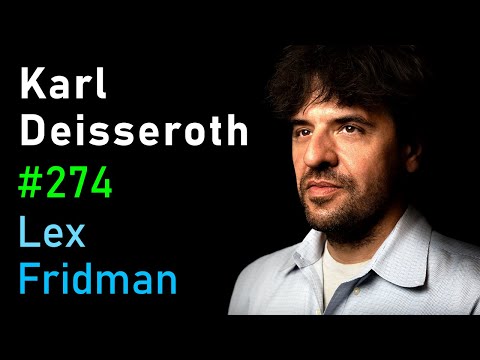 3:21:29ENLex Fridman· 2022年4月7日ポッドキャスト · 2 人When something in the mind breaks, you see what it was forゲスト Karl Deisseroth · ホスト Lex FridmanStanford psychiatrist Karl Deisseroth talks with Lex Fridman about depression, schizophrenia, optogenetics, and why you can treat one symptom without a theory of everything.
 1:41:34ENLex Fridman· 2021年6月6日ポッドキャスト · 2 人Aging Is a Scratched Disc. David Sinclair Thinks the Body Kept a Backupゲスト David Sinclair · ホスト Lex FridmanThe Harvard geneticist tells Lex Fridman why aging is information loss, how three genes gave a blind mouse its sight back, and why skipping meals may beat the perfect diet.
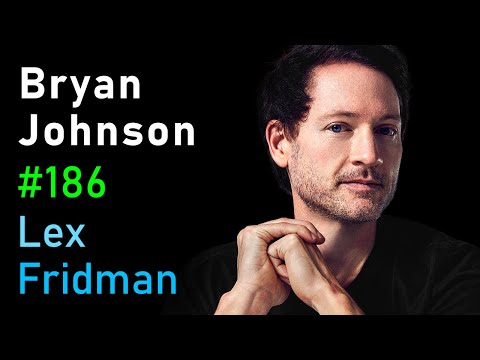 2:31:30ENLex Fridman· 2021年5月24日ポッドキャスト · 2 人The Brain Is the Last Unengineered System in Societyゲスト Bryan Johnson · ホスト Lex FridmanBryan Johnson demos Kernel Flow on Lex Fridman, then argues that cognition is society's largest unmeasured input and that numbers, not vibes, should run mental health, diet, and the next wave of brain interfaces.
 2:39:45ENLex Fridman· 2020年10月25日ポッドキャスト · 2 人The obesity gene was never the obesity geneゲスト Manolis Kellis · ホスト Lex FridmanManolis Kellis tells Lex Fridman how one nucleotide a million bases from FTO rewrote obesity biology, and why human genetics is now driving the study of disease.
 1:02:14ENLex Fridman· 2020年6月30日ポッドキャスト · 2 人The 28-year wait: Robert Langer on rejection, polymers, and a thousand studentsゲスト Robert Langer · ホスト Lex FridmanThe MIT bioengineer talks with Lex Fridman about drug delivery, tissue engineering, patents, and the long path from a Folkman hypothesis to Avastin.
 1:12:03ENLex Fridman· 2020年5月5日ポッドキャスト · 2 人Mice Don't Get Alzheimer's: Daphne Koller on Disease in a Dishゲスト Daphne Koller · ホスト Lex FridmanThe Coursera co-founder and insitro CEO on why most diseases are not one disease, how to turn cells into data, and why overconfident neural nets can kill.
 36:10ENLex Fridman· 2019年11月12日ポッドキャスト · 2 人So You're Saying There's a Chance: Musk on Neuralink, AI, and a Pale Blue Dotゲスト Elon Musk · ホスト Lex FridmanLex Fridman and Elon Musk move from consciousness and an AI referee to the engineering of a brain implant, Tesla Autopilot, and Carl Sagan's lonely speck.
 1:17:29ENLex Fridman· 2019年9月23日ポッドキャスト · 2 人The Algorithm Is Already Better. The Clinic Still Uses 1967.ゲスト Regina Barzilay · ホスト Lex FridmanMIT's Regina Barzilay on why deep learning already beats the breast-cancer 'density' score — and why data, liability, and incentives still will not move.
 1:00:11ENLex Fridman· 2019年6月17日ポッドキャスト · 2 人Rosalind Picard: Clippy Never Saw You Frown, and That's the Whole Problemゲスト Rosalind Picard · ホスト Lex FridmanThe MIT professor who named affective computing on emotion recognition, privacy, seizure-detecting wearables, and why a device you can take off is safer than a camera you cannot see.
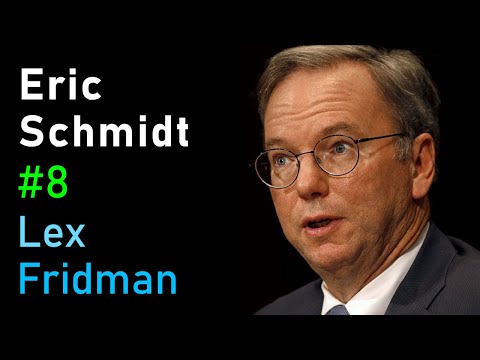 33:07ENLex Fridman· 2018年12月4日ポッドキャスト · 2 人They Ran an Extension Cord Next Door and Invented Googleゲスト Eric Schmidt · ホスト Lex FridmanEric Schmidt tells Lex Fridman that Larry and Sergey never held the entrepreneurship meeting: they had a better algorithm, too little power in the dorm, and a $100,000 check.
 1:02:57ENCognitive Revolution "How AI Changes Everything"ポッドキャストVirtual Biopsies in One Second: How a Seven-Year-Old CycleGAN Is Beating Newer Models in the Clinicホスト Nathan LabenzTanishq Mathew Abraham explains how deep learning turns label-free 3D tissue images into virtual H&E stains fast enough to guide tumor surgery.
 1:04:35EN
 Unsupervised Learning: With Jacob EffronポッドキャストOscar Health's AI Playbook: Translate the Bureaucracy First, Then Reinvent Careホスト Jacob EffronMario, Oscar Health's CTO and co-founder, explains how a regulated insurer deploys LLMs today and what stands between healthcare and AI doctors.
 2:04:21ENCognitive Revolution "How AI Changes Everything"ポッドキャスト"AI Doctors Are Here": A Father's Account of Fighting His Son's Burkitt Leukemia With GPT-5 Pro and Gemini 3ホスト Nathan LabenzNathan Labenz recounts the first three weeks of his 6-year-old son's cancer diagnosis and how frontier models served as second opinions, bedside co-pilots and relapse planners.
 1:22:17ENCognitive Revolution "How AI Changes Everything"ポッドキャストOne Set of Weights, Fourteen Medical Tasks: Inside Google's Multimodal Med-PaLM Mホスト Nathan LabenzVivek Natarajan and Tao Tu explain how Google built a single generalist biomedical model that reads images, genomics and text, and what it will take to put it in front of patients.