









絞り込み結果
172 件並び順
 59:41EN
 Cognitive Revolution "How AI Changes Everything"· 2023年7月13日ポッドキャストHumans Are Single-Threaded. MULTI·ON Wants 100 Agents Running Anywayホスト Nathan LabenzStanford PhD dropout Div Garg put a personal agent in Chrome so it can reuse your logins, ask for help when it stalls, and stop before it hits Buy.
 58:26ENCognitive Revolution "How AI Changes Everything"· 2023年4月25日ポッドキャストSeventy Percent of the Inbox Is a Pitch: Matt Welsh on the First Wave of AI Agentsホスト Nathan LabenzThe Fixie.ai founder maps copilot versus delegation, the missing appendages into our systems, and why agents will need guardrails, memory hygiene, and probably an earpiece.
 1:56:16ENCognitive Revolution "How AI Changes Everything"· 2023年4月6日ポッドキャストThey Used Humans as Stand-In AIs. Now 250,000 People Run Elicit.ホスト Nathan LabenzOught's founders tell Nathan Labenz why open-ended reasoning has to be decomposed, supervised, and grounded—not scaled until it merely looks persuasive.
 1:25:46ENCognitive Revolution "How AI Changes Everything"· 2023年3月22日ポッドキャストDon't Make the Tools Agentic: Flo Crivello on What Production Agents Actually Needホスト Nathan LabenzThe Lindy CEO tells Nathan Labenz that most working agents are intelligent workflows with human-designed control flow — and that scaffolding may still matter even if AGI arrives.
 1:45:49ENCognitive Revolution "How AI Changes Everything"ポッドキャストTrust at Scale: Elicit's Founders on Reasoning Languages, World Models and Automating the Companyホスト Nathan LabenzAndreas Stuhlmüller and Jungwon Byun explain how Elicit keeps frontier models checkable for high-stakes science, and where they think AI reasoning is heading.
 1:05:22EN
 Unsupervised Learning: With Jacob EffronポッドキャストBuild First, Optimize Later: Harrison Chase on LangChain, Evals, and the State-Machine Future of Agentsホスト Jacob EffronHarrison Chase explains how LangChain grew from an orchestration layer into LangSmith and LangGraph, why evaluation datasets force product clarity, and why reliable agents look more like state machines than autonomous loops.
 1:39:51EN
 Lenny's PodcastポッドキャストAfter the Inflection Point: Simon Willison on Agentic Engineering, Dark Factories and the Coming AI Challenger Disasterホスト Lenny RachitskyDjango co-creator Simon Willison explains what changed in November 2025, how he works with coding agents, and why prompt injection remains the field's biggest unsolved risk.
 1:22:43ENLenny's PodcastポッドキャストA Colleague With Its Own Computer: How a Small Team Built Grok Bot in a Monthホスト Lenny RachitskyRoman Ugarte of SpaceXAI explains the decisions, hand-held onboarding and product philosophy behind Grok Bot, and what Cursor's culture taught him about staying ahead.
 1:30:52EN
 Lex Fridmanポッドキャスト · 2 人Building Minds from Unified Theories: Nate Derbinsky on Cognitive Architectures, Soar, and the Case for Forgettingゲスト MIT AGI · ホスト Lex FridmanA guest lecture in MIT's AGI course on how cognitive architectures try to assemble human-level intelligence, and how studying human memory made the Soar architecture faster and better.
 1:50:25ENCognitive Revolution "How AI Changes Everything"ポッドキャストFrom Email Client to AI Agent: How Shortwave Rebuilt Itself for the Tidal Waveホスト Nathan LabenzShortwave CEO Andrew Lee explains the agent architecture, caching economics and tiny-team culture behind the company's hockey-stick growth.
 1:38:45ENLenny's PodcastポッドキャストWhen Coding Stops Being the Bottleneck: Inside Anthropic's Claude Code and Cowork Teamsホスト Lenny RachitskyFiona Fung, who leads the teams behind Claude Code and Cowork, describes how an engineering org that ships roughly eight times more code manages quality, hiring, metrics and culture.
 1:27:45ENLenny's PodcastポッドキャストCoding Is Solved, Says the Creator of Claude Code: Boris Cherny on What Comes Nextホスト Lenny RachitskyBoris Cherny, head of Claude Code at Anthropic, on the tool's origin, the principle of latent demand, and how work changes when engineers stop writing code by hand.
 45:46ENUnsupervised Learning: With Jacob EffronポッドキャストGiving AI a Nervous System: Voice, Touch, and the Post-Keyboard Interfaceホスト Jacob EffronLiveKit's Russ explains how voice AI, multimodal chat, cloud browsers, and on-device models are reshaping how humans work with machines.
 13:58ENLex FridmanポッドキャストDeep Reinforcement Learning, Explained by the Researcher Behind AlphaGoホスト Lex FridmanDavid Silver of DeepMind walks through what reinforcement learning is, how its building blocks fit together, and why deep neural networks keep surprising even the experts.
 37:23ENLenny's PodcastポッドキャストFrom Chat to Always-On Agents: OpenAI's Tibo Sottiaux on Dots, Open Ecosystems and What Comes Nextホスト Lenny RachitskyThe head of ChatGPT and Codex, speaking hours after a DevDay launch of more than 20 products, explains the vision for a personal agent that works around the clock.
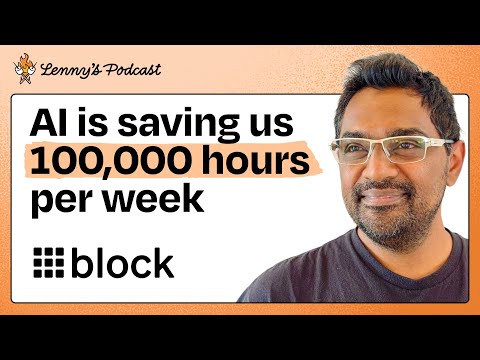 1:26:42ENLenny's Podcastポッドキャスト · 2 人Inside Block's AI-Native Bet: Goose, Functional Orgs and Throwing Code Awayゲスト Dhanji R. Prasanna · ホスト Lenny RachitskyBlock CTO Dhanji Prasanna explains how a reorg, an open-source agent and a learning-first culture made the company unusually AI-forward.
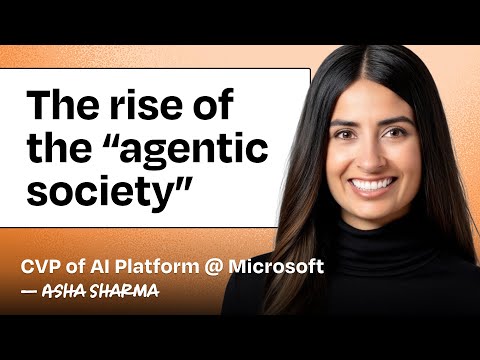 57:11ENLenny's Podcastポッドキャスト · 2 人From Artifact to Organism: Microsoft's Asha Sharma on Products That Learn and an Agentic Societyゲスト Asha Sharma · ホスト Lenny RachitskyMicrosoft's AI platform product chief explains why products are becoming living systems tuned by post-training, why interfaces are shifting toward code and composability, and how agents may reshape the org chart.
 44:53ENUnsupervised Learning: With Jacob EffronポッドキャストLegora's CEO on Building Legal AI That Survives the Next Model Releaseホスト Jacob EffronMax explains how Legora turns fast-moving model capabilities into end-to-end legal work, enterprise adoption, and a durable product strategy.
 33:31EN
 No Priors: AI, Machine Learning, Tech, & Startupsポッドキャスト · 2 人Open Source Catches Up, Regulation Can Wait: Sarah Guo and Elad Gil Answer Listener Questionsホスト Sarah Guo, Elad GilTwo AI investors cover open-source models, autonomous agents, whether to regulate AI, where startups can win, and why healthcare innovation is so hard.
 45:00ENUnsupervised Learning: With Jacob EffronポッドキャストAgents Everywhere: OpenAI's Blueprint for Tool Use, Evals, and Computer-Use Infrastructureホスト Jacob EffronOpenAI's API platform team explains how agents are moving from deterministic workflows to reasoning-driven tool use, and what developers still lack.
 54:52ENUnsupervised Learning: With Jacob EffronポッドキャストCoding Agents Are Breaking Containment: The 2026 AI Stack, the Coding Wars, and the Next Frontierホスト Jacob EffronJacob Effron and Swyx map the state of AI engineering, from agent harnesses and infrastructure churn to coding-market economics, open models, dark factories, and world models.
 29:09ENLenny's PodcastポッドキャストPlan in 90-Day Windows: How OpenAI's Product Leaders Ship Fast Without Losing the Plotホスト Lenny RachitskyOpenAI's Tara Seshan and Nan Yu tell Claire Vo how they ship imperfect features, design agents people can follow, work with research, and think about 2027.