







絞り込み結果
276 件並び順
 2:00:19EN
 Cognitive Revolution "How AI Changes Everything"· 2023年6月6日ポッドキャスト1.5 Million GPT-4 Fairy Tales Let a 33-Million-Parameter Model Out-Reason GPT-2ホスト Nathan LabenzTry this fill-in: Lily likes cats and dogs. She asked her mom for a dog. Mom said no, so she asked for a…
 11:49EN
 Matthew Berman· 2023年6月1日Testing Wizard-Vicuna 30B: Responses, Reasoning, and CodeMatthew Berman · Forward FutureMatthew Berman examines a model marketed as uncensored, demonstrates a 2023 cloud setup, and runs an informal collection of tests.
 1:25:35ENCognitive Revolution "How AI Changes Everything"· 2023年5月21日ポッドキャストTwo and a Half Years From 33.3% to 86.5%: Google Sent Foundation Models to Medical Schoolホスト Nathan LabenzVivek Natarajan walks Nathan Labenz through Med-PaLM and Med-PaLM 2: the data-light techniques, the nine-axis clinician evals, and why a high USMLE-style score is the wrong trophy.
 42:18EN
 No Priors: AI, Machine Learning, Tech, & Startups· 2023年5月18日ポッドキャスト · 2 人Ten Percent of Search Is Health — and the Doctor Is Googling Tooホスト Sarah Guo, Elad GilGoogle researcher Karan Singhal on Med-PaLM 2, the real bar for medical language models, and why medicine is a harder alignment lab than chatbots.
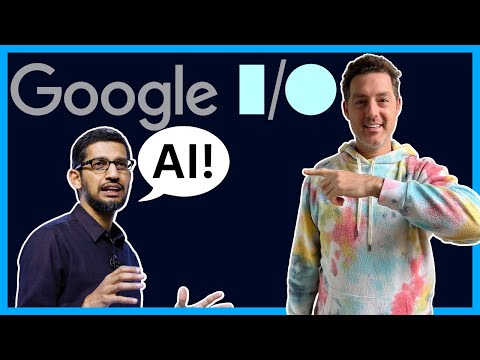 5:24ENMatthew Berman· 2023年5月12日Google I/O 2023: Bard, PaLM 2 and AI Across Google's ProductsMatthew Berman · Forward FutureMatthew Berman reviews Google's 2023 AI announcements and weighs its focus on improving established products.
 4:14:33EN
 Lex Fridman· 2023年5月9日ポッドキャスト · 2 人The Next Token Is Not a Proof: Stephen Wolfram on ChatGPT and Computational Truthゲスト Stephen Wolfram · ホスト Lex FridmanIn his fourth conversation with Lex Fridman, Stephen Wolfram contrasts large language models with Wolfram|Alpha, then follows computational irreducibility from ChatGPT through observers, thermodynamics, and the three great theories of twentieth-century physics.
 40:25ENNo Priors: AI, Machine Learning, Tech, & Startups· 2023年4月6日ポッドキャスト · 2 人A 6-Billion-Parameter Clone of ChatGPT’s Core Trickホスト Sarah Guo, Elad GilDatabricks CTO Matei Zaharia tells Sarah Guo and Elad Gil how Dolly learned instruction-following on fifty times less data than GPT-3 — and why he would rather look facts up than bake them into a trillion-parameter network.
 8:05ENMatthew Berman· 2023年3月29日A 2023 Guide to Running the Original GPT4All Model LocallyMatthew Berman · Forward FutureMatthew Berman demonstrates an early CPU-based GPT4All release, its terminal installation and the resources available for fine-tuning.
 1:03:29ZH
 跟李沐学AI· 2023年1月12日多模态论文串讲:BLIP、CoCa 与 BEiT-3从图文数据清理到统一预训练,梳理三种视觉语言模型的结构、目标函数与相互联系。
 1:07:10ZH跟李沐学AI· 2022年12月29日InstructGPT 论文精读:从人工反馈到语言模型对齐从监督微调、奖励模型到 PPO,梳理 InstructGPT 的训练流程、实验结果与局限。
 3:28:47ENLex Fridman· 2022年10月29日ポッドキャスト · 2 人Karpathy Calls Trained Neural Nets Complicated Alien Artifactsゲスト Andrej Karpathy · ホスト Lex FridmanOn Lex Fridman's podcast, Andrej Karpathy refuses the brain analogy, walks the Fermi paradox through Nick Lane's chemistry, and treats the Transformer as a general-purpose differentiable computer.
 2:10:08ENLex Fridman· 2022年7月26日ポッドキャスト · 2 人Gato Is Only the Beginningゲスト Oriol Vinyals · ホスト Lex FridmanDeepMind's Oriol Vinyals talks with Lex Fridman about generalist agents, thrown-away weights, and whether human-level AGI arrives in his lifetime.
 2:10:39ENLex Fridman· 2022年7月1日ポッドキャスト · 2 人Demis Hassabis: Solve Intelligence, Then Solve Everything Elseゲスト Demis Hassabis · ホスト Lex FridmanThe DeepMind CEO tells Lex Fridman why the Turing Test is the wrong exam, how AlphaFold rewrote biology, and why the quiet radio sky suggests we are probably alone.
 2:45:10ENLex Fridman· 2022年1月22日ポッドキャスト · 2 人A Teenager Learns to Drive in Twenty Hours. A Car Still Cannot.ゲスト Yann Lecun · ホスト Lex FridmanYann LeCun tells Lex Fridman why self-supervised world models are the missing dark matter of intelligence, and why machines are not even at the level of a house cat.
 2:31:57ENLex Fridman· 2021年9月20日ポッドキャスト · 2 人Jay McClelland on How Thought Emerges From Neural Networksゲスト Jay McClelland · ホスト Lex FridmanThe Stanford cognitive scientist talks with Lex Fridman about connectionism, backpropagation, David Rumelhart, and why intuition discovers what logic later proves.
 2:51:33ENLex Fridman· 2021年8月29日ポッドキャスト · 2 人The Self Is a GPT Prompt: Wojciech Zaremba on Consciousness, Codex, and Fermi's Silenceゲスト Wojciech Zaremba · ホスト Lex FridmanOpenAI co-founder Wojciech Zaremba tells Lex Fridman he thinks we might be alone in the universe — and that GPT-3, Codex, and a one-handed robot already hint at how intelligence is built.
 2:18:29ENLex Fridman· 2021年8月8日ポッドキャスト · 2 人Your Cortex Is 150,000 Brains Voting on a Coffee Cupゲスト Jeff Hawkins · ホスト Lex FridmanJeff Hawkins tells Lex Fridman that intelligence is learning a model of the world, the neocortex is tens of thousands of independent maps that vote, and the fastest path to machine intelligence is reverse-engineering that sheet.
 2:30:30ENLex Fridman· 2021年7月31日ポッドキャスト · 2 人The Fallacy of the Successful First Stepゲスト Ishan Misra · ホスト Lex FridmanBerkeley's Jitendra Malik explains why computer vision still looks easy, why fully autonomous driving is not near, and what children know that today's networks do not.
 1:56:17ENLex Fridman· 2021年4月19日ポッドキャスト · 2 人If You Reran Earth a Million Times, Would Anything Like Us Appear?ゲスト Risto Miikkulainen · ホスト Lex FridmanRisto Miikkulainen on neuroevolution, hyena raids, basil that never sleeps, and why variation-plus-selection still finds solutions backpropagation cannot see.
 2:01:07ENLex Fridman· 2020年12月12日ポッドキャスト · 2 人Michael Littman isn’t waiting for a runaway god. He’s watching us.ゲスト Michael Littman · ホスト Lex FridmanThe Brown reinforcement-learning researcher tells Lex Fridman why accidental superintelligence feels like a 747 assembling itself — and why social media, rote language, and theory of mind worry him more.
 2:10:06ENLex Fridman· 2020年8月14日ポッドキャスト · 2 人You Might Have to Understand the World to Understand the Letter Aゲスト Dileep George · ホスト Lex FridmanDileep George on recursive cortical networks, why a five-year-old can read any new CAPTCHA, and what the Wright brothers actually learned from birds.
 1:41:37ENLex Fridman· 2020年7月21日ポッドキャスト · 2 人The Fallacy of the Successful First Step: Jitendra Malik on Why Seeing Still Isn't Solvedゲスト Jitendra Malik · ホスト Lex FridmanBerkeley's Jitendra Malik tells Lex Fridman why computer vision keeps underestimating itself, why full self-driving still needs cognition, and why vision is the parent of language.
 1:37:31ENLex Fridman· 2020年7月14日ポッドキャスト · 2 人The Robot That Brought the Beer Was Being Teleoperatedゲスト Sergey Levine · ホスト Lex FridmanSergey Levine tells Lex Fridman why hardware is almost closed, why common sense has to be lived, and why offline reinforcement learning is the missing on-ramp from logs to robots that keep getting better.
 2:00:32ENLex Fridman· 2020年7月3日ポッドキャスト · 2 人Slow Synapses Grow Fast Learners — Warmth Is the Harder Problemゲスト Matt Botvinick · ホスト Lex FridmanDeepMind neuroscience director Matt Botvinick tells Lex Fridman how prefrontal cortex, meta-reinforcement learning, and dopamine research meet the human question of what a better life with AI would actually look like.
もっと見る276 件中 24 件を表示