









最新の記事
4,484 件並び順
 1:35:04EN
 Lex Fridman· 2020年3月16日ポッドキャスト · 2 人Satoshi Vanished. Vitalik Stayed Behind to Finish the Other Half.ゲスト Vitalik Buterin · ホスト Lex FridmanVitalik Buterin tells Lex Fridman what money actually is, what Satoshi invented, and why Ethereum is trying to become more than a points game.
 12:34EN
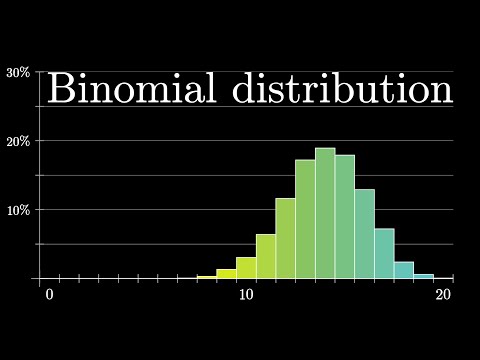
 3Blue1Brown· 2020年3月15日Binomial Distributions and the Problem of Seller RatingsHow review counts, independent trials and uncertainty about an unknown success rate fit together.
 1:09:52ENLex Fridman· 2020年3月7日ポッドキャスト · 2 人Lee Smolin Does Not Believe in the Scientific Methodゲスト Lee Smolin · ホスト Lex FridmanThe theoretical physicist talks with Lex Fridman about realism, the measurement problem, and why finishing Einstein’s revolution means treating time as fundamental and locality as optional.
 4:51ENLex Fridman· 2020年3月6日ポッドキャスト · 2 人Alex Garland on Technology and Space Explorationゲスト Alex Garland · ホスト Lex FridmanThe filmmaker discusses real-world inspiration for fiction.
 1:09:12ENLex Fridman· 2020年3月5日ポッドキャスト · 2 人Ann Druyan on Voyager, Carl Sagan, and Love Without Illusionゲスト Ann Druyan · ホスト Lex FridmanThe creative director of the Voyager Golden Record argues that science is an error-correcting way of seeing the universe — and of seeing another person.
 1:11:09ENLex Fridman· 2020年3月3日ポッドキャスト · 2 人Ava smiled when nobody was watchingゲスト Alex Garland · ホスト Lex FridmanAlex Garland talks with Lex Fridman about Ex Machina, Annihilation, Devs, and how you tell whether anything is really in there.
 1:12:48ENLex Fridman· 2020年2月29日ポッドキャスト · 2 人John Hopfield's Physics of Mind: Glitches Become Featuresゲスト John Hopfield · ホスト Lex FridmanThe Princeton physicist walks Lex Fridman from a wobbly London bridge to Hopfield networks, consciousness-as-story, and why his famous model still does not explain learning.
 1:39:56ENLex Fridman· 2020年2月26日ポッドキャスト · 2 人Why Marcus Hutter Treats Compression as Intelligence Itselfゲスト Marcus Hutter · ホスト Lex FridmanThe DeepMind researcher behind AIXI tells Lex Fridman why a Wikipedia compression contest, Solomonoff induction, and an incomputable formula belong in the same conversation.
 1:45:49ENLex Fridman· 2020年2月24日ポッドキャスト · 2 人Prediction is not a decision: Michael I. Jordan on markets and the unfinished AI revolutionゲスト Michael I. Jordan · ホスト Lex FridmanThe Berkeley statistician tells Lex Fridman that today's systems are a proto-engineering field, and that the hard work is connecting producers and consumers — not imitating minds.
 16:03ENLex Fridman· 2020年2月22日ポッドキャスト · 2 人Quantum Supremacy Is a Well-Defined Speedup, Not a Useful Taskゲスト Scott Aaronson · ホスト Lex FridmanScott Aaronson explains what Google's 53-qubit experiment actually demonstrated, how it was verified, and why complexity theory can offer evidence but not proof against classical spoofing.
 1:29:10ENLex Fridman· 2020年2月20日ポッドキャスト · 2 人Andrew Ng: The Hardest Part of AI Is Rarely the Algorithmゲスト Andrew Ng · ホスト Lex FridmanIn a conversation with Lex Fridman, Ng traces a path from late-night Coursera recordings to factory floors, arguing that messy data, habits, and starting small matter more than hype.
 58:03EN
 Jane Street· 2020年2月18日Matt Might on an Algorithm for Precision MedicineMatt Might · University of Alabama at BirminghamA computer scientist describes how genetic data, experimental models and logic programming can help clinicians investigate difficult cases.
 1:33:42ENLex Fridman· 2020年2月17日ポッドキャスト · 2 人Ask One Question of Every Quantum Headline: Is It Faster Than Classical?ゲスト Scott Aaronson · ホスト Lex FridmanScott Aaronson walks Lex Fridman from Turing's method of replacing unanswerable riddles with workable ones to Google's quantum supremacy experiment, and explains why useful chemistry simulation is closer than breaking RSA.
 1:44:55ENLex Fridman· 2020年2月14日ポッドキャスト · 2 人If You Need 60,000 Digits, You Have Not Found Intelligenceゲスト Vladimir Vapnik · ホスト Lex FridmanVladimir Vapnik tells Lex Fridman that intelligence is the art of shrinking a sea of functions with a few good predicates — and that MNIST, solved with sixty examples per class, is the test.
 7:45ENLex Fridman· 2020年2月10日ポッドキャスト · 2 人Jim Keller on Recipes, Understanding and Redesignゲスト Jim Keller · ホスト Lex FridmanWhy an efficient procedure can become a constraint, and when computer architects may need to rethink the problem.
 26:02ENLex Fridman· 2020年2月9日ポッドキャストMoore’s Law Is Not Dead—It Is a Cascade of S-Curvesホスト Lex FridmanJim Keller explains why transistor scaling keeps outrunning its obituary, and how exponential hardware changes the mathematics AI can attempt.
 1:34:44ENLex Fridman· 2020年2月5日ポッドキャスト · 2 人Moore's Law Has Been About to Die for Forty Yearsゲスト Jim Keller · ホスト Lex FridmanChip architect Jim Keller tells Lex Fridman why a cascade of diminishing-return curves still looks exponential, why you rewrite the CPU every five years, and why driving a car is not a super-hard problem.
 1:23:49ENJane Street· 2020年1月31日Steve Lee on PowerShell 7: Compatibility, New Features and the RoadmapSteve Lee · MicrosoftA historical look at the move from Windows PowerShell to cross-platform PowerShell, including demonstrations of the version 7 preview and its compatibility trade-offs.
 1:38:49ENLex Fridman· 2020年1月29日ポッドキャスト · 2 人Even a simulation would still be realゲスト David Chalmers · ホスト Lex FridmanDavid Chalmers tells Lex Fridman why a simulated world would still count as reality, and why the hard problem of consciousness still will not go away.
 1:30:52ENLex Fridman· 2020年1月25日ポッドキャスト · 2 人Cristos Goodrow: There Is No YouTube Algorithm, Only People Moving Through Videoゲスト Cristos Goodrow · ホスト Lex FridmanYouTube’s head of search and discovery tells Lex Fridman why collaborative filtering learned language on its own, why watch time is not satisfaction, and why nobody can predict a viral hit.
 1:03:12ENLex Fridman· 2020年1月21日ポッドキャスト · 2 人Paul Krugman: America's Cruelty Is a Choice, Not a Law of Technologyゲスト Paul Krugman · ホスト Lex FridmanThe Nobel economist tells Lex Fridman why productivity data undercut the robot-job panic, why markets fail in health care, and why universal programs beat a premature basic income.
 1:13:51ENLex Fridman· 2020年1月19日ポッドキャストAnswering Questions Without Seeing the Data: Andrew Trask on the Privacy-Preserving AI Stackホスト Lex FridmanA tour of remote execution, differential privacy, secure multiparty computation, and the societal consequences of making private data usable.
 1:39:57ENLex Fridman· 2020年1月17日ポッドキャスト · 2 人People Say They Want Perfect Robots. They Trust the Ones That Push Backゲスト Ayanna Howard · ホスト Lex FridmanAyanna Howard on human-robot interaction, the ethics of safety-critical code, and why a little imperfection is what actually earns trust.
 1:18:41ENLex Fridman· 2020年1月14日ポッドキャスト · 2 人The SS Soldier Who Hugged a Jewish Boy, and the Systems That Still Fool Usゲスト Daniel Kahneman · ホスト Lex FridmanDaniel Kahneman on System 1, deep learning that does not know what it is saying, and why a machine that must call a human is almost as hard as a machine that never needs one.
もっと見る4,484 件中 24 件を表示