









Résultats
51 articlesTrier
 1:47:38EN
 Cognitive Revolution "How AI Changes Everything"· 4 juil. 2026Podcast19 Neurons Can Drive a Car. Liquid AI Wants Foundation Models on Every ChipAnime : Nathan LabenzRamin Hasani traces liquid neural networks from a worm's 300-cell brain to a 600-megabyte model that will talk from inside a Mercedes, and explains why architecture search now beats architecture avengers.
 2:59:44ENCognitive Revolution "How AI Changes Everything"· 3 juin 2026PodcastTwo Endangered Languages Broke Transformers. Nested Learning Gave Models a Sleep Button.Anime : Nathan LabenzGoogle researcher Ali Behrouz tells Nathan Labenz how stacking update frequencies — not just layers — and an offline sleep phase could give language models genuine continual learning.
 1:21:56EN
 Unsupervised Learning: With Jacob Effron· 15 mai 2026PodcastYann LeCun Left Meta Because LLMs Will Not Get You to IntelligenceAnime : Jacob EffronThe Turing Award winner tells Jacob Effron why he spun AMI Labs out of Meta, why JEPA-style world models beat pixel generators, and why he thinks Hinton changed his mind in 2023.
 2:02:17ENCognitive Revolution "How AI Changes Everything"· 27 août 2025PodcastSAEs Find the Nouns. Parameter Decomposition Looks for the VerbsAnime : Nathan LabenzGoodfire's Lee Sharkey argues that sparse autoencoders recover a network's variables, not the algorithms those variables run, and shows how stochastic parameter decomposition tries to recover the computations themselves.
 1:54:08ENCognitive Revolution "How AI Changes Everything"· 29 mai 2025PodcastWhy Anthropic's first check went to a company building microscopes for neural netsAnime : Nathan LabenzGoodfire's Dan Balsam and Tom McGrath argue that mechanistic interpretability now has a proto-paradigm, two stubborn gaps, and three products worth shipping today.
 1:43:54ENCognitive Revolution "How AI Changes Everything"· 23 mars 2025PodcastA Year to Grow a Brain Organoid, an Hour to Simulate ItAnime : Nathan LabenzStanford postdoc Siyu He tells Nathan Labenz how Squidiff and CORAL move single-cell and spatial experiments into the computer — and where the models still cannot go.
 1:40:22ENCognitive Revolution "How AI Changes Everything"· 22 janv. 2025PodcastTwenty-atom crystals taught an AI the physics of a heartbeatAnime : Nathan LabenzOrbital Materials' Jonathan Godwin and Tim Duignan tell Nathan Labenz how a neural network trained on tiny crystals simulated a potassium ion channel on a single 2017 GPU.
 1:42:16ENCognitive Revolution "How AI Changes Everything"· 4 juil. 2024Podcast267 Papers in Seven Months: Albert Gu Explains the State Space Model RevolutionAnime : Nathan LabenzThe Mamba co-author walks through five years of recurrent-model work, why selective compression beats a growing KV cache, and what Mamba 2 trades away to train faster.
 1:54:01ENCognitive Revolution "How AI Changes Everything"· 26 juin 2024PodcastA Tiny Network Grew a Salt Crystal the Training Data Never ShowedAnime : Nathan LabenzTim Duignan trained tens of thousands of parameters on salt water. The model invented a crystal — and a continuum solvent theory he had spent a PhD failing to write by hand.
 1:52:18ENCognitive Revolution "How AI Changes Everything"· 6 mai 2024PodcastTwo Weeks, Thirty Compiles: How Adam Majmudar Wrote a GPU From ScratchAnime : Nathan LabenzA Cognitive Revolution walkthrough of TinyGPU, from SIMD kernels and memory latency to an open-source chip flow that runs on a laptop.
 1:19:24ENCognitive Revolution "How AI Changes Everything"· 5 avr. 2024PodcastA Gibberish Prompt Unlocks What GPT-J Plans Three Tokens AheadAnime : Nathan LabenzNortheastern’s Bau Lab shows that a 40,000-parameter soft prompt can read a model’s future words, and that about ten attention heads carry the task itself.
 2:30:06ENCognitive Revolution "How AI Changes Everything"· 22 déc. 2023PodcastTrained on a Thirtieth of GPT-4's Tokens, Mamba Beat Transformers on Home TurfAnime : Nathan LabenzIn a solo emergency episode, Nathan Labenz argues that Albert Gu and Tri Dao's selective state space model is the first architecture since 2017 that deserves to share the Transformer’s throne.
 1:40:07ENCognitive Revolution "How AI Changes Everything"· 4 juil. 2023PodcastThirty thousand voltage updates a second: inside Skydio’s autonomy stackAnime : Nathan LabenzHayk Martiros walks Nathan Labenz through a two-pound drone that sees in every direction, runs more than ten neural nets on board, and will not be weaponized.
 1:52:46ENCognitive Revolution "How AI Changes Everything"· 27 juin 2023PodcastCharge Neural Nets by Connection Length, and the Black Box Splits Into Modules You Can SeeAnime : Nathan LabenzMIT physicist Ziming Liu walks Nathan Labenz through BIMT, a brain-inspired training trick that sparsifies networks until you can read them by looking.
 1:21:20ENCognitive Revolution "How AI Changes Everything"· 9 mars 2023PodcastFreeze the eyes and the brain. Train only the optic nerve.Anime : Nathan LabenzJunnan Li and Dongxu Li tell Nathan Labenz how BLIP cleaned noisy web captions, and how BLIP-2 connected a frozen vision model to a frozen language model in under ten days on one A100.
 46:25EN
 Lex Fridman· 17 janv. 2019PodcastDeep Learning at the Edge of 2019: BERT, Autopilot, and the Ideas That Broke ThroughAnime : Lex FridmanA tour of the architectural, applied, and automation breakthroughs that defined deep learning in 2018 and set up 2019.
 1:29:03ENLex Fridman· 27 sept. 2016PodcastFrom Word Vectors to Memory Networks: The Building Blocks of Deep NLPAnime : Lex FridmanRichard Socher explains how word embeddings, recurrent models, GRUs, pointer mixtures, and dynamic memory networks turn language tasks into trainable end-to-end systems.
 1:00:51ENLex FridmanPodcastDeep Learning From the Ground Up: Hugo Larochelle's One-Hour Tour of Neural Network FoundationsAnime : Lex FridmanA fast, equation-level walk through feed-forward networks, backpropagation, practical training tricks, dropout and batch normalization, from the 2016 Deep Learning School.
 1:07:29ENLex FridmanPodcastDeep Reinforcement Learning from First Principles: Rewards, Q-Learning, Policy Gradients and AlphaZeroAnime : Lex FridmanLex Fridman's MIT 6.S091 opening lecture walks from the basic RL framework through DQN, actor-critic methods and AlphaZero to the unsolved problem of moving from simulation to the real world.
 9:59ENLex FridmanPodcastIs Language or Vision Harder? Ilya Sutskever on the Unity of Machine LearningAnime : Lex FridmanIn a short clip from his 2020 conversation with Lex Fridman, Ilya Sutskever explains why vision, language and reinforcement learning share the same few principles, and why asking which problem is harder is the wrong question.
 1:25:16ENLex FridmanPodcastFrom Hand-Built Features to ResNets: Andrej Karpathy's Crash Course in Convolutional NetworksAnime : Lex FridmanA 2016 Deep Learning School talk covering how convnets work, how the ImageNet winners evolved, and how to apply them without being a hero.
 1:24:43ENLex FridmanPodcastFrom Sparse Coding to GANs: A Tour of Unsupervised Deep Learning in 2016Anime : Lex FridmanRuslan Salakhutdinov walks through autoencoders, Boltzmann machines, variational autoencoders and adversarial networks at the Deep Learning School, with candid notes on what did and did not work.
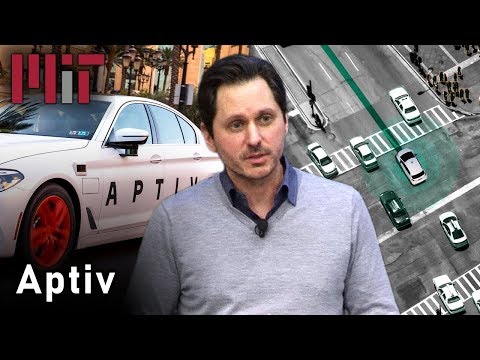 58:46ENLex FridmanPodcastCaging the Neural Network: How Aptiv Thinks About Safe Self-DrivingAnime : Lex FridmanAptiv Autonomous Mobility's Karl Iagnemma and Oscar Beijbom explain why end-to-end learning is hard to trust in cars, and show how PointPillars and nuScenes push lidar perception forward.
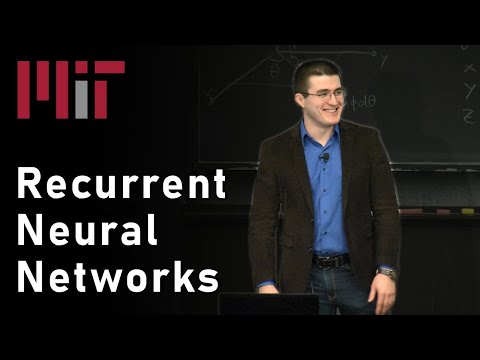 1:15:59ENLex FridmanPodcastSteering Through Time: How Recurrent Networks and LSTMs Learn from SequencesAnime : Lex FridmanLex Fridman's MIT 6.S094 lecture walks from backpropagation basics to LSTMs and the way they are used to predict steering in self-driving cars.
Charger plus24 sur 51 affichés