







Résultats
41 articlesTrier
 38:10EN
 Google DeepMind· 1 oct. 2026From deepfakes to DNA: how SynthID watermarks AIHannah Fry, Pushmeet Kohli, Jeremy Ratcliffe · Google DeepMindHannah Fry sits down with Pushmeet Kohli and Jeremy Ratcliffe to explain SynthID: a mathematical watermark now used on text, images and video, and being extended to protein sequences so DNA synthesis companies can tell AI-designed molecules from nature.
 47:22EN
 Sequoia Capital· 4 août 2026PodcastFrom One in a Thousand to 15 Percent: Chai Discovery Treats Drug Design as a Scaling ProblemJoshua Meier and Matthew McPartlon tell Sequoia’s Training Data why antibody design is an engineering problem, not a bespoke science, and why they sell a molecular CAD suite instead of their own drugs.
 58:27ENSequoia Capital· 24 mars 2026PodcastEven a dumber AI can win science if it never leaves the labGinkgo Bioworks CEO Jason Kelly tells Sequoia why autonomous labs, not smarter models, will change how experimental science gets done.
 3:18:09EN
 Lex Fridman· 30 nov. 2025Podcast · 2 voixA Thing Is Alive When Its Goals Outrun Its PartsInvité : Michael Levin · Anime : Lex FridmanTufts biologist Michael Levin tells Lex Fridman that intelligence is a spectrum of persuadability, that even a bubble sort hosts unexpected goals, and that the brain is a thin client to a space physics does not own.
 1:29:30EN
 Cognitive Revolution "How AI Changes Everything"· 14 oct. 2025Podcast2,500 Compounds and a 51 Percent Hit Rate: How a Small Graph Net Found New AntibioticsAnime : Nathan LabenzMIT's Jim Collins tells Nathan Labenz how a bootlegged 2018 project, a binary growth-inhibition label, and Chemprop graph networks pulled novel antibiotics out of chemical space that labs could never screen by hand.
 57:52EN
 Unsupervised Learning: With Jacob Effron· 13 août 2025PodcastThey Aimed for 1%. The Lab Hit 20%. Chai Discovery Moved Antibody Design Onto the Computer.Anime : Jacob EffronJoshua Meier on three waves of AI drug discovery, why Chai-2 behaves like Photoshop for molecules, and why a 1% hit rate was supposed to be enough to change the industry.
 49:27EN
 No Priors: AI, Machine Learning, Tech, & Startups· 3 juil. 2025Podcast · 2 voixFrom 0.1% to 20%: Chai-2 Turns Antibody Design Into Prompt EngineeringAnime : Sarah Guo, Elad GilChai Discovery co-founders Joshua Meier and Jack Dent tell Sarah Guo how a generative model now designs antibodies that bind on the first 24-well plate.
 2:02:27ENCognitive Revolution "How AI Changes Everything"· 7 juin 2025PodcastShe set out to build mirror life. Then she talked the field into stoppingAnime : Nathan LabenzUniversity of Minnesota geneticist Kate Adamala tells Nathan Labenz why every known organism shares one chemical alphabet — and why flipping that alphabet would be a branch of synthetic biology better left unexplored.
 1:12:29ENCognitive Revolution "How AI Changes Everything"· 4 juin 2025PodcastGoogle's AI Co-Scientist Solved a Phage Puzzle Humans Missed for YearsAnime : Nathan LabenzImperial College scientists José Penadés and Tiago Costa told the Podovirus podcast how a still-unreleased Google system recovered their unpublished answer: tailless capsids that pick up stray phage tails.
 55:40ENSequoia Capital· 29 avr. 2025PodcastTo Solve All Diseases, Isomorphic Labs Needs a Half-Dozen AlphaFoldsMax Jaderberg on turning DeepMind's game-playing research into a general AI engine for drug design—and why prediction alone cannot search a 10^60 molecular universe.
 1:43:54ENCognitive Revolution "How AI Changes Everything"· 23 mars 2025PodcastA Year to Grow a Brain Organoid, an Hour to Simulate ItAnime : Nathan LabenzStanford postdoc Siyu He tells Nathan Labenz how Squidiff and CORAL move single-cell and spatial experiments into the computer — and where the models still cannot go.
 1:33:01ENCognitive Revolution "How AI Changes Everything"· 15 janv. 2025PodcastRare Diseases Are Common: How a Harvard Gene Hunter Uses o1-pro on the Cases Sequencing Already MissedAnime : Nathan LabenzDr. Catherine Brownstein of Boston Children's Hospital explains why cheap genomes made her job harder, why data sharing still beats any model, and where ChatGPT Pro actually gives her hours back.
 1:13:23ENCognitive Revolution "How AI Changes Everything"· 12 oct. 2024PodcastAn AI Found a GABA-Cancer Link. The Next Step Is Talking to the Cells.Anime : Nathan LabenzMichael Levin and Leo Pio Lopez on a multilayer embedding that predicted melanoma, a cancer with no mutations, and why biology's real interface is cognitive.
 1:18:32ENCognitive Revolution "How AI Changes Everything"· 20 sept. 2024PodcastA DNA Model That Can Tell Which Genes You Cannot TouchAnime : Nathan LabenzStanford's Brian Hie walks through hybrid architectures, a genome-scale language model trained only on DNA, and an antibody that binds 25 times tighter than nature.
 1:30:37ENCognitive Revolution "How AI Changes Everything"· 30 août 2024Podcast64 Bytes of Random Code, and Computational Life Showed Up AnywayAnime : Nathan LabenzGoogle researchers Ettore Randazzo and Luca Versari show that self-replicators can arise from a soup of random strings with no fitness function at all.
 1:59:15ENCognitive Revolution "How AI Changes Everything"· 25 mai 2024PodcastA Protein Backbone in a Minute: The Real Progress, Bottlenecks, and Risks of AI BiologyAnime : Nathan LabenzThe White House set a thousand-fold lower reporting bar for biological models than for language models—and this conversation shows why that gap already looks prescient.
 1:25:09ENCognitive Revolution "How AI Changes Everything"· 9 févr. 2024PodcastTwo-Headed Worms, Regenerated Legs, and a Sort That Learned to WaitAnime : Nathan LabenzTufts biologist Michael Levin tells Cognitive Revolution why anatomy is rewritable software, and why he stopped a paper that might have made AI more alive.
 37:01ENNo Priors: AI, Machine Learning, Tech, & Startups· 28 sept. 2023Podcast · 2 voixDNA Is Code, but You Compile It with a PipetteAnime : Sarah Guo, Elad GilGinkgo Bioworks CEO Jason Kelly tells No Priors why cells are worth the magic, why biology has no AWS, and why a pandemic should look like cybersecurity.
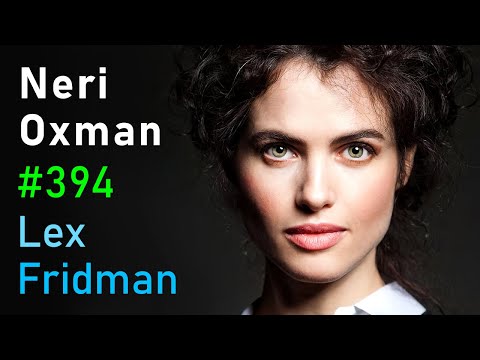 2:18:25ENLex Fridman· 1 sept. 2023Podcast · 2 voixGrow Everything: Neri Oxman on Giving Nature a VoteInvité : Neri Oxman · Anime : Lex FridmanThe designer-scientist who left MIT to build OXMAN talks silkworm pavilions, bees in space, and why the end of human agency might be the start of nature's.
 35:24ENNo Priors: AI, Machine Learning, Tech, & Startups· 24 août 2023Podcast · 2 voixThe Author of Attention Is All You Need Now Compiles mRNA Like BytecodeAnime : Sarah Guo, Elad GilJakob Uszkoreit on why Transformers won, why models spend compute on the wrong things, and why drug discovery has to become generation rather than screening.
 2:40:18ENLex Fridman· 29 déc. 2022Podcast · 2 voixEvery Living Cell Runs the Same Translation MachineInvité : Betül Kaçar · Anime : Lex FridmanAstrobiologist Betül Kaçar tells Lex Fridman how the tree of life is drawn backward, why nitrogen was fixed only once, and why the genetic code is an alphabet with room for typos.
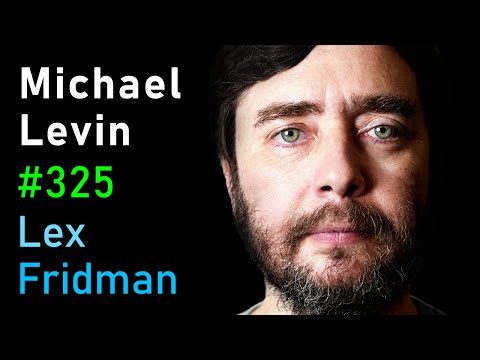 3:00:21ENLex Fridman· 1 oct. 2022Podcast · 2 voixCut Off a Planarian's Head. The New Brain Still RemembersInvité : Michael Levin · Anime : Lex FridmanMichael Levin argues that DNA only builds hardware, bioelectric networks store body plans, and frog skin cells can become robots that evolution never designed.
 3:43:01ENLex Fridman· 7 sept. 2022Podcast · 2 voixPut Hydrogen and CO2 in a Tube. Thermodynamics Wants Cells. Nothing Happens.Invité : Nick Lane · Anime : Lex FridmanBiochemist Nick Lane talks Lex Fridman through hydrothermal vents, mitochondria, sex, consciousness, and why bacteria should be common while civilizations are not.
 2:10:39ENLex Fridman· 1 juil. 2022Podcast · 2 voixDemis Hassabis: Solve Intelligence, Then Solve Everything ElseInvité : Demis Hassabis · Anime : Lex FridmanThe DeepMind CEO tells Lex Fridman why the Turing Test is the wrong exam, how AlphaFold rewrote biology, and why the quiet radio sky suggests we are probably alone.
Charger plus24 sur 41 affichés