









Résultats
123 articlesTrier
 1:06:39EN
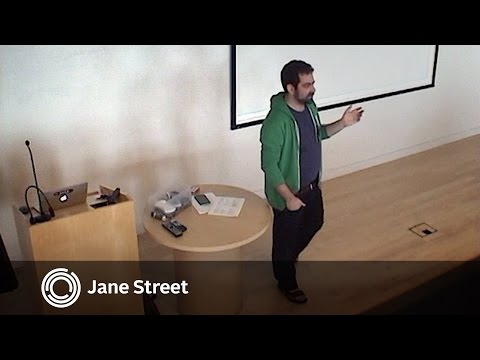
 Jane Street· 31 mars 2016Why Jane Street Uses OCamlYaron Minsky · Jane StreetA Jane Street talk explains how functional programming and static types support reliable trading software, and examines the costs of choosing a less common language.
 1:00:51EN
 Lenny's PodcastPodcast · 2 voixInflict Pain, But Do It With a Smile: Julia Schottenstein on dbt's Rise and the Art of Getting AcquiredInvité : Julia Schottenstein · Anime : Lenny RachitskyA former NEA investor turned dbt Cloud product leader explains why dbt won, how to approach M&A and pricing, and how venture habits make her a better PM.
 1:05:22EN
 Unsupervised Learning: With Jacob EffronPodcastBuild First, Optimize Later: Harrison Chase on LangChain, Evals, and the State-Machine Future of AgentsAnime : Jacob EffronHarrison Chase explains how LangChain grew from an orchestration layer into LangSmith and LangGraph, why evaluation datasets force product clarity, and why reliable agents look more like state machines than autonomous loops.
 56:20EN
 No Priors: AI, Machine Learning, Tech, & StartupsPodcast · 2 voixBiohub's Bet: Building Open AI World Models of Biology From Proteins Up to CellsAnime : Sarah Guo, Elad GilMark Zuckerberg, Priscilla Chan and Alex Rives explain why Biohub pairs a frontier AI lab with frontier wet-lab biology, and why it releases tools like ESMFold2 as open source.
 1:11:06ENUnsupervised Learning: With Jacob EffronPodcastReplit's Amjad Masad on Building Your Own Model, Latency, and the Next Billion Software CreatorsAnime : Jacob EffronThe Replit founder explains why AI should be native to the product, why he trained a small in-house model, and why he thinks software engineering is about to split in two.
 40:00ENUnsupervised Learning: With Jacob EffronPodcastThe Winds of Change: How Mistral Plans to Win the Open-Model EraAnime : Jacob EffronArthur Mensch explains Mistral's open-source strategy, enterprise distribution, model research, and views on AI regulation and sovereignty.
 1:12:15ENUnsupervised Learning: With Jacob EffronPodcastThe Open-Model Vibe Check: China, Containment, and the Data MoatAnime : Jacob EffronJacob Effron and guests debate Chinese open-weight models, distillation, containment policy, the OpenAI–Hugging Face incident, and Cursor's data advantage.
 23:54ENNo Priors: AI, Machine Learning, Tech, & StartupsPodcast · 2 voixBeyond GPT-7: The Customization Toolkit, Meta's Open Source Bet and the Return of Consumer AIAnime : Sarah Guo, Elad GilIn a host-only episode, the No Priors hosts map the six levers for 10x to 100x better AI, explain fine-tuning, RAG and AI feedback, and ask why consumer social is suddenly interesting again.
 1:03:25EN
 Lex FridmanPodcastTheano in an Hour: Symbolic Graphs, Automatic Gradients and a Compiler That Rewrites Your MathAnime : Lex FridmanPascal Lamblin of MILA walks through how Theano builds, differentiates, optimizes and runs computation graphs, then trains logistic regression, a convnet and an LSTM.
 50:23ENUnsupervised Learning: With Jacob EffronPodcastOpenAI’s Platform Bet: Where AI Value Accrues, Why Open Source Trails, and When Superintelligence ArrivesAnime : Jacob EffronPeter Welinder explains OpenAI’s platform strategy, the case for proprietary frontier models over open source, the enterprise hallucination problem, and his speculative timeline for AGI and superintelligence.
 1:34:27ENLenny's PodcastPodcast · 2 voixMatt Mullenweg on Open Source Ideals, the WP Engine Fight and Why Llama Isn't Really OpenInvité : Matt Mullenweg · Anime : Lenny RachitskyThe WordPress co-creator and Automattic CEO gives his side of the WP Engine dispute, explains his open source philosophy, and talks AI, community building and acquisitions with Lenny Rachitsky.
 1:02:06ENLex FridmanPodcastLearning TensorFlow Hands-On: From a Mystery Line to Handwritten DigitsAnime : Lex FridmanGoogle Brain's Sherry Moore walks a Deep Learning School audience through how TensorFlow works and two core labs, linear regression and MNIST digit recognition.
 33:31ENNo Priors: AI, Machine Learning, Tech, & StartupsPodcast · 2 voixOpen Source Catches Up, Regulation Can Wait: Sarah Guo and Elad Gil Answer Listener QuestionsAnime : Sarah Guo, Elad GilTwo AI investors cover open-source models, autonomous agents, whether to regulate AI, where startups can win, and why healthcare innovation is so hard.
 1:47:58ENLenny's PodcastPodcast · 3 voixBridging the Divide: How Community Notes Built a Trusted Fact-Checking System on DisagreementInvité : Keith Coleman, Jay Baxter · Anime : Lenny RachitskyKeith Coleman and Jay Baxter, the team behind Community Notes, explain how the algorithm works, how a tiny team built it, and why it survived four leaders at Twitter and X.
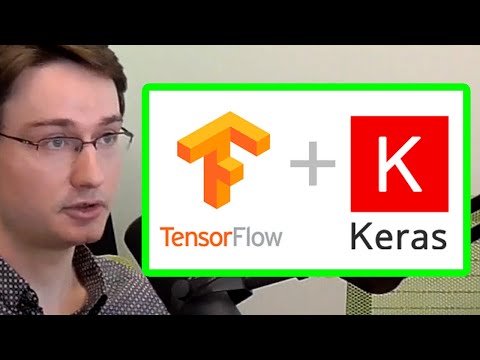 11:59ENLex FridmanPodcast · 2 voixFrom a Side Project to TensorFlow's Core: François Chollet on How Keras Came to BeInvité : François Chollet · Anime : Lex FridmanThe creator of Keras recalls why he built it in 2015 around recurrent networks, how it moved onto TensorFlow, and what TensorFlow 2.0 means for its design.