









Resultados
17 artículosOrdenar
 40:44EN
 3Blue1Brown· 16 oct 2026Grant Sanderson: There's never been a better time to go into mathGrant Sanderson, Constantin Kogler · 3Blue1BrownStudents fear AI has solved mathematics. Grant Sanderson argues the opposite: even if machines prove theorems better than we do, the institution of math stays valuable—and this is a rare moment when newcomers can reshape it.
 51:55EN3Blue1Brown· 18 sept 2026The last IMO problem AI could not solveGrant Sanderson · 3Blue1BrownGrant Sanderson walks through IMO 2025 Problem 6 — a tiling puzzle that frontier models missed — and the visual patience it takes to prove a construction is optimal.
 3:52:17EN
 Lex Fridman· 31 dic 2025PódcastSome Infinities Are Larger Than OthersPresenta: Lex FridmanJoel David Hamkins walks Lex Fridman from Hilbert's Hotel through Gödel, the continuum hypothesis, and a set-theoretic multiverse where truth is not the same as proof.
 13:30EN3Blue1Brown· 17 ago 2025How AlphaGeometry Combines Logical Proof with Creative ConstructionAleph0Aleph0 explains how a symbolic geometry solver gets surprisingly far without AI, and how a language model supplies the auxiliary constructions that take it to Olympiad level.
 3:14:34ENLex Fridman· 14 jun 2025Pódcast · 2 vocesIf ten things make a problem hard, Terence Tao turns nine of them offInvitado: Terence Tao · Presenta: Lex FridmanThe Fields Medalist walks Lex Fridman from the Kakeya needle and Navier-Stokes through Lean, Perelman, and why today's AI still cannot smell a dead-end proof.
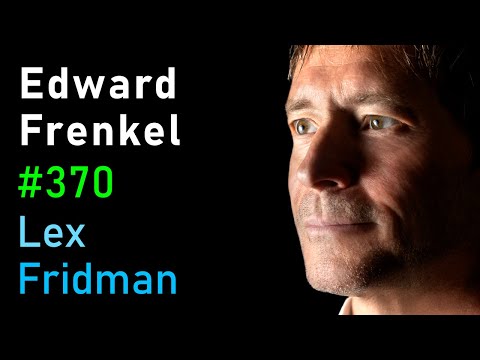 3:46:39ENLex Fridman· 9 abr 2023Pódcast · 2 vocesHe Hated School Math Until a Professor Opened the Book to QuarksInvitado: Edward Frenkel · Presenta: Lex FridmanEdward Frenkel talks with Lex Fridman about Soviet childhood, the Langlands program, Gödel, AI, and why every hard objective theory still ends with an observer.
 2:15:56ENLex Fridman· 3 dic 2021Pódcast · 2 vocesA Theory That Fits Anything Is Not Even WrongInvitado: Peter Woit · Presenta: Lex FridmanColumbia physicist Peter Woit tells Lex Fridman why string theory's original idea emptied out, why four dimensions are enough, and what twistor theory still offers.
 1:30:40ENLex Fridman· 27 sept 2021Pódcast · 2 vocesI'm Giving You This Feedback Because I Believe in YouInvitado: Jo Boaler · Presenta: Lex FridmanStanford mathematician Jo Boaler on visual math, why struggle only works if you think you can get there, and how a 90-minute class raised classroom engagement 68 percent.
 2:41:47ENLex Fridman· 12 jun 2021Pódcast · 2 vocesGeometry Is the Cilantro of MathInvitado: Jordan Ellenberg · Presenta: Lex FridmanJordan Ellenberg tells Lex Fridman that the last 150 years of mathematics have been about one question: when two things count as the same.
 2:20:15ENLex Fridman· 14 may 2021Pódcast · 2 vocesThe virus is not meters away. It is hops away.Invitado: Po-Shen Loh · Presenta: Lex FridmanPo-Shen Loh talks with Lex Fridman about teaching invention, combinatorics, and a contact-tracing app that warns you before you get sick.
 2:08:26ENLex Fridman· 23 ago 2020Pódcast · 2 vocesSatisfying Lectures Don't Stick: Grant Sanderson on Feynman, Fear, and Hitting PublishInvitado: Grant Sanderson · Presenta: Lex FridmanThe 3Blue1Brown creator talks with Lex Fridman about why the nicest explanations can fail, why he envies Bell Labs, and why the experts most qualified to teach are the ones least willing to post.
 1:02:45ENLex Fridman· 7 ene 2020Pódcast · 2 vocesAliens Would Count. They Probably Wouldn't Write e^x.Invitado: Grant Sanderson · Presenta: Lex FridmanGrant Sanderson of 3Blue1Brown talks with Lex Fridman about notation, infinity, and why a visualization has to pick a single arrow.
 54:58ENLex FridmanPódcastEric Weinstein on Geometric Unity: One Canvas, Fourteen Dimensions and a Theory of EverythingPresenta: Lex FridmanEric Weinstein talks with Lex Fridman about releasing his Oxford lecture, why academia resists his ideas, and how Geometric Unity tries to derive matter from the geometry of spacetime.
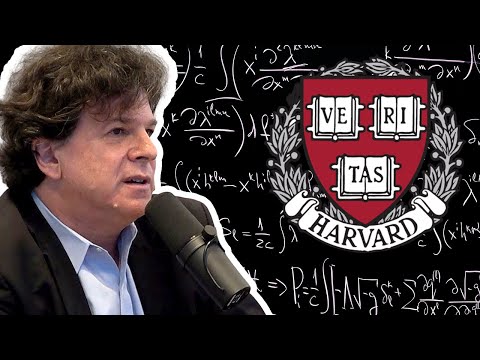 21:52ENLex FridmanPódcastThe Secret Seminar: Eric Weinstein on What Happens When Academia Meets Someone It Can't CategorizePresenta: Lex FridmanIn a clip from the Lex Fridman Podcast, mathematician Eric Weinstein recounts discovering a hidden seminar at Harvard and explains why he thinks institutions fail on novel cases.
 11:19ENLex FridmanPódcast · 2 vocesWhy Donald Knuth Thinks P = NP and Why It Might Not MatterInvitado: Donald Knuth · Presenta: Lex FridmanKnuth explains how an algorithm can provably exist without anyone being able to write it down, and why that shapes his view of P versus NP.
 11:11ENLex FridmanPódcast · 2 vocesFilling the Empty Quadrants: Jim Gates on Supersymmetry and the Beauty of Broken SymmetryInvitado: Jim Gates · Presenta: Lex FridmanTheoretical physicist Jim Gates explains supersymmetry with a four-slice pie, recalls how he chose it for his thesis in the 1970s, and connects it to the way physics moves from mathematics to experiment.
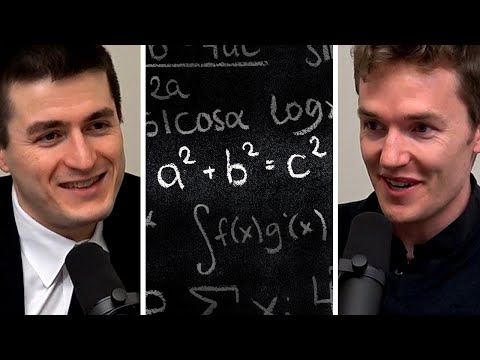 11:34ENLex FridmanPódcastNeither Discovered Nor Invented: Grant Sanderson on the Cycle Between Math and the WorldPresenta: Lex Fridman3Blue1Brown's Grant Sanderson tells Lex Fridman that mathematics feeds on a loop of discovery and invention, and wonders why the universe's laws are so compressible.