








Resultados
35 artículosOrdenar
 3:18:09EN
 Lex Fridman· 30 nov 2025Pódcast · 2 vocesA Thing Is Alive When Its Goals Outrun Its PartsInvitado: Michael Levin · Presenta: Lex FridmanTufts biologist Michael Levin tells Lex Fridman that intelligence is a spectrum of persuadability, that even a bubble sort hosts unexpected goals, and that the brain is a thin client to a space physics does not own.
 3:26:39ENLex Fridman· 22 dic 2024Pódcast · 2 vocesThe Pessimism Line: Why Earth Is Almost Certainly Not the First CivilizationInvitado: Adam Frank · Presenta: Lex FridmanAstrophysicist Adam Frank talks with Lex Fridman about habitable worlds, the Fermi paradox, technosignatures, and why science cannot ignore experience.
 1:30:37EN
 Cognitive Revolution "How AI Changes Everything"· 30 ago 2024Pódcast64 Bytes of Random Code, and Computational Life Showed Up AnywayPresenta: Nathan LabenzGoogle researchers Ettore Randazzo and Luca Versari show that self-replicators can arise from a soup of random strings with no fitness function at all.
 2:51:58ENLex Fridman· 13 jun 2024Pódcast · 2 vocesSara Walker: Life Is Huge in Time, Not in SpaceInvitado: Sara Walker · Presenta: Lex FridmanThe astrobiologist tells Lex Fridman why textbook definitions of life fail, how assembly theory measures complexity, and why aliens might disappear into their own causal structure.
 4:01:52ENLex Fridman· 15 may 2024Pódcast · 2 vocesPaul Rosolie: The Amazon Is a Machine of Death, and Every Heartbeat in It Is Worth SavingInvitado: Paul Rosolie · Presenta: Lex FridmanDeep in the Peruvian rainforest, the naturalist talks snakes, anacondas, uncontacted tribes, ayahuasca, and why he would rather protect this forest than look for aliens.
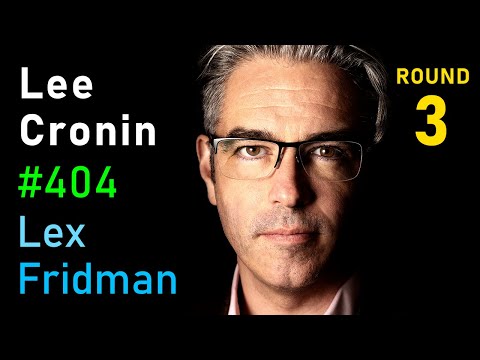 3:19:21ENLex Fridman· 9 dic 2023Pódcast · 2 vocesComplexity without copies is just randomness: Lee Cronin on assembly theoryInvitado: Lee Cronin · Presenta: Lex FridmanThe Glasgow chemist walks Lex Fridman through his controversial Nature paper, a proposed life meter for other worlds, and the claim that the universe is too big to contain its own future.
 3:47:09ENLex Fridman· 28 ene 2023Pódcast · 2 vocesKepler Found Thousands of Planets and Not One Earth TwinInvitado: David Kipping · Presenta: Lex FridmanDavid Kipping explains why cool, Earth-like worlds are the hardest exoplanets to find, and why James Webb is the first telescope that might catch their moons.
 2:40:18ENLex Fridman· 29 dic 2022Pódcast · 2 vocesEvery Living Cell Runs the Same Translation MachineInvitado: Betül Kaçar · Presenta: Lex FridmanAstrobiologist Betül Kaçar tells Lex Fridman how the tree of life is drawn backward, why nitrogen was fixed only once, and why the genetic code is an alphabet with room for typos.
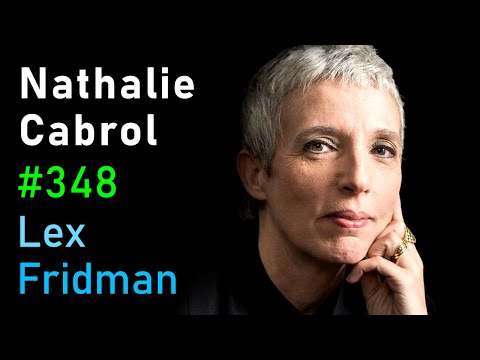 2:06:25ENLex Fridman· 19 dic 2022Pódcast · 2 vocesNathalie Cabrol Wants the Nature of Life, Not Just a Signal from MarsInvitado: Nathalie Cabrol · Presenta: Lex FridmanThe SETI Institute astrobiologist tells Lex Fridman why crater lakes, panspermia, and a Mandelbrot view of language all point to the same question: what life actually is.
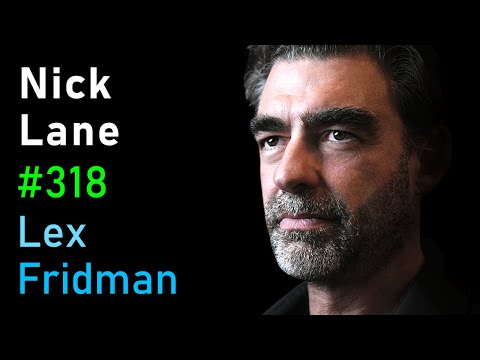 3:43:01ENLex Fridman· 7 sept 2022Pódcast · 2 vocesPut Hydrogen and CO2 in a Tube. Thermodynamics Wants Cells. Nothing Happens.Invitado: Nick Lane · Presenta: Lex FridmanBiochemist Nick Lane talks Lex Fridman through hydrothermal vents, mitochondria, sex, consciousness, and why bacteria should be common while civilizations are not.
 2:32:00ENLex Fridman· 1 ago 2022Pódcast · 2 vocesA Cube Inside a Sphere, Right Between Two Super HornetsInvitado: Ryan Graves · Presenta: Lex FridmanFormer Navy F/A-18 pilot Ryan Graves tells Lex Fridman how unexplained objects filled East Coast training airspace after a radar upgrade, and why a near-collision made it a safety problem the system still cannot process.
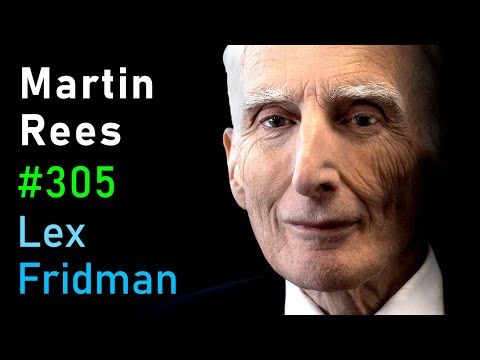 2:13:16ENLex Fridman· 23 jul 2022Pódcast · 2 vocesEvery Atom in Your Body Was Forged in a Dead StarInvitado: Martin Rees · Presenta: Lex FridmanMartin Rees talks Lex Fridman through dark matter, alien life, one-way Mars trips, and why this century is the first in which one species holds the planet.
 4:13:30ENLex Fridman· 9 jun 2022Pódcast · 2 vocesHumanity showed up 10^18 times too earlyInvitado: Robin Hanson · Presenta: Lex FridmanRobin Hanson tells Lex Fridman why our date in cosmic history is data, and why an empty sky means the loud aliens are coming fast.
 2:55:05ENLex Fridman· 8 may 2022Pódcast · 2 vocesExtinction awareness is the human trait Mason wants to carry to the starsInvitado: Chris Mason · Presenta: Lex FridmanCornell geneticist Chris Mason on why seeing our own end creates a duty to engineer life for other worlds — and what a 500-year plan would actually require.
 4:05:22ENLex Fridman· 24 abr 2022PódcastIf We Cannot Say What Life Is, We Cannot Recognize AliensPresenta: Lex FridmanAstrobiologist Sara Walker and chemist Lee Cronin argue that the hunt for alien life is really a hunt for a physics of memory, objects, and time.
 1:46:49ENLex Fridman· 23 mar 2022Pódcast · 2 vocesAriel Ekblaw on Self-Assembling Habitats and Why the Real Space Cities Will FloatInvitado: Ariel Ekblaw · Presenta: Lex FridmanThe MIT Space Exploration Initiative director talks swarm tiles, lunar ants, and why Mars is a research station rather than a backup Earth.
 4:05:51ENLex Fridman· 11 mar 2022Pódcast · 2 vocesLife is the universe developing a memoryInvitado: Lee Cronin · Presenta: Lex FridmanChemist Lee Cronin tells Lex Fridman why life looks inevitable, how assembly theory could detect it on any world, and why silicon may never hold enough states for consciousness.
 1:42:58ENLex Fridman· 6 feb 2022Pódcast · 2 vocesDon't Talk Conclusions. Talk Data.Invitado: Garry Nolan · Presenta: Lex FridmanA Stanford immunologist sat through the brain scans of people who said they had met UFOs—and treats the rest of the subject the same way.
 3:59:41ENLex Fridman· 18 ene 2022Pódcast · 2 vocesDust Covered the Origin of the UniverseInvitado: Brian Keating · Presenta: Lex FridmanExperimental cosmologist Brian Keating on telescopes as time machines, the BICEP2 false alarm, and what it actually means to lose a Nobel Prize.
 2:56:42ENLex Fridman· 26 sept 2021Pódcast · 2 vocesSilicon Does Not Emit LightInvitado: Jeffrey Shainline · Presenta: Lex FridmanNIST physicist Jeffrey Shainline on why a brain-like computer should calculate in superconducting electronics and talk with single photons.
 2:39:53ENLex Fridman· 19 jul 2021Pódcast · 2 vocesThere's Something at the Edge of the Solar SystemInvitado: Konstantin Batygin · Presenta: Lex FridmanCaltech planetary astrophysicist Konstantin Batygin tells Lex Fridman how a hypothesized five-Earth-mass world shepherds the distant Kuiper Belt — and why a photograph would end the argument.
 1:59:28ENLex Fridman· 9 jul 2021Pódcast · 2 vocesSara Walker says “what is life?” is the wrong questionInvitado: Sara Walker · Presenta: Lex FridmanThe astrobiologist and theoretical physicist tells Lex Fridman that origin-of-life science is stuck on molecules, and that causation, assembly, and planetary-scale information are closer to the real problem.
 1:58:12ENLex Fridman· 27 jun 2021Pódcast · 2 vocesThe Universe Doesn't Sacrifice. That's Why Phosphine Might Mean Life.Invitado: Clara Sousa-Silva · Presenta: Lex FridmanQuantum astrochemist Clara Sousa-Silva on the contested Venus detection, a molecule nobody could spell, and why she treats cosmic meaninglessness as a relief.
 2:22:20ENLex Fridman· 29 may 2021Pódcast · 2 vocesThe closer quarks get, the weaker they pullInvitado: Frank Wilczek · Presenta: Lex FridmanNobel physicist Frank Wilczek talks with Lex Fridman about asymptotic freedom, beauty, dark matter, consciousness, and whether a theory of everything would even help.
Cargar másMostrando 24 de 35