








Resultados
30 artículosOrdenar
 1:50:28EN
 Lex Fridman· 29 ago 2025Pódcast · 2 vocesThe 87-Kilobyte Program Two Billion People Open Every MonthInvitado: Dave Plummer · Presenta: Lex FridmanDave Plummer talks Lex Fridman through Task Manager, old-school Microsoft, and how an autistic mind actually works.
 6:08:48ENLex Fridman· 12 jul 2025Pódcast · 2 vocesNobody Serious Believes Cookie Banners Help AnyoneInvitado: DHH · Presenta: Lex FridmanLex Fridman talks with David Heinemeier Hansson for six hours about Ruby, Rails, AI, leaving the cloud, Apple's App Store, and why a small company can still refuse other people's money.
 4:25:19ENLex Fridman· 30 abr 2025Pódcast · 2 vocesA shareware text editor, a 30-hour binge, and a five-year war with AppleInvitado: Tim Sweeney · Presenta: Lex FridmanTim Sweeney traces Unreal Engine’s thirty-year climb, the four-week birth of Fortnite Battle Royale, a new language for the metaverse, and why he thinks Apple is on the wrong side of computing history.
 1:03:21EN
Horace He on Building ML Systems for Trillion-Trillion OperationsHorace He · MetaHow GPU bottlenecks, compiler design and distributed parallelism shape the systems behind large-scale model training.
 9:14EN
OCaml Local Function Types: Why Partial Application Can EscapeRichard Eisenberg · Jane StreetRichard Eisenberg uses a list-append example to show how a local argument changes the mode of a partially applied function in Jane Street’s OCaml compiler branch.
 3:34:03ENLex Fridman· 2 jun 2023Pódcast · 2 vocesPython Isn't Finished: Chris Lattner on Mojo and the Hardware MessInvitado: Chris Lattner · Presenta: Lex FridmanThe LLVM creator returns to Lex Fridman to argue that Python should grow C-like performance instead of forcing people out of the language.
 3:15:51ENLex Fridman· 26 nov 2022Pódcast · 2 vocesPython Is a Recipe Written for Two ReadersInvitado: Guido van Rossum · Presenta: Lex FridmanGuido van Rossum on CPython’s 3.11 speedups, indentation, the GIL, and why a 4.0 would hurt extensions more than syntax.
 5:14:50ENLex Fridman· 4 ago 2022Pódcast · 2 vocesThe best programming language is the one you already useInvitado: John Carmack · Presenta: Lex FridmanJohn Carmack talks with Lex Fridman about languages, id Software, VR, rockets, and why AGI might be tens of thousands of lines of code.
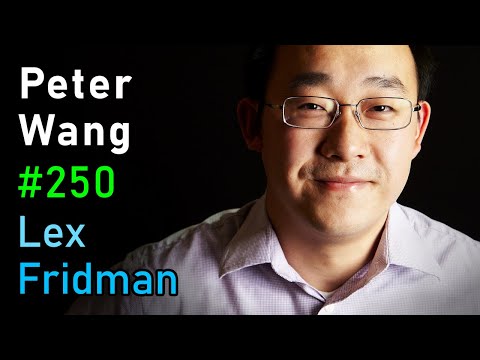 2:46:40ENLex Fridman· 23 dic 2021Pódcast · 2 vocesThe Tools That Fit in a Head Were Built by People Who Fit in a VanInvitado: Peter Wang · Presenta: Lex FridmanAnaconda's Peter Wang talks with Lex Fridman about Python, cybernetic systems, and why sharing software creates value that scarcity economics still cannot price.
 3:05:24ENLex Fridman· 22 sept 2021Pódcast · 2 vocesTravis Oliphant wrote NumPy in an empty semester — and still wants open source to payInvitado: Travis Oliphant · Presenta: Lex FridmanThe creator of NumPy, SciPy, and Anaconda tells Lex Fridman how array thinking, a priced book, and the packaging wars shaped scientific Python.
 2:21:27ENLex Fridman· 9 sept 2021Pódcast · 2 vocesThe IBM Manual Was So Bad He Became a Computer ScientistInvitado: Donald Knuth · Presenta: Lex FridmanDonald Knuth talks with Lex Fridman about first programs on an IBM 650, literate programming, the Knuth-Morris-Pratt algorithm, and the hardest theorem he ever proved.
 3:03:38ENLex Fridman· 12 feb 2021Pódcast · 2 vocesA Ten-Day Language That Still Runs the WebInvitado: Brendan Eich · Presenta: Lex FridmanBrendan Eich tells Lex Fridman how JavaScript, Firefox, Mozilla, and Brave were built from rushed bets, open-source escape pods, and accidental tracking.
 2:46:57ENLex Fridman· 18 oct 2020Pódcast · 2 vocesProgramming Languages Are Bicycles for the MindInvitado: Chris Lattner · Presenta: Lex FridmanChris Lattner talks with Lex Fridman about Swift, LLVM, RISC-V, and why the next leap in computing is as much a language problem as a silicon one.
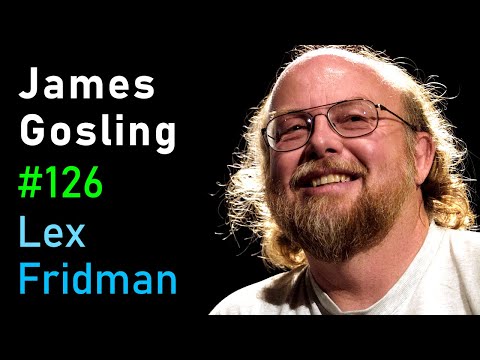 1:51:01ENLex Fridman· 24 sept 2020Pódcast · 2 vocesJames Gosling Built Java to Make Pointer Bugs Impossible. Chrome Still Has Them.Invitado: James Gosling · Presenta: Lex FridmanIn a 2020 conversation with Lex Fridman, Java’s designer traces a line from a neglected PDP-8 to Emacs, the JVM, and a thirty-year war on memory errors.
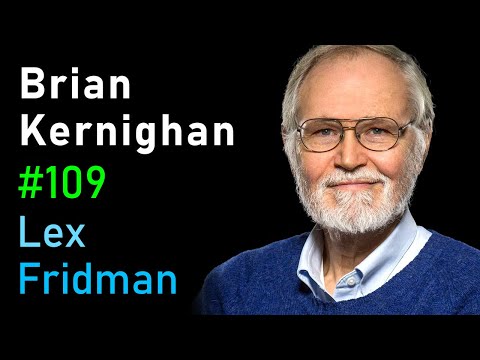 1:43:10ENLex Fridman· 18 jul 2020Pódcast · 2 vocesKen Thompson's Wife Left for Three Weeks. He Wrote Unix.Invitado: Brian Kernighan · Presenta: Lex FridmanBrian Kernighan walks Lex Fridman through Bell Labs, C, AWK, AMPL, and a lifetime of tools that millions of people still run — including all of his mistakes.
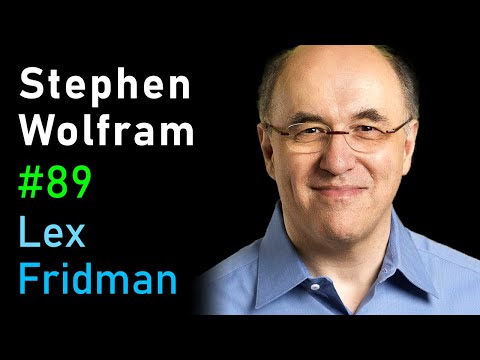 3:11:09ENLex Fridman· 18 abr 2020Pódcast · 2 vocesIn the computational universe, the animals are always smarter than youInvitado: Stephen Wolfram · Presenta: Lex FridmanStephen Wolfram talks with Lex Fridman about Rule 30, computational irreducibility, a hypergraph model of physics, and why Wolfram Language is a notation for talking about the world.
 1:45:56ENLex Fridman· 30 dic 2019Pódcast · 2 vocesPoint eight is enough: Donald Knuth on algorithms, TeX, and a life in one chairInvitado: Donald Knuth · Presenta: Lex FridmanLex Fridman visits Donald Knuth at home for a conversation about the IBM 650, geek brains, literate programming, The Art of Computer Programming, TeX, P versus NP, and a happiness budget of 80 percent.
 1:47:13ENLex Fridman· 7 nov 2019Pódcast · 2 vocesWhen You Hit the Brakes, a Computer Is in the WayInvitado: Bjarne Stroustrup · Presenta: Lex FridmanBjarne Stroustrup on why C++ still sits between the pedal and the pads, and why an abstraction that costs extra has no place in the language.
 1:05:59EN
Derek Dreyer: Proving the Safety of Rust with RustBelt and IrisDerek Dreyer · Max Planck Institute for Software SystemsRust combines safe interfaces with libraries that use unsafe code internally. Derek Dreyer explains how RustBelt verifies those libraries and why its proof needs an expressive logic for concurrency.
 1:13:06ENLex Fridman· 13 may 2019Pódcast · 2 vocesThe Compiler That Got Apple, Google, and Intel to Share a CodebaseInvitado: Chris Lattner · Presenta: Lex FridmanChris Lattner walks through LLVM, Clang, Swift, TPU numeric formats, and why compiler work is mostly software engineering.
 1:18:13EN
Lindsey Kuper on Abstractions for Correct and Efficient Parallel ComputingLindsey Kuper · University of California, Santa CruzFrom lattice-based shared state to non-invasive parallel languages and neural-network verification, high-level abstractions can make systems both safer and faster.
 1:26:44ENLex Fridman· 22 nov 2018Pódcast · 2 vocesHe raised Python like a child, then set it freeInvitado: Guido van Rossum · Presenta: Lex FridmanIn a 2018 conversation with Lex Fridman, Guido van Rossum traces Python from electronics kits and Conway's Game of Life to the Thursday morning he resigned as benevolent dictator for life.
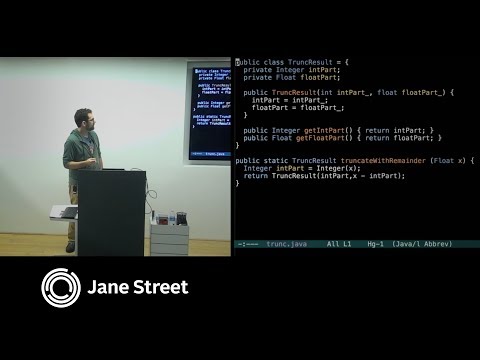 1:08:43EN
Ron Minsky on Types and Why They Matter in SoftwareYaron Minsky · Jane StreetType systems can make programs faster, catch mistakes and guide large refactorings, but their value depends on the language and the work. Ron Minsky explains the trade-offs through practical examples.
 52:51EN
Caveat Configurator: When Configuration Becomes CodeDominick LoBraico · Jane StreetDominick LoBraico explains why flexible OCaml plugins created production problems at Jane Street, and how configuration generation and disciplined plugin management address them.
Cargar másMostrando 24 de 30