








Resultados
9 artículosOrdenar
 16:57EN
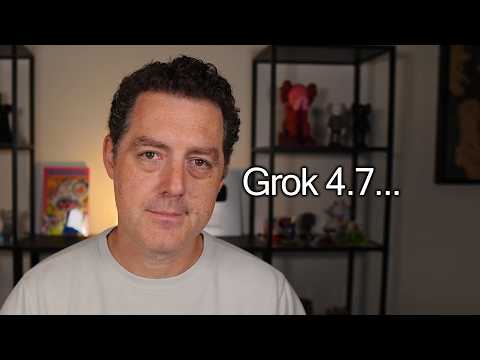
Grok 4.7 Compared: Coding, Knowledge Work and Cost per TaskMatthew Berman · Forward FutureMatthew Berman examines reported benchmarks and prices while noting missing competitors and limited hands-on testing.
 23:39ZH
 跟李沐学AI· 23 jul 2025李沐:给文本大模型加入一千万小时语音,开源 Higgs Audio李沐 · Boson AI李沐介绍团队如何在文本大语言模型的训练里加入大量语音数据,做成能听能说的 AudioLLM,并把 Higgs Audio 开源。他讲了架构取舍、token 压缩、数据从哪来,以及怎么在 3090 上跑起来。
 16:28EN
Testing Reka Core: Multimodal Benchmarks, Coding and ReasoningMatthew Berman · Forward FutureMatthew Berman reviews Reka’s reported model comparisons and tests Core on code, logic and image understanding.
 15:01EN
Testing Llama 3 at Launch: Code, Reasoning and Image GenerationMatthew Berman · Forward FutureMatthew Berman tries Meta AI’s new interface on a snake game, logic puzzles and rapid image generation.
 18:46EN
 Lex FridmanPódcastDeep Learning Plus One Idea: Ilya Sutskever on Building AGIPresenta: Lex FridmanIn a May 2020 conversation, Sutskever discusses self-play, simulation, bodies and consciousness, tests of intelligence, and how an AGI might be governed and aligned.
 17:40ENLex FridmanPódcastFrom AlphaGo Zero to MuZero: How Self-Play Strips Knowledge Out of AIPresenta: Lex FridmanDeepMind's David Silver explains why removing human knowledge made AlphaZero stronger and more general, and how MuZero extended the idea to worlds with unknown rules.
 16:41ENLex FridmanPódcastAlphaFold 2 and the Protein-Folding Breakthrough: Why Lex Fridman Calls It a Landmark for AI and BiologyPresenta: Lex FridmanA quick explainer on DeepMind's CASP14 result, how protein folding works, how AlphaFold 1 and 2 likely differ, and what the advance could unlock.
 20:36ENLex FridmanPódcastWhy Simple Theories Win: Marcus Hutter on Occam's Razor, Compression and Kolmogorov ComplexityPresenta: Lex FridmanDeepMind researcher Marcus Hutter explains Solomonoff induction, why compression equals understanding, and how a simple universe can still look rich.
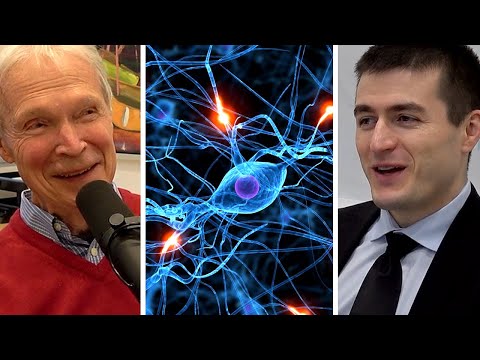 20:50ENLex FridmanPódcastGlitches as Features: What John Hopfield Says Artificial Neural Networks Are MissingPresenta: Lex FridmanIn a short conversation with Lex Fridman, physicist and neural-network pioneer John Hopfield compares evolved brains with today's artificial networks and explains why he expects AI to borrow from biology generation after generation.