








Resultados
344 artículosOrdenar
 1:42:06EN
 Cognitive Revolution "How AI Changes Everything"· 8 jul 2025PódcastEvery Frontier Lab Is Spending a Billion a Year on Data. Here Is Where It GoesPresenta: Nathan LabenzLabelbox CEO Manu Sharma on the $15 billion Scale deal, RL “gyms,” $250,000 trainers, and why post-training now eats the budget that used to belong to pre-training.
 1:09EN
 Matthew Berman· 3 jul 2025A Discussion of GPT-4.5’s Scaling and TrainingA speaker offers an assessment of GPT-4.5’s cost, speed and alleged training challenges.
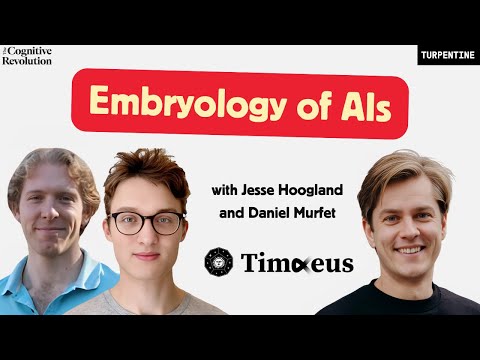 1:37:05ENCognitive Revolution "How AI Changes Everything"· 19 jun 2025PódcastAn Algebraic Geometer Quit Tenure Because the Bowl-Shaped Loss Plot Is a LiePresenta: Nathan LabenzJesse Hoogland and Daniel Murfet of Timaeus argue that singularities in the loss landscape — not the smooth valleys in every slide deck — are what actually govern how neural networks learn, generalize, and go wrong.
 48:51EN
 Sequoia Capital· 17 jun 2025PódcastThe Breakthroughs for AGI Are Already Done, Says OpenAI’s Former Research HeadBob McGrew tells Sequoia’s Training Data that 2025 is the year of reasoning, agents will be priced at the cost of compute, and nothing fundamental will be added to the stack by 2035.
 22:05ENMatthew Berman· 9 jun 2025Apple’s “Illusion of Thinking”: Puzzle Limits and a Code-Assisted TestMatthew Berman, Ilya Sutskever · Forward FutureMatthew Berman reviews Apple’s reasoning-model experiments and tests a different way to solve Tower of Hanoi using generated code.
 10:09ENMatthew Berman· 30 may 2025DeepSeek R1 0528: Benchmark Gains and Two Coding TestsMatthew Berman · Forward FutureMatthew Berman examines the May 2025 DeepSeek reasoning-model update, comparing reported benchmark gains with his own Rubik’s Cube and Snake programming tests.
 1:54:08ENCognitive Revolution "How AI Changes Everything"· 29 may 2025PódcastWhy Anthropic's first check went to a company building microscopes for neural netsPresenta: Nathan LabenzGoodfire's Dan Balsam and Tom McGrath argue that mechanistic interpretability now has a proto-paradigm, two stubborn gaps, and three products worth shipping today.
 2:12:00ENCognitive Revolution "How AI Changes Everything"· 15 may 2025PódcastGradient Descent at Test Time: Titans Pushes LLM Context to 10 Million TokensPresenta: Nathan LabenzA Cornell PhD student's neural memory module holds about 70% accuracy where GPT-4's scores fall off a cliff.
 47:00EN
 Unsupervised Learning: With Jacob Effron· 8 may 2025PódcastAn Eval Lasts Three Months — and a Frozen Frontier Would Still Feed Startups for a DecadePresenta: Jacob EffronOpenAI’s GPT-4.1 post-training lead Michelle Pokrass tells Unsupervised Learning how the team spent three months on evals before training, why agents fail on wiring more than intelligence, and when to reach for RFT.
 38:10EN
 No Priors: AI, Machine Learning, Tech, & Startups· 1 may 2025Pódcast · 2 voceso3 should wait exactly as long as the answer takesPresenta: Sarah Guo, Elad GilOpenAI researchers Eric Mitchell and Brandon McKinzie tell No Priors why o3's leap is a chain of tools during reasoning — and why you should send the same prompt a hundred times.
 0:34ENMatthew Berman· 1 may 2025DeepSeek-Prover-V2 and Its Formal Math ResultsMatthew Berman · Forward FutureMatthew Berman highlights DeepSeek’s reported theorem-proving results on miniF2F, PutnamBench and formalized AIME problems.
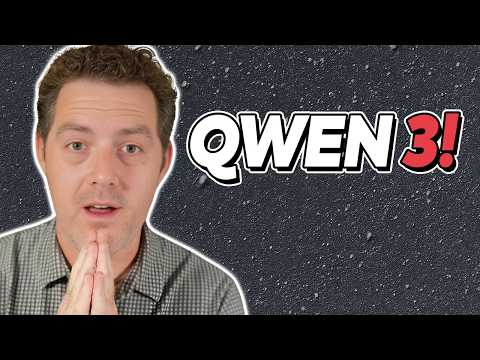 14:04ENMatthew Berman· 29 abr 2025Qwen3: Open Weights, Adjustable Reasoning and Tool UseMatthew Berman · Forward FutureMatthew Berman reviews the April 2025 Qwen3 family, its benchmark claims, training pipeline and local demonstration.
 26:35ENMatthew Berman· 23 abr 2025Testing Gemini 2.5 Flash on Coding and Video UnderstandingMatthew Berman · Forward FutureMatthew Berman compares Google’s faster model with Gemini 2.5 Pro through interactive simulations, games and questions about a long video.
 15:45ENMatthew Berman· 18 abr 2025AI News: Gemini 2.5 Flash, OpenAI Models, Claude Research and Kling 2.0Matthew Berman · Forward FutureMatthew Berman reviews a week of 2025 model releases, research tools and agent announcements, including historical price and benchmark comparisons.
 58:11ENSequoia Capital· 15 abr 2025PódcastPatrick Hsu Wants an App Store for Biology, Not Just Better DrugsThe Arc Institute co-founder argues that Evo 2, trained on genomes rather than proteins, should underpin tools for every step of the scientific method.
 2:29:41ZH
 Zhang Xiaojun Podcast· 7 abr 2025Pódcast · 4 voces陈建宇:机器人基座模型如何走向通用 VLAInvitado: 陈建宇 · Presenta: 张小珺从 SayCan、RT-2 到 Diffusion Policy,清华助理教授、星动纪元创始人陈建宇梳理机器人模型从借用语言模型到端到端 VLA 的路线。关键难题仍是多样化数据、跨本体泛化和高频动作控制。
 1:14:11ENCognitive Revolution "How AI Changes Everything"· 5 abr 2025PódcastThe Reasoning Curve Was Smooth All Along: Gemini 2.5's Jack Rae on Thinking, Memory, and AGIPresenta: Nathan LabenzDeepMind's thinking-and-inference lead explains why RL-for-reasoning felt sudden, why Gemini shows raw chain of thought, and why a million-token window still is not memory.
 26:05ENMatthew Berman· 31 mar 2025Inside Claude: What Interpretability Research Reveals—and What It Cannot Yet ExplainMatthew Berman · Forward FutureMatthew Berman examines Anthropic’s case studies on multilingual features, planning, arithmetic, hallucinations and safety.
 1:43:54ENCognitive Revolution "How AI Changes Everything"· 23 mar 2025PódcastA Year to Grow a Brain Organoid, an Hour to Simulate ItPresenta: Nathan LabenzStanford postdoc Siyu He tells Nathan Labenz how Squidiff and CORAL move single-cell and spatial experiments into the computer — and where the models still cannot go.
 35:14ENNo Priors: AI, Machine Learning, Tech, & Startups· 20 mar 2025Pódcast · 2 vocesRobots Have No Wikipedia. Chelsea Finn Is Starting With Three Buildings.Presenta: Sarah Guo, Elad GilPhysical Intelligence’s cofounder tells No Priors why a generalist robot model has to be trained across embodiments, why open-sourcing hardware is a bet against the problem going unsolved, and why humanoids are a little overrated.
 1:10:23ENUnsupervised Learning: With Jacob Effron· 17 mar 2025PódcastA Million Tokens per Dollar: Why Noam Shazeer Thinks Inference Compute Is Still UntappedPresenta: Jacob EffronThe Transformer co-inventor and Gemini researcher Jack Rae walk through test-time compute, Ilya Sutskever's AGI critique, and a four-year-old who now lectures his teacher about lizards.
 1:56:38ENCognitive Revolution "How AI Changes Everything"· 8 mar 2025Pódcasto3 took ARC from 20% to 87%. Nathan Labenz sketches early superintelligencePresenta: Nathan LabenzOn Consistently Candid, the Cognitive Revolution host argues that math and coding will be superhuman by 2026, and that a reasoning core plus specialist “intuitive physics” may already be enough.
 12:10ENMatthew Berman· 6 mar 2025Mercury Coder and Diffusion Language Models: Speed, Demos and LimitsMatthew Berman · Forward FutureMatthew Berman explores Inception’s 2025 coding model, comparing iterative text refinement with autoregressive generation and examining speed claims.
 1:02:41EN
 20VC with Harry Stebbings· 3 mar 2025Pódcast · 2 vocesMike Krieger on AI Products, Model Competition and the Future of CodingInvitado: Mike Krieger · Presenta: Harry StebbingsAnthropic’s chief product officer explains how he thinks about product design, model differentiation and the limits of current AI tools.
Cargar másMostrando 24 de 344