









Resultados
101 artículosOrdenar
 2:28:11EN
 Lex Fridman· 1 nov 2020Pódcast · 2 vocesPeople Are Easy to Predict — and They Hate Being Told SoInvitado: Charles Isbell · Presenta: Lex FridmanGeorgia Tech dean Charles Isbell talks with Lex Fridman about interactive AI, computing as a mindset, and race in America.
 2:34:20ENLex Fridman· 30 ago 2020Pódcast · 2 vocesIntelligence Is How Efficiently You Acquire Skills You Were Not Prepared ForInvitado: François Chollet · Presenta: Lex FridmanFrançois Chollet tells Lex Fridman why skill is not intelligence, why GPT-3 is still pattern matching, and why a grid puzzle called ARC still separates children from machines.
 1:37:31ENLex Fridman· 14 jul 2020Pódcast · 2 vocesThe Robot That Brought the Beer Was Being TeleoperatedInvitado: Sergey Levine · Presenta: Lex FridmanSergey Levine tells Lex Fridman why hardware is almost closed, why common sense has to be lived, and why offline reinforcement learning is the missing on-ramp from logs to robots that keep getting better.
 2:00:32ENLex Fridman· 3 jul 2020Pódcast · 2 vocesSlow Synapses Grow Fast Learners — Warmth Is the Harder ProblemInvitado: Matt Botvinick · Presenta: Lex FridmanDeepMind neuroscience director Matt Botvinick tells Lex Fridman how prefrontal cortex, meta-reinforcement learning, and dopamine research meet the human question of what a better life with AI would actually look like.
 45:31ENLex Fridman· 1 jul 2020PódcastYou Are Your Own Existence Proof: Karl Friston on Free Energy, Life, and Self-AwarenessPresenta: Lex FridmanKarl Friston explains how the free energy principle reframes existence, life, planning, and self-awareness as inference problems.
 1:37:28ENLex Fridman· 8 may 2020Pódcast · 2 vocesWe Are Still Massively Underestimating Deep LearningInvitado: Ilya Sutskever · Presenta: Lex FridmanIlya Sutskever tells Lex Fridman why 2012 was about conviction, why bigger models can get worse before they get better, and what he would do with an AGI.
 1:12:03ENLex Fridman· 5 may 2020Pódcast · 2 vocesMice Don't Get Alzheimer's: Daphne Koller on Disease in a DishInvitado: Daphne Koller · Presenta: Lex FridmanThe Coursera co-founder and insitro CEO on why most diseases are not one disease, how to turn cells into data, and why overconfident neural nets can kill.
 1:12:48ENLex Fridman· 29 feb 2020Pódcast · 2 vocesJohn Hopfield's Physics of Mind: Glitches Become FeaturesInvitado: John Hopfield · Presenta: Lex FridmanThe Princeton physicist walks Lex Fridman from a wobbly London bridge to Hopfield networks, consciousness-as-story, and why his famous model still does not explain learning.
 1:45:49ENLex Fridman· 24 feb 2020Pódcast · 2 vocesPrediction is not a decision: Michael I. Jordan on markets and the unfinished AI revolutionInvitado: Michael I. Jordan · Presenta: Lex FridmanThe Berkeley statistician tells Lex Fridman that today's systems are a proto-engineering field, and that the hard work is connecting producers and consumers — not imitating minds.
 1:44:55ENLex Fridman· 14 feb 2020Pódcast · 2 vocesIf You Need 60,000 Digits, You Have Not Found IntelligenceInvitado: Vladimir Vapnik · Presenta: Lex FridmanVladimir Vapnik tells Lex Fridman that intelligence is the art of shrinking a sea of functions with a few good predicates — and that MNIST, solved with sixty examples per class, is the test.
 26:02ENLex Fridman· 9 feb 2020PódcastMoore’s Law Is Not Dead—It Is a Cascade of S-CurvesPresenta: Lex FridmanJim Keller explains why transistor scaling keeps outrunning its obituary, and how exponential hardware changes the mathematics AI can attempt.
 1:18:41ENLex Fridman· 14 ene 2020Pódcast · 2 vocesThe SS Soldier Who Hugged a Jewish Boy, and the Systems That Still Fool UsInvitado: Daniel Kahneman · Presenta: Lex FridmanDaniel Kahneman on System 1, deep learning that does not know what it is saying, and why a machine that must call a human is almost as hard as a machine that never needs one.
 1:23:01ENLex Fridman· 11 dic 2019Pódcast · 2 vocesYou Cannot Ask a Question You Have No Words ForInvitado: Judea Pearl · Presenta: Lex FridmanA teenager spent three days in bed with a fever after learning that geometry could be done in algebra — then spent a career giving cause and effect a mathematics.
 35:46ENLex Fridman· 29 nov 2019Pódcast · 2 vocesYou never hear structure: Noam Chomsky on language, cognition, and deep learningInvitado: Noam Chomsky · Presenta: Lex FridmanLex Fridman asks the linguist whether we could talk to aliens, how far language goes in the brain, and whether neural networks tell us anything about the mind.
 49:53ENLex Fridman· 25 nov 2019Pódcast · 2 vocesGilbert Strang still teaches with thick chalk and four subspacesInvitado: Gilbert Strang · Presenta: Lex FridmanThe MIT linear-algebra legend talks with Lex Fridman about OpenCourseWare, singular values, neural nets as a million folds, and why calculus hogged the undergraduate timetable.
 1:48:55ENLex Fridman· 19 nov 2019Pódcast · 2 vocesThree Fairness Rules That Cannot All Be TrueInvitado: Michael Kearns · Presenta: Lex FridmanMichael Kearns tells Lex Fridman why algorithmic fairness is messier than privacy, and why a Pareto curve belongs in front of the people who actually have to choose.
 1:03:13ENLex Fridman· 30 sept 2019Pódcast · 2 vocesYou Can't Have Both Kinds of Fairness, Says Peter NorvigInvitado: Peter Norvig · Presenta: Lex FridmanThe co-author of Artificial Intelligence: A Modern Approach walks Lex Fridman through recidivism scores, utility functions, Lisp, MOOCs, and why human-level intelligence should not be the goal.
 1:59:49ENLex Fridman· 14 sept 2019Pódcast · 2 vocesIntelligence is not the height of a building: François Chollet on Keras, deep learning, and why AGI will not explodeInvitado: François Chollet · Presenta: Lex FridmanThe Keras creator tells Lex Fridman that intelligence lives in a brain, a body, and a problem, that science already is a recursively self-improving superhuman system with linear output, and that the real near-term danger is the newsfeed.
 1:15:58ENLex Fridman· 31 ago 2019Pódcast · 2 vocesHuman Intelligence Is a Ridiculously Narrow SliverInvitado: Yann Lecun · Presenta: Lex FridmanYann LeCun tells Lex Fridman why giant nets plus gradient descent broke the textbooks, why "AGI" is the wrong word, and why the next leap is a world model learned like a baby.
 1:44:11ENLex Fridman· 27 ago 2019Pódcast · 2 vocesA Single GPU Is Enough: Jeremy Howard on Teaching Deep LearningInvitado: Jeremy Howard · Presenta: Lex FridmanThe fast.ai founder tells Lex Fridman why domain experts, not more papers or more TPUs, will decide whether deep learning actually helps people.
 2:09:42ENLex Fridman· 1 jul 2019Pódcast · 2 vocesThe Brain Does Not Classify Images. It Navigates Maps.Invitado: Jeff Hawkins · Presenta: Lex FridmanJeff Hawkins tells Lex Fridman why the neocortex stores the world as thousands of voting reference frames, and why scaling today's networks will not get us there.
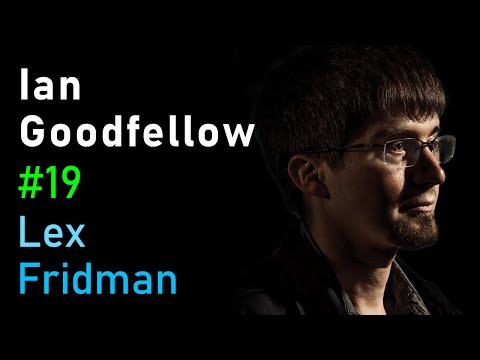 1:08:37ENLex Fridman· 18 abr 2019Pódcast · 2 vocesA Bar in Montreal, Then a Night of Code: Ian Goodfellow on Why GANs WorkInvitado: Ian Goodfellow · Presenta: Lex FridmanLex Fridman talks with Ian Goodfellow about the 2014 invention of generative adversarial networks, adversarial examples as a security problem, and what still has to be built before machines can hold a fact the way a person does.
 1:01:24ENLex Fridman· 12 mar 2019Pódcast · 2 vocesLeslie Kaelbling: You Buy the Ticket Before You Can Plan the AirportInvitado: Leslie Kaelbling · Presenta: Lex FridmanThe MIT roboticist tells Lex Fridman why abstractions, belief-space control, and built-in bias matter more than picking a tribe of symbols or neural nets.
 1:20:21ENLex Fridman· 19 ene 2019Pódcast · 2 vocesEinstein Was the Worst of Five Ph.D. StudentsInvitado: Tomaso Poggio · Presenta: Lex FridmanMIT neuroscientist Tomaso Poggio on why intelligence is science's deepest problem, and what brains still have to teach machines.
Cargar másMostrando 24 de 101