








Artículos recientes
4483 artículosOrdenar
 2:48:46EN
 Lex Fridman· 9 ago 2020Pódcast · 2 vocesLet Physics Walk: Russ Tedrake on Underactuated Robots, Contact, and Barefoot CommutesInvitado: Russ Tedrake · Presenta: Lex FridmanMIT’s Russ Tedrake talks with Lex Fridman about gravity-powered walkers, a dead trout that swims upstream, why contact still breaks classical control, and what the DARPA Robotics Challenge taught him about testing.
 2:29:24ENLex Fridman· 31 jul 2020Pódcast · 2 vocesWe Are the Descendants of the First Digital ComputerInvitado: Manolis Kellis · Presenta: Lex FridmanMIT computational biologist Manolis Kellis tells Lex Fridman why life is digital, why any two humans are 99.9 percent identical, and what evolutionary signatures reveal inside SARS-CoV-2.
 1:34:10EN
 All-In Podcast· 31 jul 2020Pódcast · 4 vocesAll-In E6: Antitrust, Startup Acquisitions and Platform SpeechPresenta: Jason Calacanis, Chamath Palihapitiya, David Sacks, David FriedbergA July 2020 debate on Big Tech hearings, marketplace power and the presidential election.
 2:01:15ENLex Fridman· 29 jul 2020Pódcast · 2 vocesNobody Died from the Fukushima ReactorsInvitado: Ian Hutchinson · Presenta: Lex FridmanMIT plasma physicist Ian Hutchinson on fusion, a hundredfold carbon cut, scientism, and why faith is more than believing unproven claims.
 2:07:32ENLex Fridman· 26 jul 2020Pódcast · 2 vocesRichard Karp: Either All These Problems Are Easy, or None of Them AreInvitado: Richard Karp · Presenta: Lex FridmanThe Turing Award winner walks Lex Fridman from a geometry proof that stopped him at 13 through NP-completeness, randomized algorithms, and why no program yet outthinks a six-month-old.
 11:41EN
 Jane Street· 21 jul 2020Five Ways to Calculate the Wait for a Successful ShotSawyer · Jane StreetA 20% success rate leads to an expected wait of five attempts—but two consecutive successes take 30. Explore the reasoning through series, recursion and a long-run argument.
 1:41:37ENLex Fridman· 21 jul 2020Pódcast · 2 vocesThe Fallacy of the Successful First Step: Jitendra Malik on Why Seeing Still Isn't SolvedInvitado: Jitendra Malik · Presenta: Lex FridmanBerkeley's Jitendra Malik tells Lex Fridman why computer vision keeps underestimating itself, why full self-driving still needs cognition, and why vision is the parent of language.
 3:40ENLex Fridman· 20 jul 2020Pódcast · 2 vocesBrian Kernighan on JavaScript and Software DependenciesInvitado: Brian Kernighan · Presenta: Lex FridmanA 2020 conversation about language evolution and package complexity.
 1:43:10ENLex Fridman· 18 jul 2020Pódcast · 2 vocesKen Thompson's Wife Left for Three Weeks. He Wrote Unix.Invitado: Brian Kernighan · Presenta: Lex FridmanBrian Kernighan walks Lex Fridman through Bell Labs, C, AWK, AMPL, and a lifetime of tools that millions of people still run — including all of his mistakes.
 10:32ENJane Street· 17 jul 2020Real Numbers: Expected Time Between Exams and a Half-Court Shot ChallengeSawyer · Jane StreetSawyer solves an exam-scheduling problem in several ways, then asks how many basketball attempts it takes to make one shot or two in a row.
 1:37:31ENLex Fridman· 14 jul 2020Pódcast · 2 vocesThe Robot That Brought the Beer Was Being TeleoperatedInvitado: Sergey Levine · Presenta: Lex FridmanSergey Levine tells Lex Fridman why hardware is almost closed, why common sense has to be lived, and why offline reinforcement learning is the missing on-ramp from logs to robots that keep getting better.
 6:04ENJane Street· 14 jul 2020Finals Week and the Expected Number of Snowboards UsedSawyer · Jane StreetSawyer poses a new exam-scheduling puzzle and uses indicator variables in two ways to solve the previous snowboard problem.
 6:16ENJane Street· 10 jul 2020Indicator Variables: Marching Bands and SnowboardsSawyer · Jane StreetSawyer uses linearity of expectation to count in-step rows, then poses a six-snowboard challenge.
 1:09:14ENLex Fridman· 8 jul 2020Pódcast · 2 vocesSuffering Is a State You'd Rather Not Be In — Peter Singer on Animals, Robots, and UsInvitado: Peter Singer · Presenta: Lex FridmanOn Lex Fridman's podcast, the Princeton bioethicist defines suffering, extends it from factory farms to possible machine minds, and still puts extreme poverty first.
 9:40ENJane Street· 7 jul 2020Real Numbers: A Marching Band Challenge, Expected Damage, and Bayes’ RuleSawyer · Jane StreetSawyer introduces a marching-band expected-value puzzle and uses linearity and Bayesian updating to solve a monster-attack problem.
 10:08ENJane Street· 3 jul 2020Expected Damage and a Golden-Ratio Window PuzzleSawyer · Jane StreetSawyer introduces expected value with an unknown video-game monster, then uses geometry to solve a painting-through-a-window problem.
 2:00:32ENLex Fridman· 3 jul 2020Pódcast · 2 vocesSlow Synapses Grow Fast Learners — Warmth Is the Harder ProblemInvitado: Matt Botvinick · Presenta: Lex FridmanDeepMind neuroscience director Matt Botvinick tells Lex Fridman how prefrontal cortex, meta-reinforcement learning, and dopamine research meet the human question of what a better life with AI would actually look like.
 45:31ENLex Fridman· 1 jul 2020PódcastYou Are Your Own Existence Proof: Karl Friston on Free Energy, Life, and Self-AwarenessPresenta: Lex FridmanKarl Friston explains how the free energy principle reframes existence, life, planning, and self-awareness as inference problems.
 7:55ENJane Street· 30 jun 2020The Art Thief’s Window and a Toy Boat’s Return JourneySawyer · Jane StreetSawyer poses a geometric window puzzle and solves the previous episode’s river-crossing problem in two ways.
 1:02:14ENLex Fridman· 30 jun 2020Pódcast · 2 vocesThe 28-year wait: Robert Langer on rejection, polymers, and a thousand studentsInvitado: Robert Langer · Presenta: Lex FridmanThe MIT bioengineer talks with Lex Fridman about drug delivery, tissue engineering, patents, and the long path from a Folkman hypothesis to Avastin.
 1:49:51ENLex Fridman· 27 jun 2020Pódcast · 2 vocesThe Idea Once Called a Devolution Now Powers Almost Every New ChipInvitado: David Patterson · Presenta: Lex FridmanTuring Award winner David Patterson talks with Lex Fridman about RISC, RAID, Moore's Law, open hardware, and why chips without a software stack die.
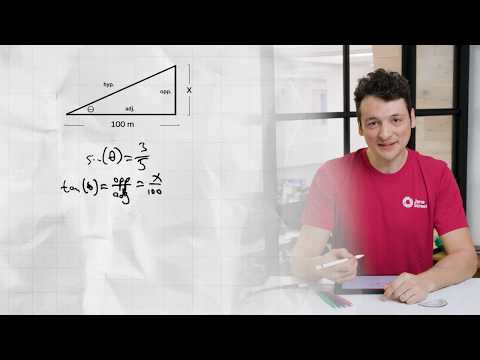 5:38ENJane Street· 26 jun 2020Wavey’s Return: Solving a River-Crossing PuzzleSawyer · Jane StreetSawyer solves the first toy-boat crossing with a 5:3 speed ratio, then asks how the answer changes when the return journey starts 60 meters downstream.
 6:37ENJane Street· 23 jun 2020Crossing the River: A Toy Boat Puzzle and a Snow-Cone SolutionSawyer · Jane StreetA toy boat drifts downstream in a steady current. Sawyer poses a navigation puzzle and solves the previous episode’s cone-and-hemisphere problem.
 4:08:58ENLex Fridman· 22 jun 2020Pódcast · 2 vocesThe Man Who Named AGI Wants Superintelligence Raised on CompassionInvitado: Ben Goertzel · Presenta: Lex FridmanLex Fridman talks with Ben Goertzel for four hours about OpenCog, Sophia, SingularityNET, and why a bigger neural net is not a mind.
Cargar másMostrando 24 de 4483