









Resultados
48 artículosOrdenar
 1:25:01EN
 Lex Fridman· 3 oct 2019Pódcast · 2 vocesGary Marcus: Deep Learning Imitates Intelligence. It Does Not Understand.Invitado: Gary Marcus · Presenta: Lex FridmanOn Lex Fridman's podcast, the NYU emeritus and Rebooting AI co-author argues that perception and reasoning need different tools — and that trustworthy AI is impossible until machines can represent harm, bottles, and intent.
 1:17:29ENLex Fridman· 23 sept 2019Pódcast · 2 vocesThe Algorithm Is Already Better. The Clinic Still Uses 1967.Invitado: Regina Barzilay · Presenta: Lex FridmanMIT's Regina Barzilay on why deep learning already beats the breast-cancer 'density' score — and why data, liability, and incentives still will not move.
 1:59:49ENLex Fridman· 14 sept 2019Pódcast · 2 vocesIntelligence is not the height of a building: François Chollet on Keras, deep learning, and why AGI will not explodeInvitado: François Chollet · Presenta: Lex FridmanThe Keras creator tells Lex Fridman that intelligence lives in a brain, a body, and a problem, that science already is a recursively self-improving superhuman system with linear output, and that the real near-term danger is the newsfeed.
 1:44:11ENLex Fridman· 27 ago 2019Pódcast · 2 vocesA Single GPU Is Enough: Jeremy Howard on Teaching Deep LearningInvitado: Jeremy Howard · Presenta: Lex FridmanThe fast.ai founder tells Lex Fridman why domain experts, not more papers or more TPUs, will decide whether deep learning actually helps people.
 1:10:58ENLex Fridman· 3 jun 2019Pódcast · 2 vocesThe Hadoop Lesson That Made Google Give TensorFlow AwayInvitado: Rajat Monga · Presenta: Lex FridmanIn November 2015, Google put its core internal machine-learning system on GitHub. Rajat Monga explains why a company of that size would hand over the hard-to-copy part.
 1:46:01ENLex Fridman· 29 abr 2019Pódcast · 2 vocesThe Night AlphaStar Beat TLO, the Team Went to a BarInvitado: Oriol Vinyals · Presenta: Lex FridmanOriol Vinyals on how DeepMind turned StarCraft II into a sequence problem, built a league of agents, and still refuses to call the game solved.
 1:08:37ENLex Fridman· 18 abr 2019Pódcast · 2 vocesA Bar in Montreal, Then a Night of Code: Ian Goodfellow on Why GANs WorkInvitado: Ian Goodfellow · Presenta: Lex FridmanLex Fridman talks with Ian Goodfellow about the 2014 invention of generative adversarial networks, adversarial examples as a security problem, and what still has to be built before machines can hold a fact the way a person does.
 1:20:21ENLex Fridman· 19 ene 2019Pódcast · 2 vocesEinstein Was the Worst of Five Ph.D. StudentsInvitado: Tomaso Poggio · Presenta: Lex FridmanMIT neuroscientist Tomaso Poggio on why intelligence is science's deepest problem, and what brains still have to teach machines.
 1:19:59ENLex Fridman· 23 dic 2018Pódcast · 2 vocesSchmidhuber’s bet: true meta-learning rewrites the learner, not the last layerInvitado: Juergen Schmidhuber · Presenta: Lex FridmanJürgen Schmidhuber tells Lex Fridman how Gödel machines, compression-as-science, Power Play, LSTMs, and world models all descend from a teenage plan to multiply one person’s curiosity into a better physicist than he could ever be.
 42:45ENLex Fridman· 16 dic 2018Pódcast · 2 vocesA one-legged robot learned a backflip from "this is better"Invitado: Pieter Abbeel · Presenta: Lex FridmanPieter Abbeel tells Lex Fridman why preference comparisons, self-play, ten-minute demos, and messy ensembles of simulators are the practical path through deep reinforcement learning.
 54:03ENLex Fridman· 16 nov 2018Pódcast · 2 vocesThe Hardest Part of Learning Was Left Out of the TextbooksInvitado: Vladimir Vapnik · Presenta: Lex FridmanVladimir Vapnik tells Lex Fridman why intelligence is the work of inventing predicates that shrink the admissible set of functions, not of fitting a rule to a mountain of data.
 42:18ENLex Fridman· 20 oct 2018Pódcast · 2 vocesAn Adult Can Change Last Year's Mind. A Network Still Cannot.Invitado: Yoshua Bengio · Presenta: Lex FridmanYoshua Bengio tells Lex Fridman that the missing pieces of deep learning sit in credit assignment, training objectives, and a kind of compositionality borrowed from classical AI — not in ten thousand layers.
 15:01ENLex FridmanPódcast · 2 vocesDeep Learning Is a System 1 Machine: Daniel Kahneman on What AI Still LacksInvitado: Daniel Kahneman · Presenta: Lex FridmanThe Nobel-winning psychologist tells Lex Fridman how his fast-and-slow thinking framework maps onto deep learning, and why driving among pedestrians may require understanding people.
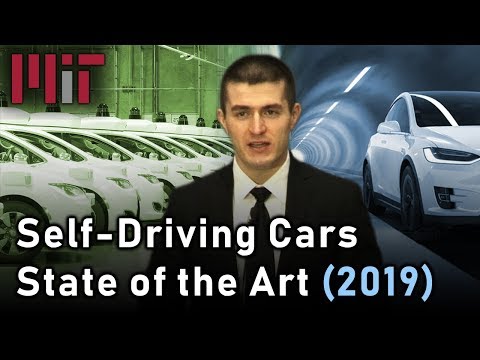 54:33ENLex FridmanPódcast · 2 vocesVision or Lidar, Human or Machine: Lex Fridman's 2019 Map of the Self-Driving RaceInvitado: Self-Driving Cars · Presenta: Lex FridmanThe opening lecture of MIT's 6.S094 course surveys 2018's milestones, the industry's optimistic predictions, and the beliefs about driving and humans that will decide who wins.
 10:16ENLex FridmanPódcast · 2 vocesReasoning Without Logic: Yann LeCun on Teaching Neural Networks to ThinkInvitado: Yann Lecun · Presenta: Lex FridmanYann LeCun explains why he believes neural networks can reason, and what memory, recurrence and continuous representations would need to look like.
 17:21ENLex FridmanPódcast · 2 vocesHow Alexa Learned to Hear From Across the Room: Rohit Prasad on Far-Field Speech and IntentInvitado: Rohit Prasad · Presenta: Lex FridmanAlexa's head scientist recalls the early days of the Echo, when far-field speech recognition seemed unsolvable and there were no customers to collect data from.
 1:08:06ENLex FridmanPódcast · 2 vocesDeep Learning in One Lecture: From Perceptrons to AutoML and the Limits of LearningInvitado: Deep Learning Basics · Presenta: Lex FridmanLex Fridman's opening lecture for MIT's 6.S094 course surveys why deep learning took off, how neural networks learn, and where the technique still falls short.
 24:08ENLex FridmanPódcast · 2 vocesIntelligence Is Not Just Prediction: David Ferrucci on Explanation, Persuasion and Shared MeaningInvitado: David Ferrucci · Presenta: Lex FridmanThe lead of IBM's Watson team argues that predicting well is only half of intelligence, and that being understood by others is the other half.
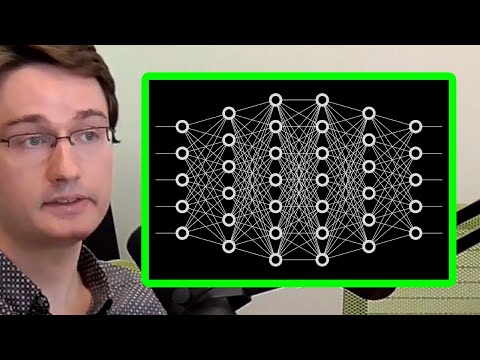 10:34ENLex FridmanPódcast · 2 vocesWhy Deep Learning Needs Rules: Chollet on Interpolation, Abstraction and Hybrid AIInvitado: François Chollet · Presenta: Lex FridmanFrançois Chollet explains why neural networks only interpolate between points they have seen, and why the best AI systems pair them with symbolic rules.
 52:28ENLex FridmanPódcast · 2 vocesRay Kurzweil on Hierarchies, the Neocortex and Merging with AIInvitado: Ray Kurzweil · Presenta: Lex FridmanIn an MIT AGI course lecture, Kurzweil connects the history of neural networks to his hierarchical theory of the neocortex, language understanding at Google, longevity, jobs and existential risk.
 1:00:15ENLex FridmanPódcast · 2 vocesCircuit Search, Hindsight and Self-Play: Ilya Sutskever's Case for Where Learning Is GoingInvitado: Ilya Sutskever · Presenta: Lex FridmanIn an MIT AGI lecture, OpenAI's co-founder explains why deep learning works, then walks through meta-learning, hindsight experience replay, sim-to-real transfer, self-play and learning goals from human feedback.
 11:59ENLex FridmanPódcast · 2 vocesFrom a Side Project to TensorFlow's Core: François Chollet on How Keras Came to BeInvitado: François Chollet · Presenta: Lex FridmanThe creator of Keras recalls why he built it in 2015 around recurrent networks, how it moved onto TensorFlow, and what TensorFlow 2.0 means for its design.
 26:45ENLex FridmanPódcast · 2 vocesStart Small, Build Habits, Pick Your Team: Andrew Ng's Practical Advice for Learning Deep LearningInvitado: Andrew Ng · Presenta: Lex FridmanIn a clip from the Lex Fridman Podcast, Andrew Ng explains how to begin in deep learning, how to study effectively, and how to choose a career path.
 51:18ENLex FridmanPódcast · 2 vocesEngineering Intelligence: Lex Fridman's Opening Lecture for MIT's AGI CourseInvitado: MIT AGI · Presenta: Lex FridmanLex Fridman lays out an engineering-first approach to artificial general intelligence, previews the course's projects and guest speakers, and frames deep learning's limits.