








Resultados
16 artículosOrdenar
CanalCognitive Revolution "How AI Changes Everything"TemaValidación con humanos en el bucleIdiomainglés
 1:29:02EN
 Cognitive Revolution "How AI Changes Everything"· 1 jul 2026PódcastFrom 50 Designs a Day to 1,500: How AI Changed What Jaguar Land Rover Can ExplorePresenta: Nathan LabenzNeural Concept’s Thomas von Tschammer on specialist physics models, engineering copilots, and why Formula 1 already runs thousands of designs overnight.
 1:18:49ENCognitive Revolution "How AI Changes Everything"· 8 feb 2026PódcastIf AGI Is Cheap Intelligent Labor, Cyber Defense Should Become Continuous ForensicsPresenta: Nathan LabenzAsymmetric Security founder Alexis Carlier argues that assuming AGI means redesigning defense around proactive digital forensics instead of alert triage.
 38:48ENCognitive Revolution "How AI Changes Everything"· 14 jun 2025PódcastTask Length Doubles Every Few Months. Nathan Labenz Still Wants Humans in ChargePresenta: Nathan LabenzAt Imagine AI Live, the Cognitive Revolution host maps structured AI agents against autonomous agentic systems—and tells businesses to keep final control.
 1:33:01ENCognitive Revolution "How AI Changes Everything"· 15 ene 2025PódcastRare Diseases Are Common: How a Harvard Gene Hunter Uses o1-pro on the Cases Sequencing Already MissedPresenta: Nathan LabenzDr. Catherine Brownstein of Boston Children's Hospital explains why cheap genomes made her job harder, why data sharing still beats any model, and where ChatGPT Pro actually gives her hours back.
 1:01:53ENCognitive Revolution "How AI Changes Everything"· 18 dic 2024PódcastHumans Wrote 1.3 Percent of the Tokens. The AI Lab Still Designed Working Nanobodies.Presenta: Nathan LabenzStanford's James Zou describes a GPT-4o research group that invented a protein-design pipeline for under $100 — and a sparse autoencoder that pulled an undocumented motif out of ESM-2.
 1:29:00ENCognitive Revolution "How AI Changes Everything"· 11 dic 2024Pódcast14,000 people applied. Thirty-three got in. The jobs are at Homeland Security.Presenta: Nathan LabenzMichael Boyce, director of the DHS AI Corps, tells Nathan Labenz how the largest civilian AI team in the U.S. government is being built — and what it is already shipping.
 1:55:53ENCognitive Revolution "How AI Changes Everything"· 5 dic 2024PódcastAI Beats Humans at Reading Papers. It Still Cannot Count Atoms.Presenta: Nathan LabenzAndrew White, Head of Science at Future House, maps what language models can already do in chemistry and biology—and the bottlenecks they do not dissolve.
 1:23:37ENCognitive Revolution "How AI Changes Everything"· 23 oct 2024PódcastNine of the top ten research ideas were Claude'sPresenta: Nathan LabenzStanford PhD student Chenglei Si ran a blind study pitting Claude 3.5 Sonnet against more than a hundred NLP researchers on novel research ideas.
 1:23:09ENCognitive Revolution "How AI Changes Everything"· 3 abr 2024PódcastThe Right Size of an AI Task Is Whatever You Can CheckPresenta: Nathan LabenzElicit founders Andreas Stuhlmüller and Jungwon Byun walk through how a twelve-person research assistant cut summary hallucinations from 1.5 to 0.5, ships about every week and a half, and treats task decomposition as the way to spend more compute without a black box.
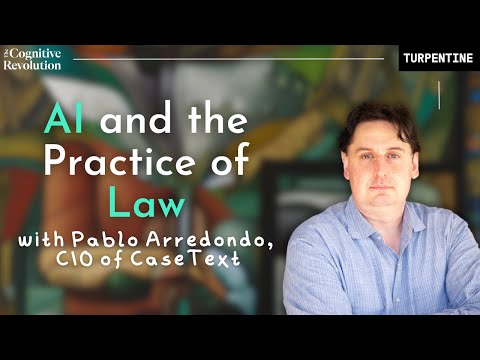 1:28:37ENCognitive Revolution "How AI Changes Everything"· 14 mar 2024PódcastTwelve Hours After a GPT-4 Demo, He Turned a Decade-Old Legal Startup AroundPresenta: Nathan LabenzPablo Arredondo, co-founder of CaseText and now VP of CoCounsel at Thomson Reuters, traces legal research from 19th-century citators to a retrieval-anchored GPT-4 product that law firms treat more like a colleague than a search box.
 1:33:51ENCognitive Revolution "How AI Changes Everything"· 23 may 2023PódcastGPT-4 still writes SQL that will not run. She put a guardrail on the modelPresenta: Nathan LabenzShreya Rajpal built Guardrails AI so developers can encode what “correct” means, validate the pieces, and send failures back to the model instead of hoping the prompt holds.
 1:28:43ENCognitive Revolution "How AI Changes Everything"· 16 may 2023PódcastClinical Guidelines Are 11% Evidence. Curai’s Founder Still Wants GPT-4 in the Exam RoomPresenta: Nathan LabenzNeal Khosla of Curai Health argues that large language models already match median U.S. physicians on today’s tests — and that the real work is scaffolding, supervision, and a doctor’s signature.
 58:24ENCognitive Revolution "How AI Changes Everything"· 11 may 2023PódcastAmong 100 Random Doctors, Zak Kohane Would Be Surprised If One Beat GPT-4Presenta: Nathan LabenzHarvard's biomedical informatics chair on a rare newborn case, why drug-style trials will not certify a general medical model, and why the AI should still work for the patient.
 58:26ENCognitive Revolution "How AI Changes Everything"· 25 abr 2023PódcastSeventy Percent of the Inbox Is a Pitch: Matt Welsh on the First Wave of AI AgentsPresenta: Nathan LabenzThe Fixie.ai founder maps copilot versus delegation, the missing appendages into our systems, and why agents will need guardrails, memory hygiene, and probably an earpiece.
 1:56:16ENCognitive Revolution "How AI Changes Everything"· 6 abr 2023PódcastThey Used Humans as Stand-In AIs. Now 250,000 People Run Elicit.Presenta: Nathan LabenzOught's founders tell Nathan Labenz why open-ended reasoning has to be decomposed, supervised, and grounded—not scaled until it merely looks persuasive.
 1:25:46ENCognitive Revolution "How AI Changes Everything"· 22 mar 2023PódcastDon't Make the Tools Agentic: Flo Crivello on What Production Agents Actually NeedPresenta: Nathan LabenzThe Lindy CEO tells Nathan Labenz that most working agents are intelligent workflows with human-designed control flow — and that scaffolding may still matter even if AGI arrives.