








Results
37 articlesSort
 40:44EN
 3Blue1Brown· Oct 16, 2026Grant Sanderson: There's never been a better time to go into mathGrant Sanderson, Constantin Kogler · 3Blue1BrownStudents fear AI has solved mathematics. Grant Sanderson argues the opposite: even if machines prove theorems better than we do, the institution of math stays valuable—and this is a rare moment when newcomers can reshape it.
 51:55EN3Blue1Brown· Sep 18, 2026The last IMO problem AI could not solveGrant Sanderson · 3Blue1BrownGrant Sanderson walks through IMO 2025 Problem 6 — a tiling puzzle that frontier models missed — and the visual patience it takes to prove a construction is optimal.
 1:16:29EN
Grant Sanderson and Alok Puranik: Positional Encodings Through Group TheoryGrant Sanderson, Alok Puranik · 3Blue1BrownStarting with assumptions about attention, they derive matrix exponentials and connect rotations, decay and Jordan blocks to RoPE and ALiBi.
 3:52:17EN
 Lex Fridman· Dec 31, 2025PodcastSome Infinities Are Larger Than OthersHost Lex FridmanJoel David Hamkins walks Lex Fridman from Hilbert's Hotel through Gödel, the continuum hypothesis, and a set-theoretic multiverse where truth is not the same as proof.
 13:30EN3Blue1Brown· Aug 17, 2025How AlphaGeometry Combines Logical Proof with Creative ConstructionAleph0Aleph0 explains how a symbolic geometry solver gets surprisingly far without AI, and how a language model supplies the auxiliary constructions that take it to Olympiad level.
 3:14:34ENLex Fridman· Jun 14, 2025Podcast · 2 speakersIf ten things make a problem hard, Terence Tao turns nine of them offGuest Terence Tao · Host Lex FridmanThe Fields Medalist walks Lex Fridman from the Kakeya needle and Navier-Stokes through Lean, Perelman, and why today's AI still cannot smell a dead-end proof.
 7:17EN
Erik and Martin Demaine on the Mathematics of Curved-Crease SculptureErik Demaine, Martin Demaine · MITThe MIT father-and-son collaborators turn paper folding into art and research, embedding puzzles and mathematical fonts in their sculpture Solve Me.
 3:23EN
Nitya on Training and Working as a Quantitative Trader at Jane StreetNitya · Jane StreetA trader on the New York international ETF desk describes the skills, training and collaboration involved in her work.
 3:46:39ENLex Fridman· Apr 9, 2023Podcast · 2 speakersHe Hated School Math Until a Professor Opened the Book to QuarksGuest Edward Frenkel · Host Lex FridmanEdward Frenkel talks with Lex Fridman about Soviet childhood, the Langlands program, Gödel, AI, and why every hard objective theory still ends with an observer.
 25:42EN
Graham and Andrea Work Through a Trading Mock InterviewMichael, Graham, Andrea · Jane StreetA 20-sided die game shows how a trading interview can develop through clarification, quantitative estimates and collaborative problem-solving.
 2:15:56ENLex Fridman· Dec 3, 2021Podcast · 2 speakersA Theory That Fits Anything Is Not Even WrongGuest Peter Woit · Host Lex FridmanColumbia physicist Peter Woit tells Lex Fridman why string theory's original idea emptied out, why four dimensions are enough, and what twistor theory still offers.
 1:30:40ENLex Fridman· Sep 27, 2021Podcast · 2 speakersI'm Giving You This Feedback Because I Believe in YouGuest Jo Boaler · Host Lex FridmanStanford mathematician Jo Boaler on visual math, why struggle only works if you think you can get there, and how a 90-minute class raised classroom engagement 68 percent.
 2:41:47ENLex Fridman· Jun 12, 2021Podcast · 2 speakersGeometry Is the Cilantro of MathGuest Jordan Ellenberg · Host Lex FridmanJordan Ellenberg tells Lex Fridman that the last 150 years of mathematics have been about one question: when two things count as the same.
 2:20:15ENLex Fridman· May 14, 2021Podcast · 2 speakersThe virus is not meters away. It is hops away.Guest Po-Shen Loh · Host Lex FridmanPo-Shen Loh talks with Lex Fridman about teaching invention, combinatorics, and a contact-tracing app that warns you before you get sick.
 2:08:26ENLex Fridman· Aug 23, 2020Podcast · 2 speakersSatisfying Lectures Don't Stick: Grant Sanderson on Feynman, Fear, and Hitting PublishGuest Grant Sanderson · Host Lex FridmanThe 3Blue1Brown creator talks with Lex Fridman about why the nicest explanations can fail, why he envies Bell Labs, and why the experts most qualified to teach are the ones least willing to post.
 11:41EN
Five Ways to Calculate the Wait for a Successful ShotSawyer · Jane StreetA 20% success rate leads to an expected wait of five attempts—but two consecutive successes take 30. Explore the reasoning through series, recursion and a long-run argument.
 10:32EN
Real Numbers: Expected Time Between Exams and a Half-Court Shot ChallengeSawyer · Jane StreetSawyer solves an exam-scheduling problem in several ways, then asks how many basketball attempts it takes to make one shot or two in a row.
 6:04EN
Finals Week and the Expected Number of Snowboards UsedSawyer · Jane StreetSawyer poses a new exam-scheduling puzzle and uses indicator variables in two ways to solve the previous snowboard problem.
 6:16EN
Indicator Variables: Marching Bands and SnowboardsSawyer · Jane StreetSawyer uses linearity of expectation to count in-step rows, then poses a six-snowboard challenge.
 9:40EN
Real Numbers: A Marching Band Challenge, Expected Damage, and Bayes’ RuleSawyer · Jane StreetSawyer introduces a marching-band expected-value puzzle and uses linearity and Bayesian updating to solve a monster-attack problem.
 10:08EN
Expected Damage and a Golden-Ratio Window PuzzleSawyer · Jane StreetSawyer introduces expected value with an unknown video-game monster, then uses geometry to solve a painting-through-a-window problem.
 7:55EN
The Art Thief’s Window and a Toy Boat’s Return JourneySawyer · Jane StreetSawyer poses a geometric window puzzle and solves the previous episode’s river-crossing problem in two ways.
 5:38EN
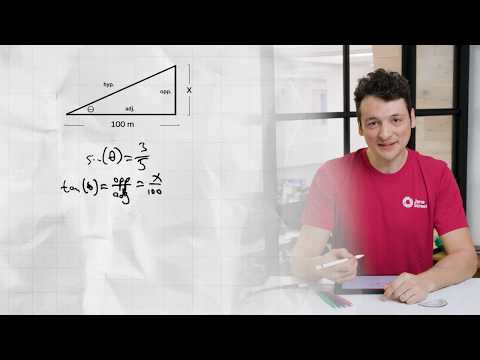
Wavey’s Return: Solving a River-Crossing PuzzleSawyer · Jane StreetSawyer solves the first toy-boat crossing with a 5:3 speed ratio, then asks how the answer changes when the return journey starts 60 meters downstream.
 6:37EN
Crossing the River: A Toy Boat Puzzle and a Snow-Cone SolutionSawyer · Jane StreetA toy boat drifts downstream in a steady current. Sawyer poses a navigation puzzle and solves the previous episode’s cone-and-hemisphere problem.
Load moreShowing 24 of 37