








Results
6 articlesSort
 13:30EN
 3Blue1Brown· Aug 17, 2025How AlphaGeometry Combines Logical Proof with Creative ConstructionAleph0Aleph0 explains how a symbolic geometry solver gets surprisingly far without AI, and how a language model supplies the auxiliary constructions that take it to Olympiad level.
 1:09EN
A Discussion of GPT-4.5’s Scaling and TrainingA speaker offers an assessment of GPT-4.5’s cost, speed and alleged training challenges.
 11:11EN
 Lex FridmanPodcast · 2 speakersYann LeCun on Benchmarks, Interactive Environments, and Why Human Intelligence Is Not GeneralGuest Yann Lecun · Host Lex FridmanIn a 2019 clip, LeCun defends benchmarks as a test of AI claims, explains why interactive environments break the usual train-test protocol, and argues that "general intelligence" is a misnomer.
 10:16ENLex FridmanPodcast · 2 speakersReasoning Without Logic: Yann LeCun on Teaching Neural Networks to ThinkGuest Yann Lecun · Host Lex FridmanYann LeCun explains why he believes neural networks can reason, and what memory, recurrence and continuous representations would need to look like.
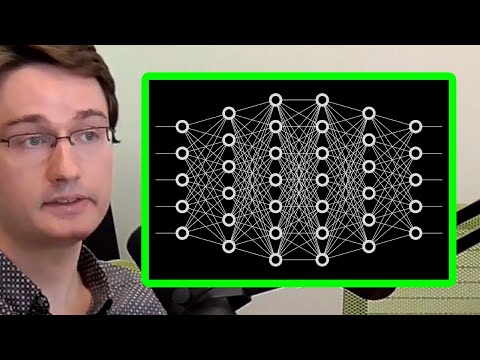 10:34ENLex FridmanPodcast · 2 speakersWhy Deep Learning Needs Rules: Chollet on Interpolation, Abstraction and Hybrid AIGuest François Chollet · Host Lex FridmanFrançois Chollet explains why neural networks only interpolate between points they have seen, and why the best AI systems pair them with symbolic rules.
 11:23ENLex FridmanPodcast · 2 speakersScience Is a Self-Improving System That Isn't Exploding: Chollet on the Limits of an Intelligence ExplosionGuest François Chollet · Host Lex FridmanFrançois Chollet uses the history of science to argue that recursive self-improvement meets exponential friction and yields linear, not explosive, progress.