







Results
24 articlesSort
 0:53EN
Sam Altman on AI and the Discovery of New KnowledgeSam Altman · OpenAIAltman expects progress in mathematical discovery to extend to biology, materials and energy.
 0:35EN
Sebastian Bubeck Responds to a Math Authorship DisputeMatthew Berman · Forward FutureMatthew Berman recounts OpenAI researcher Sebastian Bubeck’s account of communications with a mathematician identified as Levent.
 13:30EN
 3Blue1Brown· Aug 17, 2025How AlphaGeometry Combines Logical Proof with Creative ConstructionAleph0Aleph0 explains how a symbolic geometry solver gets surprisingly far without AI, and how a language model supplies the auxiliary constructions that take it to Olympiad level.
 7:17EN
Erik and Martin Demaine on the Mathematics of Curved-Crease SculptureErik Demaine, Martin Demaine · MITThe MIT father-and-son collaborators turn paper folding into art and research, embedding puzzles and mathematical fonts in their sculpture Solve Me.
 3:23EN
Nitya on Training and Working as a Quantitative Trader at Jane StreetNitya · Jane StreetA trader on the New York international ETF desk describes the skills, training and collaboration involved in her work.
 11:41EN
Five Ways to Calculate the Wait for a Successful ShotSawyer · Jane StreetA 20% success rate leads to an expected wait of five attempts—but two consecutive successes take 30. Explore the reasoning through series, recursion and a long-run argument.
 10:32EN
Real Numbers: Expected Time Between Exams and a Half-Court Shot ChallengeSawyer · Jane StreetSawyer solves an exam-scheduling problem in several ways, then asks how many basketball attempts it takes to make one shot or two in a row.
 6:04EN
Finals Week and the Expected Number of Snowboards UsedSawyer · Jane StreetSawyer poses a new exam-scheduling puzzle and uses indicator variables in two ways to solve the previous snowboard problem.
 6:16EN
Indicator Variables: Marching Bands and SnowboardsSawyer · Jane StreetSawyer uses linearity of expectation to count in-step rows, then poses a six-snowboard challenge.
 9:40EN
Real Numbers: A Marching Band Challenge, Expected Damage, and Bayes’ RuleSawyer · Jane StreetSawyer introduces a marching-band expected-value puzzle and uses linearity and Bayesian updating to solve a monster-attack problem.
 10:08EN
Expected Damage and a Golden-Ratio Window PuzzleSawyer · Jane StreetSawyer introduces expected value with an unknown video-game monster, then uses geometry to solve a painting-through-a-window problem.
 7:55EN
The Art Thief’s Window and a Toy Boat’s Return JourneySawyer · Jane StreetSawyer poses a geometric window puzzle and solves the previous episode’s river-crossing problem in two ways.
 5:38EN
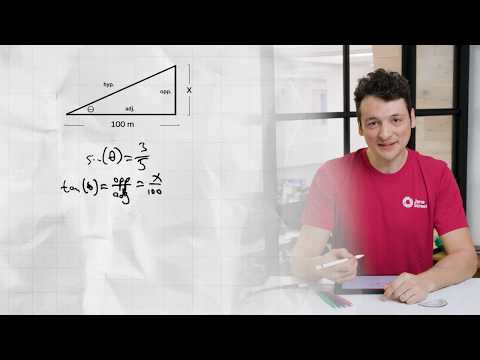
Wavey’s Return: Solving a River-Crossing PuzzleSawyer · Jane StreetSawyer solves the first toy-boat crossing with a 5:3 speed ratio, then asks how the answer changes when the return journey starts 60 meters downstream.
 6:37EN
Crossing the River: A Toy Boat Puzzle and a Snow-Cone SolutionSawyer · Jane StreetA toy boat drifts downstream in a steady current. Sawyer poses a navigation puzzle and solves the previous episode’s cone-and-hemisphere problem.
 3:35EN
Snow Cones and Spheres: A Volume Solution and a New Geometry PuzzleSawyer · Jane StreetSawyer derives the height of a cone with the same volume as a hemisphere, then asks how to reshape the ice with minimal movement.
 5:39EN
A Snow Cone Geometry Puzzle and a Piggy Bank ProbabilitySawyer · Jane StreetSawyer poses a cone-design challenge and solves a conditional probability problem in two ways.
 7:03EN
Grandma’s Secret College Fund: A Bayes’ Theorem PuzzleSawyer · Jane StreetA random $20 bill reveals information about a hidden deposit. Sawyer poses the new puzzle and solves a DMV probability problem three ways.
 7:23EN
Bayes' Theorem and a Driver's Test Probability PuzzleSawyer · Jane StreetSawyer derives Bayes' theorem, poses a question about test-takers who studied, and solves an earlier card-game probability puzzle.
 8:03EN
Real Numbers: A Taxi Challenge and Two Ways to Calculate a Sleep ProbabilitySawyer · Jane StreetSawyer poses a consecutive-taxi puzzle and solves a five-night dog-sitting problem with a probability table and a counting argument.
 6:50EN
The Perils of Dogsitting: A Probability Warm-UpSawyer · Jane StreetSawyer introduces a five-night dogsitting puzzle and reviews independence, overlapping events and complements with coins and dice.
 7:15EN
A Balanced Game of War and the Probability of Three TaxisSawyer · Jane StreetSawyer introduces conditional probability through a card-game challenge, then solves an earlier six-car puzzle in two ways.
 11:19EN
 Lex FridmanPodcast · 2 speakersWhy Donald Knuth Thinks P = NP and Why It Might Not MatterGuest Donald Knuth · Host Lex FridmanKnuth explains how an algorithm can provably exist without anyone being able to write it down, and why that shapes his view of P versus NP.
 11:11ENLex FridmanPodcast · 2 speakersFilling the Empty Quadrants: Jim Gates on Supersymmetry and the Beauty of Broken SymmetryGuest Jim Gates · Host Lex FridmanTheoretical physicist Jim Gates explains supersymmetry with a four-slice pie, recalls how he chose it for his thesis in the 1970s, and connects it to the way physics moves from mathematics to experiment.
 11:34ENLex FridmanPodcastNeither Discovered Nor Invented: Grant Sanderson on the Cycle Between Math and the WorldHost Lex Fridman3Blue1Brown's Grant Sanderson tells Lex Fridman that mathematics feeds on a loop of discovery and invention, and wonders why the universe's laws are so compressible.