








Results
344 articlesSort
 1:19:21EN
 Lex FridmanPodcastVapnik's Case for Learning by Predicates, Not Just by More DataHost Lex FridmanIn an MIT lecture, Vladimir Vapnik argues that complete statistical learning needs two mechanisms, data and invariants, and that choosing smart predicates is where intelligence lives.
 1:03:25ENLex FridmanPodcastTheano in an Hour: Symbolic Graphs, Automatic Gradients and a Compiler That Rewrites Your MathHost Lex FridmanPascal Lamblin of MILA walks through how Theano builds, differentiates, optimizes and runs computation graphs, then trains logistic regression, a convnet and an LSTM.
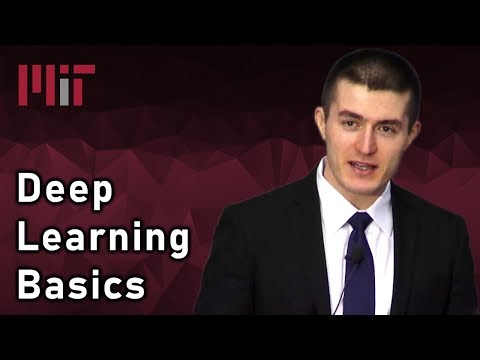 1:08:06ENLex FridmanPodcast · 2 speakersDeep Learning in One Lecture: From Perceptrons to AutoML and the Limits of LearningGuest Deep Learning Basics · Host Lex FridmanLex Fridman's opening lecture for MIT's 6.S094 course surveys why deep learning took off, how neural networks learn, and where the technique still falls short.
 57:25EN
 Unsupervised Learning: With Jacob EffronPodcastFrom RAG to Reasoning: Why the Future of AI Is a System, Not a ModelHost Jacob EffronDouwe Kiela explains what OpenAI's o1 reveals about test-time compute, why enterprise AI must be specialized, and where post-training and evaluations are heading.
 13:58ENLex FridmanPodcastDeep Reinforcement Learning, Explained by the Researcher Behind AlphaGoHost Lex FridmanDavid Silver of DeepMind walks through what reinforcement learning is, how its building blocks fit together, and why deep neural networks keep surprising even the experts.
 57:55ENLex FridmanPodcastFrom Q-Tables to AlphaGo Zero: A Self-Driving Car Lecture on Deep Reinforcement LearningHost Lex FridmanLex Fridman's MIT 6.S094 lecture walks from the AI pipeline and Q-learning to deep Q-networks, AlphaGo Zero and the DeepTraffic competition.
 1:13:22ENLex FridmanPodcastThe Second 90%: What It Really Takes to Put Deep Learning on a Driverless CarHost Lex FridmanWaymo's Sacha Arnoud walks MIT students through Waymo's history, its perception stack, and the industrial-scale labeling, compute and testing behind it.
 57:15ENLex FridmanPodcastInside Torch and Autograd: How Deep Learning Libraries Compute GradientsHost Lex FridmanAlex Wiltschko of Twitter walks through Lua Torch, then explains automatic differentiation and what separates modern deep learning frameworks.
 1:12:12EN
 Lenny's PodcastPodcastModels Are Grown, Not Built: What Anthropic's Interpretability Research Sees Inside ClaudeHost Lenny RachitskyAnthropic researcher Emmanuel Ameisen explains how studying a language model's intermediate computations reveals concepts, plans and surprising quirks, and why that matters for alignment.
 1:20:58ENLex FridmanPodcastFrom Bag of Words to Attention: Quoc Le Teaches Sequence-to-Sequence Learning Through Email RepliesHost Lex FridmanA Deep Learning School talk that builds sequence-to-sequence models step by step around one running example, automatic email reply, and then surveys memory and operation-augmented networks.
 1:19:48ENLex FridmanPodcastBigger Models, Cleaner Splits and Human Baselines: Andrew Ng's Practical Recipe for Applied Deep LearningHost Lex FridmanIn a 2016 Deep Learning School talk, Andrew Ng distills lessons from leading Baidu's AI team into a workflow for diagnosing models, handling data and building a career.
 1:02:06ENLex FridmanPodcastLearning TensorFlow Hands-On: From a Mystery Line to Handwritten DigitsHost Lex FridmanGoogle Brain's Sherry Moore walks a Deep Learning School audience through how TensorFlow works and two core labs, linear regression and MNIST digit recognition.
 20:36ENLex FridmanPodcastWhy Simple Theories Win: Marcus Hutter on Occam's Razor, Compression and Kolmogorov ComplexityHost Lex FridmanDeepMind researcher Marcus Hutter explains Solomonoff induction, why compression equals understanding, and how a simple universe can still look rich.
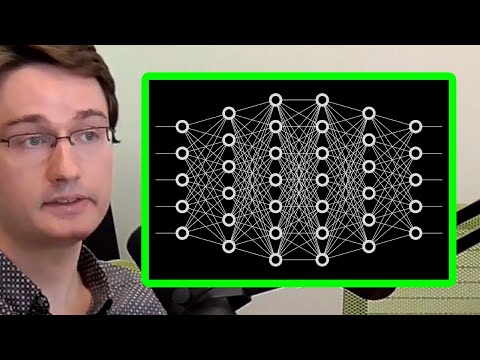 10:34ENLex FridmanPodcast · 2 speakersWhy Deep Learning Needs Rules: Chollet on Interpolation, Abstraction and Hybrid AIGuest François Chollet · Host Lex FridmanFrançois Chollet explains why neural networks only interpolate between points they have seen, and why the best AI systems pair them with symbolic rules.
 1:19:34ENLenny's PodcastPodcastFei-Fei Li on ImageNet, World Models and Why Everyone Has a Role in AIHost Lenny RachitskyThe scientist often called the godmother of AI traces how big data sparked deep learning, explains why spatial intelligence is the next frontier, and shows what World Labs' first product, Marble, can do.
 53:13ENLex FridmanPodcastHow Machines Learn to See: From Pixel Differences to Convolutions, ResNets and Scene SegmentationHost Lex FridmanLex Fridman's MIT 6.S094 lecture walks from the basics of image classification through landmark network architectures to pixel-level segmentation, optical flow and the SegFuse competition.
 34:33ENLex FridmanPodcastTeaching Cars to Watch the Driver: Deep Learning for Semi-Autonomous VehiclesHost Lex FridmanLex Fridman's MIT 6.S094 lecture on using driver-facing cameras and neural networks to understand body pose, gaze, emotion and cognitive load.
 1:16:52EN
 Cognitive Revolution "How AI Changes Everything"PodcastMamba After 90 Days: What 30 Papers Reveal About State Space Models, Hybrids, and Mixture of ExpertsHost Nathan LabenzNathan Labenz and AI scout Jason Meaux survey the first wave of Mamba-inspired research, from mechanistic studies and synthetic-task tradeoffs to hybrid architectures and MoE variants.
 10:39ENLex FridmanPodcastStatistics as Decision-Making: Michael I. Jordan on Bayesians, Frequentists and the Ideas Between ThemHost Lex FridmanBerkeley's Michael I. Jordan explains where statistics came from, why it is really about decisions, and how empirical Bayes and false discovery rate bridge two rival philosophies.
 11:29ENLex FridmanPodcastWhy Tesla AI Day Was the Most Impressive Real-World AI Effort Lex Fridman Has SeenHost Lex FridmanLex Fridman walks through the neural network, data annotation, Dojo and Tesla Bot announcements and what they say about solving real-world robotics.
 52:28ENLex FridmanPodcast · 2 speakersRay Kurzweil on Hierarchies, the Neocortex and Merging with AIGuest Ray Kurzweil · Host Lex FridmanIn an MIT AGI course lecture, Kurzweil connects the history of neural networks to his hierarchical theory of the neocortex, language understanding at Google, longevity, jobs and existential risk.
 1:00:15ENLex FridmanPodcast · 2 speakersCircuit Search, Hindsight and Self-Play: Ilya Sutskever's Case for Where Learning Is GoingGuest Ilya Sutskever · Host Lex FridmanIn an MIT AGI lecture, OpenAI's co-founder explains why deep learning works, then walks through meta-learning, hindsight experience replay, sim-to-real transfer, self-play and learning goals from human feedback.
 1:48:13ENCognitive Revolution "How AI Changes Everything"PodcastRobotics Hits Its GPT-3.5 Moment: Inside Gemini Robotics, From Embodied Reasoning to OrigamiHost Nathan LabenzGoogle DeepMind researchers Keerthana Gopalakrishnan and Ted Xiao explain how Gemini Robotics works, what it can and cannot do, and where the field goes next.
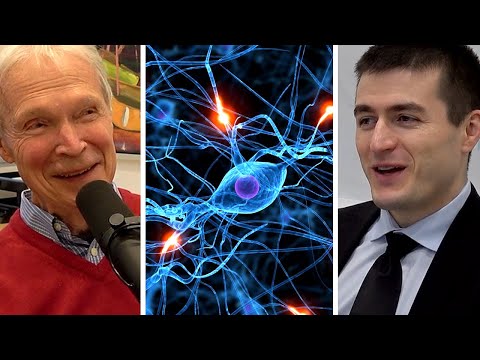 20:50ENLex FridmanPodcastGlitches as Features: What John Hopfield Says Artificial Neural Networks Are MissingHost Lex FridmanIn a short conversation with Lex Fridman, physicist and neural-network pioneer John Hopfield compares evolved brains with today's artificial networks and explains why he expects AI to borrow from biology generation after generation.
Load moreShowing 24 of 344