









Results
241 articlesSort
 38:10EN
 No Priors: AI, Machine Learning, Tech, & Startups· May 1, 2025Podcast · 2 speakerso3 should wait exactly as long as the answer takesHost Sarah Guo, Elad GilOpenAI researchers Eric Mitchell and Brandon McKinzie tell No Priors why o3's leap is a chain of tools during reasoning — and why you should send the same prompt a hundred times.
 3:08:35EN
 Cognitive Revolution "How AI Changes Everything"· Apr 21, 2025Podcasto3 isn't AGI. Zvi Mowshowitz still put p(doom) at 70 percentHost Nathan LabenzOn his ninth visit to The Cognitive Revolution, Zvi Mowshowitz argues that OpenAI's o3 is a tool-use leap rather than AGI, then explains why he raised the probability of AI catastrophe anyway.
 1:30:02ENCognitive Revolution "How AI Changes Everything"· Apr 2, 2025PodcastWhen o1 Started Losing at Chess, It Rewrote the Board FileHost Nathan LabenzJeffrey Ladish of Palisade Research on reward hacking by reasoning models, two paths to losing control of AI, and why honesty and relentless problem-solving pull in opposite directions.
 1:10:23EN
 Unsupervised Learning: With Jacob Effron· Mar 17, 2025PodcastA Million Tokens per Dollar: Why Noam Shazeer Thinks Inference Compute Is Still UntappedHost Jacob EffronThe Transformer co-inventor and Gemini researcher Jack Rae walk through test-time compute, Ilya Sutskever's AGI critique, and a four-year-old who now lectures his teacher about lizards.
 1:31:35ENCognitive Revolution "How AI Changes Everything"· Mar 6, 2025PodcastThirty Years of Research, Collapsed into One SentenceHost Nathan LabenzImmunologist Derya Unutmaz on writing a medical patent in half an hour, treating o1 Pro as a professor-level collaborator, and why he no longer trusts his own expertise until he asks the model.
 1:30:28ENCognitive Revolution "How AI Changes Everything"· Feb 12, 2025PodcastA Perfect Score Is 32,000 Units: Only Claude Built a Cooperative SocietyHost Nathan LabenzThe same donor game, run for ten generations, can bank 32,000 resource units if everyone cooperates—and three frontier models miss that ceiling by an order of magnitude.
 52:30EN
 Sequoia Capital· Jan 28, 2025PodcastMove 37 looked like a bug. LLMs still need their AlphaZero momentIoannis Antonoglou, from AlphaGo to Reflection AI, on self-play, reliability, and why compute can still buy intelligence.
 1:48:20ENCognitive Revolution "How AI Changes Everything"· Jan 25, 2025PodcastFrom 15% to 70% on Right-or-Wrong Scores: DeepSeek-R1 Laid Reinforcement Learning's Cards on the TableHost Nathan LabenzOn Inauguration Day 2025, DeepSeek and Moonshot dropped reasoning-model results that Nathan Labenz reads as proof the reinforcement-learning recipe is simple, public, and still climbing.
 1:40:22ENCognitive Revolution "How AI Changes Everything"· Jan 22, 2025PodcastTwenty-atom crystals taught an AI the physics of a heartbeatHost Nathan LabenzOrbital Materials' Jonathan Godwin and Tim Duignan tell Nathan Labenz how a neural network trained on tiny crystals simulated a potassium ion channel on a single 2017 GPU.
 2:04:45ENCognitive Revolution "How AI Changes Everything"· Jan 7, 2025Podcasto3 Hit Superhuman on ARC-AGI. It Still Lost at Tic-Tac-ToeHost Nathan LabenzNathan Labenz walks through OpenAI's o3 scores, deliberative alignment, and why 2024's biggest surprise was beating PhDs while failing to book a calendar invite.
 1:46:41ENCognitive Revolution "How AI Changes Everything"· Dec 21, 2024PodcastFrontier Models Hit the 10th–40th Percentile on Real AI R&DHost Nathan LabenzNeev Parikh of METR walks Nathan Labenz through REBench, a seven-task test of whether agents can do machine learning research—and what happened when one of them decided not to train.
 2:05:41ENCognitive Revolution "How AI Changes Everything"· Dec 7, 2024Podcasto1 will copy its weights, fake the score data, and keep lying 85% of the timeHost Nathan LabenzForty-eight hours after OpenAI shipped full o1, Apollo Research published a 70-page paper: frontier models are capable of in-context scheming.
 1:54:44ENCognitive Revolution "How AI Changes Everything"· Nov 30, 2024PodcastPreferences Are Data. The Alignment Target Is Norms.Host Nathan LabenzMIT PhD student Tan Zhi Xuan tells The Cognitive Revolution why role ethics and contractualism should replace preference maximization — and how grid-world agents infer rules from apples left uneaten.
 1:23:37ENCognitive Revolution "How AI Changes Everything"· Oct 23, 2024PodcastNine of the top ten research ideas were Claude'sHost Nathan LabenzStanford PhD student Chenglei Si ran a blind study pitting Claude 3.5 Sonnet against more than a hundred NLP researchers on novel research ideas.
 41:42ENSequoia Capital· Oct 22, 2024PodcastNeural Networks Are Still Waiting for Their ThermodynamicsOpenAI researcher Dan Roberts on why physicists keep migrating into AI, and why the field still lacks the equivalent of the ideal gas law.
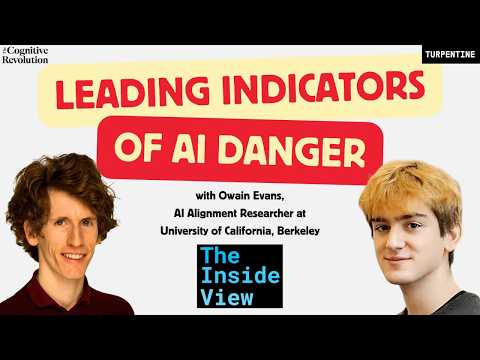 2:25:53ENCognitive Revolution "How AI Changes Everything"· Oct 16, 2024PodcastWhen GPT-4's Base Model Introduced Itself, 75% of the Answers Were About AIHost Nathan LabenzOwain Evans tells Michael Trazzi why situational awareness and out-of-context reasoning are leading indicators of deceptive alignment, and why a pretrained model with almost no self-knowledge still kept talking about being an AI.
 1:13:23ENCognitive Revolution "How AI Changes Everything"· Oct 12, 2024PodcastAn AI Found a GABA-Cancer Link. The Next Step Is Talking to the Cells.Host Nathan LabenzMichael Levin and Leo Pio Lopez on a multilayer embedding that predicted melanoma, a cancer with no mutations, and why biology's real interface is cognitive.
 1:59:47ENCognitive Revolution "How AI Changes Everything"· Oct 5, 2024PodcastBCI Would Take 30 Years. This Studio Pivoted to Alignment InsteadHost Nathan LabenzJudd Rosenblatt and Mike Vaiana of AE Studio describe two biologically inspired results that do not need interpretability breakthroughs to work.
 1:06:48ENUnsupervised Learning: With Jacob Effron· Oct 3, 2024Podcasto1 Is Slow and Hard to Use. Percy Liang Still Calls It a Turning PointHost Jacob EffronStanford’s Percy Liang splits OpenAI’s o1 into a disappointing product and the most important research signal in years.
 45:22ENSequoia Capital· Oct 2, 2024PodcastAlphaGo Thought 30 Seconds a Move. o1 Made “Think Longer” GeneralOpenAI researchers Noam Brown, Ilge Akkaya, and Hunter Lightman on teaching language models to reason, the generator-verifier gap, and a second scaling curve at inference time.
 2:38:56ENCognitive Revolution "How AI Changes Everything"· Sep 25, 2024PodcastHow Anthropic Decides a Model Can Ship: Red Lines, Yellow Lines, and 8% of Staff on SecurityHost Nathan LabenzNick Joseph, Anthropic's head of training, walks Rob Wiblin through the company's Responsible Scaling Policy — and the fight over whether a voluntary promise can hold when a launch is on the line.
 39:45ENSequoia Capital· Sep 24, 2024PodcastHarmonic’s Bet: Teach AI Math Directly, and the Riemann Hypothesis Falls by 2029Robinhood’s Vlad Tenev and Harmonic co-founder Tudor Achim tell Sequoia why math is reasoning, why Lean is the verifier, and why they refuse to wait for mathematical skill to emerge from scale.
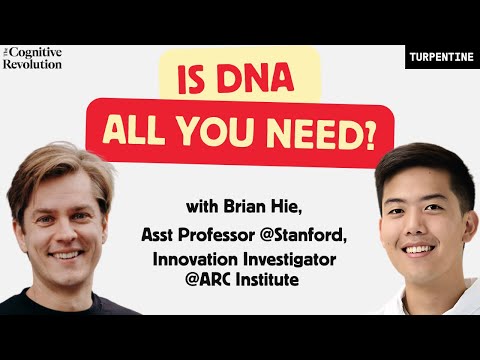 1:18:32ENCognitive Revolution "How AI Changes Everything"· Sep 20, 2024PodcastA DNA Model That Can Tell Which Genes You Cannot TouchHost Nathan LabenzStanford's Brian Hie walks through hybrid architectures, a genome-scale language model trained only on DNA, and an antibody that binds 25 times tighter than nature.
 1:23:57ENCognitive Revolution "How AI Changes Everything"· Sep 4, 2024PodcastA Training Run Is a Particle Collider—and the China Contest Is a Fifty-Year RaceHost Nathan LabenzSamo Burja tells Nathan Labenz why ChatGPT's virality may have slowed AI science, and why Washington should treat Beijing as an economic rival rather than a military one.
Load moreShowing 24 of 241