







Results
49 articlesSort
 1:25:01EN
 Lex Fridman· Oct 3, 2019Podcast · 2 speakersGary Marcus: Deep Learning Imitates Intelligence. It Does Not Understand.Guest Gary Marcus · Host Lex FridmanOn Lex Fridman's podcast, the NYU emeritus and Rebooting AI co-author argues that perception and reasoning need different tools — and that trustworthy AI is impossible until machines can represent harm, bottles, and intent.
 1:17:29ENLex Fridman· Sep 23, 2019Podcast · 2 speakersThe Algorithm Is Already Better. The Clinic Still Uses 1967.Guest Regina Barzilay · Host Lex FridmanMIT's Regina Barzilay on why deep learning already beats the breast-cancer 'density' score — and why data, liability, and incentives still will not move.
 1:59:49ENLex Fridman· Sep 14, 2019Podcast · 2 speakersIntelligence is not the height of a building: François Chollet on Keras, deep learning, and why AGI will not explodeGuest François Chollet · Host Lex FridmanThe Keras creator tells Lex Fridman that intelligence lives in a brain, a body, and a problem, that science already is a recursively self-improving superhuman system with linear output, and that the real near-term danger is the newsfeed.
 1:44:11ENLex Fridman· Aug 27, 2019Podcast · 2 speakersA Single GPU Is Enough: Jeremy Howard on Teaching Deep LearningGuest Jeremy Howard · Host Lex FridmanThe fast.ai founder tells Lex Fridman why domain experts, not more papers or more TPUs, will decide whether deep learning actually helps people.
 1:10:58ENLex Fridman· Jun 3, 2019Podcast · 2 speakersThe Hadoop Lesson That Made Google Give TensorFlow AwayGuest Rajat Monga · Host Lex FridmanIn November 2015, Google put its core internal machine-learning system on GitHub. Rajat Monga explains why a company of that size would hand over the hard-to-copy part.
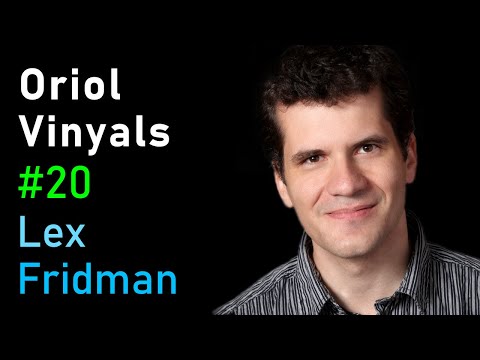 1:46:01ENLex Fridman· Apr 29, 2019Podcast · 2 speakersThe Night AlphaStar Beat TLO, the Team Went to a BarGuest Oriol Vinyals · Host Lex FridmanOriol Vinyals on how DeepMind turned StarCraft II into a sequence problem, built a league of agents, and still refuses to call the game solved.
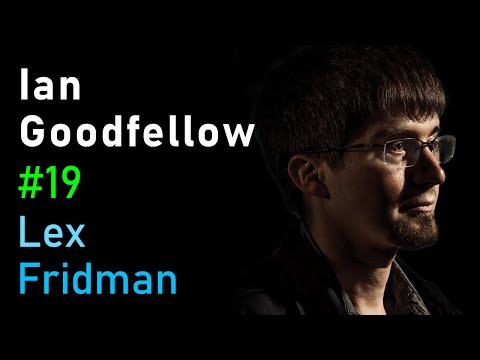 1:08:37ENLex Fridman· Apr 18, 2019Podcast · 2 speakersA Bar in Montreal, Then a Night of Code: Ian Goodfellow on Why GANs WorkGuest Ian Goodfellow · Host Lex FridmanLex Fridman talks with Ian Goodfellow about the 2014 invention of generative adversarial networks, adversarial examples as a security problem, and what still has to be built before machines can hold a fact the way a person does.
 1:20:21ENLex Fridman· Jan 19, 2019Podcast · 2 speakersEinstein Was the Worst of Five Ph.D. StudentsGuest Tomaso Poggio · Host Lex FridmanMIT neuroscientist Tomaso Poggio on why intelligence is science's deepest problem, and what brains still have to teach machines.
 1:19:59ENLex Fridman· Dec 23, 2018Podcast · 2 speakersSchmidhuber’s bet: true meta-learning rewrites the learner, not the last layerGuest Juergen Schmidhuber · Host Lex FridmanJürgen Schmidhuber tells Lex Fridman how Gödel machines, compression-as-science, Power Play, LSTMs, and world models all descend from a teenage plan to multiply one person’s curiosity into a better physicist than he could ever be.
 42:45ENLex Fridman· Dec 16, 2018Podcast · 2 speakersA one-legged robot learned a backflip from "this is better"Guest Pieter Abbeel · Host Lex FridmanPieter Abbeel tells Lex Fridman why preference comparisons, self-play, ten-minute demos, and messy ensembles of simulators are the practical path through deep reinforcement learning.
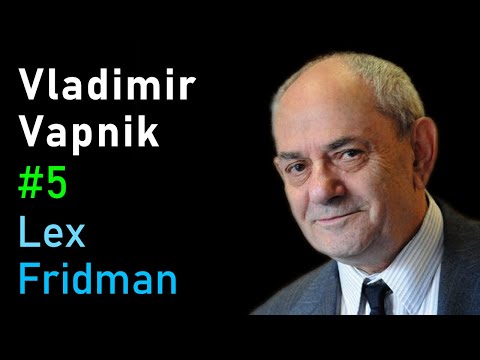 54:03ENLex Fridman· Nov 16, 2018Podcast · 2 speakersThe Hardest Part of Learning Was Left Out of the TextbooksGuest Vladimir Vapnik · Host Lex FridmanVladimir Vapnik tells Lex Fridman why intelligence is the work of inventing predicates that shrink the admissible set of functions, not of fitting a rule to a mountain of data.
 42:18ENLex Fridman· Oct 20, 2018Podcast · 2 speakersAn Adult Can Change Last Year's Mind. A Network Still Cannot.Guest Yoshua Bengio · Host Lex FridmanYoshua Bengio tells Lex Fridman that the missing pieces of deep learning sit in credit assignment, training objectives, and a kind of compositionality borrowed from classical AI — not in ten thousand layers.
 15:01ENLex FridmanPodcast · 2 speakersDeep Learning Is a System 1 Machine: Daniel Kahneman on What AI Still LacksGuest Daniel Kahneman · Host Lex FridmanThe Nobel-winning psychologist tells Lex Fridman how his fast-and-slow thinking framework maps onto deep learning, and why driving among pedestrians may require understanding people.
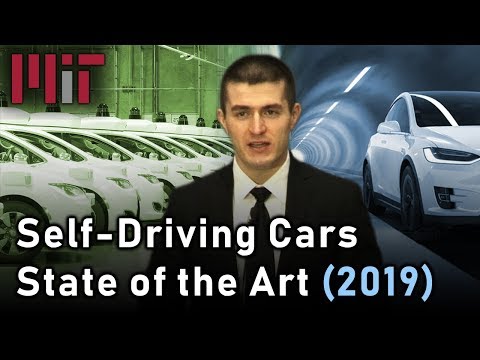 54:33ENLex FridmanPodcast · 2 speakersVision or Lidar, Human or Machine: Lex Fridman's 2019 Map of the Self-Driving RaceGuest Self-Driving Cars · Host Lex FridmanThe opening lecture of MIT's 6.S094 course surveys 2018's milestones, the industry's optimistic predictions, and the beliefs about driving and humans that will decide who wins.
 10:16ENLex FridmanPodcast · 2 speakersReasoning Without Logic: Yann LeCun on Teaching Neural Networks to ThinkGuest Yann Lecun · Host Lex FridmanYann LeCun explains why he believes neural networks can reason, and what memory, recurrence and continuous representations would need to look like.
 17:21ENLex FridmanPodcast · 2 speakersHow Alexa Learned to Hear From Across the Room: Rohit Prasad on Far-Field Speech and IntentGuest Rohit Prasad · Host Lex FridmanAlexa's head scientist recalls the early days of the Echo, when far-field speech recognition seemed unsolvable and there were no customers to collect data from.
 1:08:06ENLex FridmanPodcast · 2 speakersDeep Learning in One Lecture: From Perceptrons to AutoML and the Limits of LearningGuest Deep Learning Basics · Host Lex FridmanLex Fridman's opening lecture for MIT's 6.S094 course surveys why deep learning took off, how neural networks learn, and where the technique still falls short.
 24:08ENLex FridmanPodcast · 2 speakersIntelligence Is Not Just Prediction: David Ferrucci on Explanation, Persuasion and Shared MeaningGuest David Ferrucci · Host Lex FridmanThe lead of IBM's Watson team argues that predicting well is only half of intelligence, and that being understood by others is the other half.
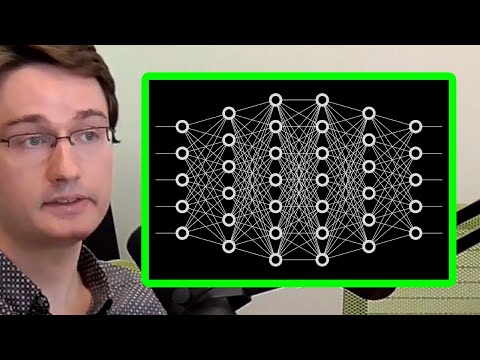 10:34ENLex FridmanPodcast · 2 speakersWhy Deep Learning Needs Rules: Chollet on Interpolation, Abstraction and Hybrid AIGuest François Chollet · Host Lex FridmanFrançois Chollet explains why neural networks only interpolate between points they have seen, and why the best AI systems pair them with symbolic rules.
 52:28ENLex FridmanPodcast · 2 speakersRay Kurzweil on Hierarchies, the Neocortex and Merging with AIGuest Ray Kurzweil · Host Lex FridmanIn an MIT AGI course lecture, Kurzweil connects the history of neural networks to his hierarchical theory of the neocortex, language understanding at Google, longevity, jobs and existential risk.
 1:00:15ENLex FridmanPodcast · 2 speakersCircuit Search, Hindsight and Self-Play: Ilya Sutskever's Case for Where Learning Is GoingGuest Ilya Sutskever · Host Lex FridmanIn an MIT AGI lecture, OpenAI's co-founder explains why deep learning works, then walks through meta-learning, hindsight experience replay, sim-to-real transfer, self-play and learning goals from human feedback.
 11:59ENLex FridmanPodcast · 2 speakersFrom a Side Project to TensorFlow's Core: François Chollet on How Keras Came to BeGuest François Chollet · Host Lex FridmanThe creator of Keras recalls why he built it in 2015 around recurrent networks, how it moved onto TensorFlow, and what TensorFlow 2.0 means for its design.
 26:45ENLex FridmanPodcast · 2 speakersStart Small, Build Habits, Pick Your Team: Andrew Ng's Practical Advice for Learning Deep LearningGuest Andrew Ng · Host Lex FridmanIn a clip from the Lex Fridman Podcast, Andrew Ng explains how to begin in deep learning, how to study effectively, and how to choose a career path.
 51:18ENLex FridmanPodcast · 2 speakersEngineering Intelligence: Lex Fridman's Opening Lecture for MIT's AGI CourseGuest MIT AGI · Host Lex FridmanLex Fridman lays out an engineering-first approach to artificial general intelligence, previews the course's projects and guest speakers, and frames deep learning's limits.