







Results
21 articlesSort
 2:28:14EN
 Lex Fridman· Jul 23, 2025Podcast · 2 speakersNature Has Structure: Demis Hassabis on Learnable Reality and AGIGuest Demis Hassabis · Host Lex FridmanThe Google DeepMind CEO argues that evolution-shaped systems can be modeled by classical learning, and that interactive world models sit on the path to AGI.
 3:14:34ENLex Fridman· Jun 14, 2025Podcast · 2 speakersIf ten things make a problem hard, Terence Tao turns nine of them offGuest Terence Tao · Host Lex FridmanThe Fields Medalist walks Lex Fridman from the Kakeya needle and Navier-Stokes through Lean, Perelman, and why today's AI still cannot smell a dead-end proof.
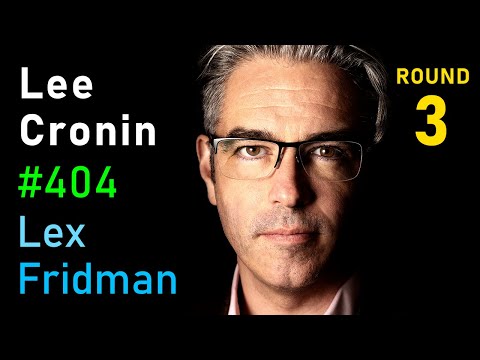 3:19:21ENLex Fridman· Dec 9, 2023Podcast · 2 speakersComplexity without copies is just randomness: Lee Cronin on assembly theoryGuest Lee Cronin · Host Lex FridmanThe Glasgow chemist walks Lex Fridman through his controversial Nature paper, a proposed life meter for other worlds, and the claim that the universe is too big to contain its own future.
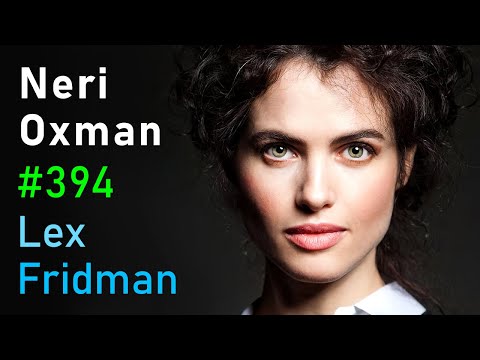 2:18:25ENLex Fridman· Sep 1, 2023Podcast · 2 speakersGrow Everything: Neri Oxman on Giving Nature a VoteGuest Neri Oxman · Host Lex FridmanThe designer-scientist who left MIT to build OXMAN talks silkworm pavilions, bees in space, and why the end of human agency might be the start of nature's.
 2:07:04ENLex Fridman· May 28, 2023Podcast · 2 speakersThe Ribosome Already Solved Digital ManufacturingGuest Neil Gershenfeld · Host Lex FridmanNeil Gershenfeld tells Lex Fridman why Turing separated the head from the tape, how fab labs are the personal-computer moment for making things, and what it would take to grow a civilization from about twenty parts.
 2:06:25ENLex Fridman· Dec 19, 2022Podcast · 2 speakersNathalie Cabrol Wants the Nature of Life, Not Just a Signal from MarsGuest Nathalie Cabrol · Host Lex FridmanThe SETI Institute astrobiologist tells Lex Fridman why crater lakes, panspermia, and a Mandelbrot view of language all point to the same question: what life actually is.
 3:43:01ENLex Fridman· Sep 7, 2022Podcast · 2 speakersPut Hydrogen and CO2 in a Tube. Thermodynamics Wants Cells. Nothing Happens.Guest Nick Lane · Host Lex FridmanBiochemist Nick Lane talks Lex Fridman through hydrothermal vents, mitochondria, sex, consciousness, and why bacteria should be common while civilizations are not.
 2:13:16ENLex Fridman· Jul 23, 2022Podcast · 2 speakersEvery Atom in Your Body Was Forged in a Dead StarGuest Martin Rees · Host Lex FridmanMartin Rees talks Lex Fridman through dark matter, alien life, one-way Mars trips, and why this century is the first in which one species holds the planet.
 2:10:39ENLex Fridman· Jul 1, 2022Podcast · 2 speakersDemis Hassabis: Solve Intelligence, Then Solve Everything ElseGuest Demis Hassabis · Host Lex FridmanThe DeepMind CEO tells Lex Fridman why the Turing Test is the wrong exam, how AlphaFold rewrote biology, and why the quiet radio sky suggests we are probably alone.
 2:55:05ENLex Fridman· May 8, 2022Podcast · 2 speakersExtinction awareness is the human trait Mason wants to carry to the starsGuest Chris Mason · Host Lex FridmanCornell geneticist Chris Mason on why seeing our own end creates a duty to engineer life for other worlds — and what a 500-year plan would actually require.
 3:05:24ENLex Fridman· Sep 22, 2021Podcast · 2 speakersTravis Oliphant wrote NumPy in an empty semester — and still wants open source to payGuest Travis Oliphant · Host Lex FridmanThe creator of NumPy, SciPy, and Anaconda tells Lex Fridman how array thinking, a priced book, and the packaging wars shaped scientific Python.
 3:02:43ENLex Fridman· Jan 18, 2021Podcast · 2 speakersHumanity Cannot Survive on the Right Person Showing Up at the Right TimeGuest Max Tegmark · Host Lex FridmanMIT physicist Max Tegmark tells Lex Fridman why AI should be as well understood as rockets, why 2020 was a warning on weapons and news, and why luck is a terrible long-term plan.
 2:17:42ENLex Fridman· Jan 11, 2021Podcast · 2 speakersThe building block of life is a bead on a string, not the whole proteinGuest Dmitry Korkin · Host Lex FridmanDmitry Korkin tells Lex Fridman why protein domains, a triangular spike, and a conservative viral shell matter more than the AlphaFold headline, and why a Nobel laureate once answered a midnight forum post.
 2:39:45ENLex Fridman· Oct 25, 2020Podcast · 2 speakersThe obesity gene was never the obesity geneGuest Manolis Kellis · Host Lex FridmanManolis Kellis tells Lex Fridman how one nucleotide a million bases from FTO rewrote obesity biology, and why human genetics is now driving the study of disease.
 2:29:24ENLex Fridman· Jul 31, 2020Podcast · 2 speakersWe Are the Descendants of the First Digital ComputerGuest Manolis Kellis · Host Lex FridmanMIT computational biologist Manolis Kellis tells Lex Fridman why life is digital, why any two humans are 99.9 percent identical, and what evolutionary signatures reveal inside SARS-CoV-2.
 1:02:14ENLex Fridman· Jun 30, 2020Podcast · 2 speakersThe 28-year wait: Robert Langer on rejection, polymers, and a thousand studentsGuest Robert Langer · Host Lex FridmanThe MIT bioengineer talks with Lex Fridman about drug delivery, tissue engineering, patents, and the long path from a Folkman hypothesis to Avastin.
 1:12:03ENLex Fridman· May 5, 2020Podcast · 2 speakersMice Don't Get Alzheimer's: Daphne Koller on Disease in a DishGuest Daphne Koller · Host Lex FridmanThe Coursera co-founder and insitro CEO on why most diseases are not one disease, how to turn cells into data, and why overconfident neural nets can kill.
 2:09:02ENLex Fridman· Apr 22, 2020Podcast · 2 speakersA Hundred-Nanometer Machine That Is Not Quite AliveGuest Dmitry Korkin · Host Lex FridmanDmitry Korkin walks through the structural genomics of SARS-CoV-2, from spike-ACE2 docking to drug-binding sites, vaccines, and cruise-ship simulations, recorded in the first spring of the pandemic.
 39:33ENLex Fridman· Nov 22, 2019Podcast · 2 speakersMars is not Plan B: Dava Newman on spacesuits, autonomy, and Spaceship EarthGuest Dava Newman · Host Lex FridmanThe MIT Apollo professor and former NASA deputy administrator on Magellan’s crew, mechanical counterpressure, and why the next decade belongs to Earth.
 1:17:29ENLex Fridman· Sep 23, 2019Podcast · 2 speakersThe Algorithm Is Already Better. The Clinic Still Uses 1967.Guest Regina Barzilay · Host Lex FridmanMIT's Regina Barzilay on why deep learning already beats the breast-cancer 'density' score — and why data, liability, and incentives still will not move.
 57:42ENLex Fridman· Aug 12, 2019Podcast · 2 speakersA Brain Organoid Is Not a BrainGuest Paola Arlotta · Host Lex FridmanHarvard developmental biologist Paola Arlotta on how the cerebral cortex is built, why timing and mechanical force are part of the code, and why a dish of stem cells is only a window onto that process.