









Ergebnisse
37 ArtikelSortieren
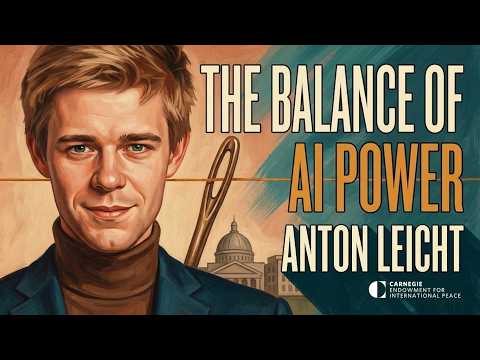 2:09:42EN
 Cognitive Revolution "How AI Changes Everything"· 15. Sept. 2026PodcastA Frontier Pause Would Help. America Will Not Sign One That Only Pauses the FrontierModeration: Nathan LabenzCarnegie fellow Anton Leicht tells Nathan Labenz why a six-month slowdown is technically overdue, why US-China incentives block it, and how Europe can still trade compute and ASML for a seat at the table.
 3:15:53ENCognitive Revolution "How AI Changes Everything"· 10. Sept. 2026PodcastThe Goal Is Pax Robotica, Not Winning the AI RaceModeration: Nathan LabenzAfter two weeks in China, Nathan Labenz argues the United States should trade chips for robots, keep a shared AI paradigm, and aim for mutual abundance instead of another sword of Damocles.
 2:23:43ENCognitive Revolution "How AI Changes Everything"· 27. Juli 2026PodcastHe Bought an Android, Two SIMs, and Left Claude Watching His InboxModeration: Nathan LabenzNathan Labenz asked a dozen friends how to visit China and got two irreconcilable answers.
 1:34:42ENCognitive Revolution "How AI Changes Everything"· 13. Feb. 2026PodcastA $500 Kernel, a Ten-Month Village, and the Temper of AgentsModeration: Nathan LabenzJames Zou, Sam Hammond, and Shoshannah Tekofsky on science agents, America's knowledge-work bet, and what models actually do when you leave them alone.
 1:43:19ENCognitive Revolution "How AI Changes Everything"· 19. Dez. 2025PodcastA $100 Million Super PAC Named Him Public Enemy Number One. Donations Went Up.Moderation: Nathan LabenzIn the second half of Cognitive Revolution’s year-end live show, Assemblymember Alex Bores, former White House adviser Dean Ball, and forecaster Peter Wildeford argue over state AI laws, chip sales to China, and what 2026 will actually feel like.
 1:09:48EN
 Unsupervised Learning: With Jacob Effron· 5. Dez. 2025PodcastChina's AI Labs Went From 15 to Six. The Compute Gap Is 15-to-1.Moderation: Jacob EffronJordan Schneider tells Unsupervised Learning that Chinese models were a private-capital story, that Beijing still thinks in hardware, and that the West's real edge is chips it can serve — not a state master plan.
 2:49:12ENCognitive Revolution "How AI Changes Everything"· 18. Okt. 2025PodcastWhy China's Master Plan for AI Never Mentions AGIModeration: Nathan LabenzBeijing-based Concordia AI CEO Brian Tse on China's safety rules, chip strategy, and why the two ecosystems look more alike than Washington assumes.
 2:04:27ENCognitive Revolution "How AI Changes Everything"· 23. Aug. 2025PodcastA 10% Chance of an AI-Enabled Coup in the Next 30 YearsModeration: Nathan LabenzTom Davidson maps three ways superintelligent systems could help a head of state or a lab CEO lock in power—and argues the window for building safeguards is short.
 3:17:35ENCognitive Revolution "How AI Changes Everything"· 13. Aug. 2025PodcastTen Thousand Comments and 76 Spare Gigawatts: Four Months Writing America's AI Action PlanModeration: Nathan LabenzDean W. Ball spent four months as the White House's senior AI adviser, then left as the Action Plan landed — and explains how a to-do list got written inside a building that cannot run ChatGPT.
 1:14:05ENCognitive Revolution "How AI Changes Everything"· 9. Aug. 2025PodcastSullivan boils US-China AI competition down to four buckets, four examples, and a path he calls boringModeration: Nathan LabenzThe former national security advisor treats transformative AI as a planning assumption, not a prophecy, and wants Washington to compete hard with Beijing without pretending a grand bargain will cure the rivalry.
 1:45:00ENCognitive Revolution "How AI Changes Everything"· 6. Aug. 2025PodcastAmerica Holds 45% of the World's Data Centers. Everyone Else Must Build, Buy, or AllyModeration: Nathan LabenzAnjney Midha of a16z maps what “sovereign AI” actually means for companies and for countries that will never own the talent, data, and compute frontier.
 4:05:15EN
 Lex Fridman· 26. Juni 2025PodcastThey could not agree whether Iran was building a bomb. They still wanted the same next move.Moderation: Lex FridmanAfter the Iran-Israel ceasefire, Scott Horton and Mark Dubowitz spend four hours on Lex Fridman arguing over enrichment math, a stolen archive, and whether bombing Fordo makes a weapon more likely or less.
 2:10:07ENCognitive Revolution "How AI Changes Everything"· 23. Apr. 2025PodcastA $30,000 Operation Could Knock a $10 Billion Superintelligence Data Center Offline for a YearModeration: Nathan LabenzGladstone AI’s Jeremy and Edouard Harris inventory what an American Manhattan Project for superintelligence would actually have to secure — and what it would cost in concrete, supply chains, and civil liberties.
 1:28:01ENCognitive Revolution "How AI Changes Everything"· 16. Apr. 2025PodcastThe Q* Letter Never Happened: Helen Toner on OpenAI, Adaptation Buffers, and AI at WarModeration: Nathan LabenzThe former OpenAI director explains why a famous Reuters story was false, why locking down AI will not work, and how military “battle buddy” demos skip the hard questions.
 1:37:40ENCognitive Revolution "How AI Changes Everything"· 13. Apr. 2025PodcastChina, Japan, and Korea fought only one war in six centuriesModeration: Nathan LabenzFrom 1200 to 1800, East Asia’s great powers stayed at peace while Europe fought almost without pause — and David C. Kang argues that history still shapes how Asia lives with China.
 3:15:17ENLex Fridman· 26. März 2025PodcastDemocrats still think politics runs on money. It runs on attention.Moderation: Lex FridmanEzra Klein and Derek Thompson tell Lex Fridman why the left keeps authorizing billions it cannot build, and why DOGE is a fight over control rather than efficiency.
 3:01:30ENCognitive Revolution "How AI Changes Everything"· 15. März 2025PodcastTechnology Opens the Door. Competition Pushes Us Through.Moderation: Nathan LabenzAllan Dafoe on technological determinism, why alignment is not enough, and how DeepMind is trying to evaluate dangerous capabilities before they arrive.
 1:30:57ENCognitive Revolution "How AI Changes Everything"· 12. März 2025PodcastAnt's $320 Billion IPO Was Stopped at the Eleventh Hour: Angela Zhang on China's Tech TightropeModeration: Nathan LabenzA USC law professor walks through the dynamic pyramid that governs Chinese tech, from Didi's listing to DeepSeek's price war, and why she thinks the United States is starting to look more like China.
 1:56:38ENCognitive Revolution "How AI Changes Everything"· 8. März 2025Podcasto3 took ARC from 20% to 87%. Nathan Labenz sketches early superintelligenceModeration: Nathan LabenzOn Consistently Candid, the Cognitive Revolution host argues that math and coding will be superhuman by 2026, and that a reasoning core plus specialist “intuitive physics” may already be enough.
 1:08:51ENCognitive Revolution "How AI Changes Everything"· 1. März 2025PodcastChip Controls Are Meant to Buy Ten Years, Not Win the AI RaceModeration: Nathan LabenzEconomist Noah Smith tells Nathan Labenz that U.S. export controls are a piece of conventional deterrence against China — not a plan to kneecap DeepSeek.
 1:24:57ENUnsupervised Learning: With Jacob Effron· 21. Jan. 2025PodcastA 50,000-GPU cap and a 1,700-chip loopholeModeration: Jacob EffronSemiAnalysis founder Dylan Patel walks through the AI diffusion rule, China’s compute squeeze, and how xAI stood up a 100,000-GPU cluster in a closed Memphis appliance factory.
 1:15:17ENCognitive Revolution "How AI Changes Everything"· 2. Nov. 2024PodcastAn AI Arms Race Is Not Physics. It Is a Choice.Moderation: Nathan LabenzNathan Labenz argues with Trump’s former NSC cyber director over China, chips, and whether words can stop a militarized AI race.
 1:02:32ENLex Fridman· 23. Okt. 2024PodcastThe More Important the Issue, the Less Anyone Discusses ItModeration: Lex FridmanBernie Sanders tells Lex Fridman why drug lobbyists, campaign cash, and a healthcare system built for profit keep the biggest American problems off the table.
 1:23:57ENCognitive Revolution "How AI Changes Everything"· 4. Sept. 2024PodcastA Training Run Is a Particle Collider—and the China Contest Is a Fifty-Year RaceModeration: Nathan LabenzSamo Burja tells Nathan Labenz why ChatGPT's virality may have slowed AI science, and why Washington should treat Beijing as an economic rival rather than a military one.
Mehr laden24 von 37 angezeigt