







Ergebnisse
107 ArtikelSortieren
 38:14EN
 No Priors: AI, Machine Learning, Tech, & Startups· 18. Sept. 2026Podcast · 2 StimmenDiffusion Will Win Inference: Stefano Ermon Bets Parallel Tokens Beat Custom SiliconModeration: Sarah Guo, Elad GilThe Stanford diffusion pioneer tells No Priors why a 50-person lab is training language models that generate many tokens at once — and why that maps to GPUs the way transformers once mapped to training.
 3:36:13EN
 Zhang Xiaojun Podcast· 13. Aug. 2026Podcast · 2 StimmenNVIDIA’s Ming-Yu Liu on Cosmos, Physical AI, and Creating New MarketsGast: Ming-Yu Liu · Moderation: 张小珺NVIDIA research VP Ming-Yu Liu explains how a decade of generative-model research led to Cosmos 3, a world foundation model for Physical AI. He also shares what he learned from Jensen Huang about long-term bets, teamwork, and building markets instead of fighting over existing ones.
 2:59:03ENZhang Xiaojun Podcast· 28. Juli 2026Podcast · 2 StimmenYou Kaichao on How vLLM Grew from Open-Source Project to AI Infrastructure CompanyGast: You Kaichao · Moderation: 张小珺Inferact co-founder You Kaichao traces vLLM’s path from Berkeley research to a company, then explains why model, inference, hardware and agent design increasingly have to move together.
 3:46:12ENZhang Xiaojun Podcast· 16. Juli 2026Podcast · 2 StimmenKay Ke on Physical Intelligence, Robot Learning, and the Future of RoboticsGast: Kay Ke · Moderation: 张小珺Physical Intelligence researcher Kay Ke traces the field's research lineages and explains Pi's progression from π₀ to π*₀.₆. She also reflects on education, fiction, ambition, and what it means to build robots that work beyond a demo.
 36:19ENNo Priors: AI, Machine Learning, Tech, & Startups· 26. Juni 2026Podcast · 2 StimmenThe Benchmark Grid Is Broken: Why Test-Time Compute Has Outrun How We Score ModelsModeration: Sarah Guo, Elad GilOpenAI researcher Noam Brown argues that static leaderboards hide how long a model is allowed to think — and that safety evals, research taste, and the release cycle have not caught up.
 32:22EN
 20VC with Harry Stebbings· 7. Apr. 2026Podcast · 2 StimmenDemis Hassabis on AGI, Scientific Discovery and the Challenges AheadGast: Demis Hassabis · Moderation: Harry StebbingsThe Google DeepMind CEO discusses compute, continual learning, safety standards and his hopes for AI in science, medicine and energy.
 13:30EN
 3Blue1Brown· 17. Aug. 2025How AlphaGeometry Combines Logical Proof with Creative ConstructionAleph0Aleph0 explains how a symbolic geometry solver gets surprisingly far without AI, and how a language model supplies the auxiliary constructions that take it to Olympiad level.
 42:09ENNo Priors: AI, Machine Learning, Tech, & Startups· 26. Juni 2025Podcast · 2 StimmenAlphaEvolve found algorithms humans missed for 50 years — then sped up Gemini 23%Moderation: Sarah Guo, Elad GilGoogle DeepMind’s Pushmeet Kohli and Matej Balog tell No Priors how an evolutionary coding agent searches algorithm space the way AlphaGo searched Go.
 3:14:34EN
 Lex Fridman· 14. Juni 2025Podcast · 2 StimmenIf ten things make a problem hard, Terence Tao turns nine of them offGast: Terence Tao · Moderation: Lex FridmanThe Fields Medalist walks Lex Fridman from the Kakeya needle and Navier-Stokes through Lean, Perelman, and why today's AI still cannot smell a dead-end proof.
 38:10ENNo Priors: AI, Machine Learning, Tech, & Startups· 1. Mai 2025Podcast · 2 Stimmeno3 should wait exactly as long as the answer takesModeration: Sarah Guo, Elad GilOpenAI researchers Eric Mitchell and Brandon McKinzie tell No Priors why o3's leap is a chain of tools during reasoning — and why you should send the same prompt a hundred times.
 2:36:13ZHZhang Xiaojun Podcast· 24. Feb. 2025Podcast · 2 Stimmen松琳解读 DeepSeek、Kimi 与 MiniMax 的注意力新论文Gast: Songlin Yang(松琳) · Moderation: 张小珺从动态稀疏注意力到线性注意力混合架构:三条长上下文路线如何兼顾训练、推理与硬件效率
 53:07ZHZhang Xiaojun Podcast· 17. Feb. 2025Podcast · 2 Stimmen张亚勤:信息智能、物理智能与生物智能的 AGI 路线图Gast: 张亚勤 · Moderation: 张小珺张亚勤把 AGI 的发展分为信息、物理和生物三类智能:信息智能可能在五年内接近人类,通用机器人约需十年,生物智能则可能在二十年后扩展人的记忆与健康。他也讨论大模型如何为自动驾驶和机器人补上数据、常识与行动能力。
 45:31EN
Jerry Chow on Quantum Computing, Encryption, AI and Error CorrectionMatthew Berman, Jerry Chow · Forward FutureIBM’s quantum systems director explains qubits, cryogenic hardware, software and the work needed to make quantum computers useful.
 2:49:35ZHZhang Xiaojun Podcast· 4. Feb. 2025Podcast · 2 Stimmen潘嘉怡解读 R1、o1 与 Kimi K1.5:强化学习如何教模型学会推理Gast: 潘嘉怡 · Moderation: 张小珺伯克利博士生潘嘉怡带读 DeepSeek、OpenAI 与 Kimi 的推理模型报告,拆解长思维链、GRPO、奖励设计与蒸馏。R1-Zero 的“顿悟时刻”展示了推理策略如何在强化学习中涌现。
 1:33:07ZHZhang Xiaojun Podcast· 17. Aug. 2024Podcast · 2 Stimmen广密复盘全球大模型这一年:Scaling Law、AGI 豪赌与中美格局Gast: 李广密 · Moderation: 张小珺拾象创始人李广密从硅谷一线观察出发,回顾 OpenAI、Anthropic、Google 与中国模型公司的竞争。他认为,模型能力与成本共同决定新一轮应用爆发,而巨额投入押注的是智能能否持续扩展以及 AI 对经济和产业的长期重构。
 34:09ENNo Priors: AI, Machine Learning, Tech, & Startups· 27. Juni 2024Podcast · 2 StimmenFive Independent Teams Found the Same 10-to-1 Mix That Beats TransformersModeration: Sarah Guo, Elad GilThe authors of S4 and Mamba argue that mostly state-space layers plus a dash of attention is the architecture that actually works—and they are shipping it first as real-time speech.
 26:00ENNo Priors: AI, Machine Learning, Tech, & Startups· 11. Juni 2024Podcast · 2 StimmenWhy a Zapier founder thinks AGI research has been stalled for four yearsModeration: Sarah Guo, Elad GilMike Knoop and François Chollet put more than a million dollars on beating ARC-AGI, the eval they say actually measures general intelligence.
 2:15:39ENLex Fridman· 2. Juni 2024Podcast · 2 StimmenRoman Yampolskiy Puts Superintelligent Ruin at 99.99 PercentGast: Roman Yampolskiy · Moderation: Lex FridmanThe AI safety researcher tells Lex Fridman that controlling AGI is as impossible as a perpetual motion machine, and that tests, open source, and regulation cannot close the gap.
 2:50:44ENLex Fridman· 17. Apr. 2024Podcast · 2 StimmenThe Pirahã Have No Word for OneGast: Edward Gibson · Moderation: Lex FridmanMIT psycholinguist Ted Gibson tells Lex Fridman why related words sit together, why language is not thought, and why large language models ace form while missing meaning.
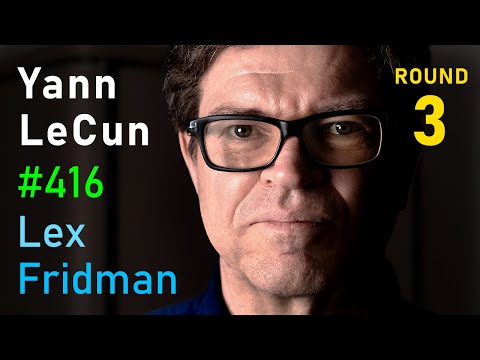 2:47:17ENLex Fridman· 7. März 2024Podcast · 2 StimmenIf You Want Human-Level AI, Abandon Generative ModelsGast: Yann Lecun · Moderation: Lex FridmanYann LeCun tells Lex Fridman why autoregressive LLMs cannot plan, remember, or understand the physical world — and why open source is the only democratic answer.
 41:58ENNo Priors: AI, Machine Learning, Tech, & Startups· 2. Nov. 2023Podcast · 2 StimmenReliability is the bottleneck. Autonomy is what would make AI feel alive.Moderation: Sarah Guo, Elad GilIlya Sutskever talks with Sarah Guo and Elad Gil about AlexNet, OpenAI’s capped-profit bet, why smaller models mainly lose reliability, and the line he draws for digital life.
 39:50ENNo Priors: AI, Machine Learning, Tech, & Startups· 20. Juli 2023Podcast · 2 StimmenWhy AI Video Is Still a Four-Second CorgiModeration: Sarah Guo, Elad GilMeta research director Devi Parikh explains why text-to-video has stalled on short animated images, and what it will take to get past that plateau.
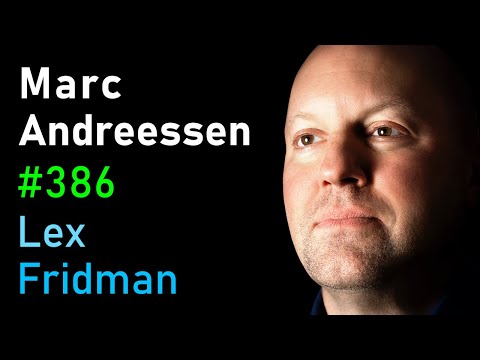 3:11:35ENLex Fridman· 21. Juni 2023Podcast · 2 StimmenSearch was always a hack: Marc Andreessen on AI, truth, and the next internetGast: Marc Andreessen · Moderation: Lex FridmanLex Fridman sits down with the Mosaic co-creator and Andreessen Horowitz founder to ask whether Google Search, the browser, and open-source AI survive the decade.
 2:07:04ENLex Fridman· 28. Mai 2023Podcast · 2 StimmenThe Ribosome Already Solved Digital ManufacturingGast: Neil Gershenfeld · Moderation: Lex FridmanNeil Gershenfeld tells Lex Fridman why Turing separated the head from the tape, how fab labs are the personal-computer moment for making things, and what it would take to grow a civilization from about twenty parts.
Mehr laden24 von 107 angezeigt