









Ergebnisse
45 ArtikelSortieren
 1:47:38EN
 Cognitive Revolution "How AI Changes Everything"· 4. Juli 2026Podcast19 Neurons Can Drive a Car. Liquid AI Wants Foundation Models on Every ChipModeration: Nathan LabenzRamin Hasani traces liquid neural networks from a worm's 300-cell brain to a 600-megabyte model that will talk from inside a Mercedes, and explains why architecture search now beats architecture avengers.
 2:59:44ENCognitive Revolution "How AI Changes Everything"· 3. Juni 2026PodcastTwo Endangered Languages Broke Transformers. Nested Learning Gave Models a Sleep Button.Moderation: Nathan LabenzGoogle researcher Ali Behrouz tells Nathan Labenz how stacking update frequencies — not just layers — and an offline sleep phase could give language models genuine continual learning.
 1:21:56EN
 Unsupervised Learning: With Jacob Effron· 15. Mai 2026PodcastYann LeCun Left Meta Because LLMs Will Not Get You to IntelligenceModeration: Jacob EffronThe Turing Award winner tells Jacob Effron why he spun AMI Labs out of Meta, why JEPA-style world models beat pixel generators, and why he thinks Hinton changed his mind in 2023.
 2:02:17ENCognitive Revolution "How AI Changes Everything"· 27. Aug. 2025PodcastSAEs Find the Nouns. Parameter Decomposition Looks for the VerbsModeration: Nathan LabenzGoodfire's Lee Sharkey argues that sparse autoencoders recover a network's variables, not the algorithms those variables run, and shows how stochastic parameter decomposition tries to recover the computations themselves.
 1:54:08ENCognitive Revolution "How AI Changes Everything"· 29. Mai 2025PodcastWhy Anthropic's first check went to a company building microscopes for neural netsModeration: Nathan LabenzGoodfire's Dan Balsam and Tom McGrath argue that mechanistic interpretability now has a proto-paradigm, two stubborn gaps, and three products worth shipping today.
 1:43:54ENCognitive Revolution "How AI Changes Everything"· 23. März 2025PodcastA Year to Grow a Brain Organoid, an Hour to Simulate ItModeration: Nathan LabenzStanford postdoc Siyu He tells Nathan Labenz how Squidiff and CORAL move single-cell and spatial experiments into the computer — and where the models still cannot go.
 1:40:22ENCognitive Revolution "How AI Changes Everything"· 22. Jan. 2025PodcastTwenty-atom crystals taught an AI the physics of a heartbeatModeration: Nathan LabenzOrbital Materials' Jonathan Godwin and Tim Duignan tell Nathan Labenz how a neural network trained on tiny crystals simulated a potassium ion channel on a single 2017 GPU.
 1:42:16ENCognitive Revolution "How AI Changes Everything"· 4. Juli 2024Podcast267 Papers in Seven Months: Albert Gu Explains the State Space Model RevolutionModeration: Nathan LabenzThe Mamba co-author walks through five years of recurrent-model work, why selective compression beats a growing KV cache, and what Mamba 2 trades away to train faster.
 1:54:01ENCognitive Revolution "How AI Changes Everything"· 26. Juni 2024PodcastA Tiny Network Grew a Salt Crystal the Training Data Never ShowedModeration: Nathan LabenzTim Duignan trained tens of thousands of parameters on salt water. The model invented a crystal — and a continuum solvent theory he had spent a PhD failing to write by hand.
 1:52:18ENCognitive Revolution "How AI Changes Everything"· 6. Mai 2024PodcastTwo Weeks, Thirty Compiles: How Adam Majmudar Wrote a GPU From ScratchModeration: Nathan LabenzA Cognitive Revolution walkthrough of TinyGPU, from SIMD kernels and memory latency to an open-source chip flow that runs on a laptop.
 1:19:24ENCognitive Revolution "How AI Changes Everything"· 5. Apr. 2024PodcastA Gibberish Prompt Unlocks What GPT-J Plans Three Tokens AheadModeration: Nathan LabenzNortheastern’s Bau Lab shows that a 40,000-parameter soft prompt can read a model’s future words, and that about ten attention heads carry the task itself.
 2:30:06ENCognitive Revolution "How AI Changes Everything"· 22. Dez. 2023PodcastTrained on a Thirtieth of GPT-4's Tokens, Mamba Beat Transformers on Home TurfModeration: Nathan LabenzIn a solo emergency episode, Nathan Labenz argues that Albert Gu and Tri Dao's selective state space model is the first architecture since 2017 that deserves to share the Transformer’s throne.
 1:40:07ENCognitive Revolution "How AI Changes Everything"· 4. Juli 2023PodcastThirty thousand voltage updates a second: inside Skydio’s autonomy stackModeration: Nathan LabenzHayk Martiros walks Nathan Labenz through a two-pound drone that sees in every direction, runs more than ten neural nets on board, and will not be weaponized.
 1:52:46ENCognitive Revolution "How AI Changes Everything"· 27. Juni 2023PodcastCharge Neural Nets by Connection Length, and the Black Box Splits Into Modules You Can SeeModeration: Nathan LabenzMIT physicist Ziming Liu walks Nathan Labenz through BIMT, a brain-inspired training trick that sparsifies networks until you can read them by looking.
 1:21:20ENCognitive Revolution "How AI Changes Everything"· 9. März 2023PodcastFreeze the eyes and the brain. Train only the optic nerve.Moderation: Nathan LabenzJunnan Li and Dongxu Li tell Nathan Labenz how BLIP cleaned noisy web captions, and how BLIP-2 connected a frozen vision model to a frozen language model in under ten days on one A100.
 46:25EN
 Lex Fridman· 17. Jan. 2019PodcastDeep Learning at the Edge of 2019: BERT, Autopilot, and the Ideas That Broke ThroughModeration: Lex FridmanA tour of the architectural, applied, and automation breakthroughs that defined deep learning in 2018 and set up 2019.
 1:29:03ENLex Fridman· 27. Sept. 2016PodcastFrom Word Vectors to Memory Networks: The Building Blocks of Deep NLPModeration: Lex FridmanRichard Socher explains how word embeddings, recurrent models, GRUs, pointer mixtures, and dynamic memory networks turn language tasks into trainable end-to-end systems.
 1:00:51ENLex FridmanPodcastDeep Learning From the Ground Up: Hugo Larochelle's One-Hour Tour of Neural Network FoundationsModeration: Lex FridmanA fast, equation-level walk through feed-forward networks, backpropagation, practical training tricks, dropout and batch normalization, from the 2016 Deep Learning School.
 1:07:29ENLex FridmanPodcastDeep Reinforcement Learning from First Principles: Rewards, Q-Learning, Policy Gradients and AlphaZeroModeration: Lex FridmanLex Fridman's MIT 6.S091 opening lecture walks from the basic RL framework through DQN, actor-critic methods and AlphaZero to the unsolved problem of moving from simulation to the real world.
 1:25:16ENLex FridmanPodcastFrom Hand-Built Features to ResNets: Andrej Karpathy's Crash Course in Convolutional NetworksModeration: Lex FridmanA 2016 Deep Learning School talk covering how convnets work, how the ImageNet winners evolved, and how to apply them without being a hero.
 1:24:43ENLex FridmanPodcastFrom Sparse Coding to GANs: A Tour of Unsupervised Deep Learning in 2016Moderation: Lex FridmanRuslan Salakhutdinov walks through autoencoders, Boltzmann machines, variational autoencoders and adversarial networks at the Deep Learning School, with candid notes on what did and did not work.
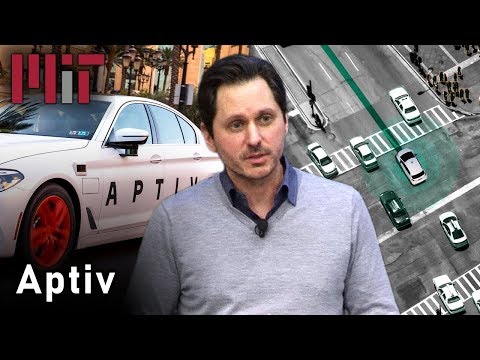 58:46ENLex FridmanPodcastCaging the Neural Network: How Aptiv Thinks About Safe Self-DrivingModeration: Lex FridmanAptiv Autonomous Mobility's Karl Iagnemma and Oscar Beijbom explain why end-to-end learning is hard to trust in cars, and show how PointPillars and nuScenes push lidar perception forward.
 1:15:59ENLex FridmanPodcastSteering Through Time: How Recurrent Networks and LSTMs Learn from SequencesModeration: Lex FridmanLex Fridman's MIT 6.S094 lecture walks from backpropagation basics to LSTMs and the way they are used to predict steering in self-driving cars.
 1:31:52ENLex FridmanPodcastFrom Phonemes to CTC: How Deep Learning Rebuilt Speech RecognitionModeration: Lex FridmanBaidu's Adam Coates walks through the traditional speech pipeline, the CTC-based end-to-end engine that replaced much of it, and what it takes to scale and deploy it.
Mehr laden24 von 45 angezeigt