








Ergebnisse
51 ArtikelSortieren
 1:15:59EN
 Lex FridmanPodcastSteering Through Time: How Recurrent Networks and LSTMs Learn from SequencesModeration: Lex FridmanLex Fridman's MIT 6.S094 lecture walks from backpropagation basics to LSTMs and the way they are used to predict steering in self-driving cars.
 37:00ENLex FridmanPodcastInside the YouTube Algorithm: Related Graphs, Satisfaction Surveys and the Viewers Who Are Part of the CodeModeration: Lex FridmanYouTube's head of search and discovery, Cristos Goodrow, explains to Lex Fridman how search and recommendations work, which signals matter, and how the team measures whether viewers are better off.
 1:31:52ENLex FridmanPodcastFrom Phonemes to CTC: How Deep Learning Rebuilt Speech RecognitionModeration: Lex FridmanBaidu's Adam Coates walks through the traditional speech pipeline, the CTC-based end-to-end engine that replaced much of it, and what it takes to scale and deploy it.
 17:40ENLex FridmanPodcastFrom AlphaGo Zero to MuZero: How Self-Play Strips Knowledge Out of AIModeration: Lex FridmanDeepMind's David Silver explains why removing human knowledge made AlphaZero stronger and more general, and how MuZero extended the idea to worlds with unknown rules.
 1:07:35ENLex FridmanPodcastWhy AI Will Never Be Perfect: Lex Fridman's Case for Keeping Humans in the LoopModeration: Lex FridmanIn MIT 6.S093's opening lecture, Lex Fridman lays out five research areas of human-centered AI, from machine teaching to arguing machines that flag their own uncertainty.
 1:19:52ENLex FridmanPodcastFrom Pixels to Steering Wheels: Convolutional Networks and End-to-End DrivingModeration: Lex FridmanLex Fridman's MIT 6.S094 lecture explains how convolutional neural networks work, where deep learning helps a self-driving car, and how to train a network to steer from video.
 1:27:30ENLex FridmanPodcastFrom NAND Gates to Self-Driving Traffic: Deep Reinforcement Learning in One LectureModeration: Lex FridmanLex Fridman's second MIT 6.S094 lecture walks from the humble perceptron to deep Q-learning and the browser-based DeepTraffic competition.
 1:05:15ENLex FridmanPodcastTaming the Long Tail: How Waymo Builds a Self-Driving FactoryModeration: Lex FridmanWaymo principal scientist Drago Anguelov explains how machine learning infrastructure, hybrid design and smart simulated agents tackle the rare events of autonomous driving.
 1:27:15ENLex FridmanPodcastPolicy Gradients vs. Q-Learning: John Schulman's Field Guide to Deep Reinforcement LearningModeration: Lex FridmanOpenAI's John Schulman walks through the core methods of deep RL, from the score function estimator to TRPO and DQN, and says when each one is worth using.
 1:19:21ENLex FridmanPodcastVapnik's Case for Learning by Predicates, Not Just by More DataModeration: Lex FridmanIn an MIT lecture, Vladimir Vapnik argues that complete statistical learning needs two mechanisms, data and invariants, and that choosing smart predicates is where intelligence lives.
 1:03:25ENLex FridmanPodcastTheano in an Hour: Symbolic Graphs, Automatic Gradients and a Compiler That Rewrites Your MathModeration: Lex FridmanPascal Lamblin of MILA walks through how Theano builds, differentiates, optimizes and runs computation graphs, then trains logistic regression, a convnet and an LSTM.
 13:58ENLex FridmanPodcastDeep Reinforcement Learning, Explained by the Researcher Behind AlphaGoModeration: Lex FridmanDavid Silver of DeepMind walks through what reinforcement learning is, how its building blocks fit together, and why deep neural networks keep surprising even the experts.
 57:55ENLex FridmanPodcastFrom Q-Tables to AlphaGo Zero: A Self-Driving Car Lecture on Deep Reinforcement LearningModeration: Lex FridmanLex Fridman's MIT 6.S094 lecture walks from the AI pipeline and Q-learning to deep Q-networks, AlphaGo Zero and the DeepTraffic competition.
 1:13:22ENLex FridmanPodcastThe Second 90%: What It Really Takes to Put Deep Learning on a Driverless CarModeration: Lex FridmanWaymo's Sacha Arnoud walks MIT students through Waymo's history, its perception stack, and the industrial-scale labeling, compute and testing behind it.
 57:15ENLex FridmanPodcastInside Torch and Autograd: How Deep Learning Libraries Compute GradientsModeration: Lex FridmanAlex Wiltschko of Twitter walks through Lua Torch, then explains automatic differentiation and what separates modern deep learning frameworks.
 1:12:12EN
 Lenny's PodcastPodcastModels Are Grown, Not Built: What Anthropic's Interpretability Research Sees Inside ClaudeModeration: Lenny RachitskyAnthropic researcher Emmanuel Ameisen explains how studying a language model's intermediate computations reveals concepts, plans and surprising quirks, and why that matters for alignment.
 1:20:58ENLex FridmanPodcastFrom Bag of Words to Attention: Quoc Le Teaches Sequence-to-Sequence Learning Through Email RepliesModeration: Lex FridmanA Deep Learning School talk that builds sequence-to-sequence models step by step around one running example, automatic email reply, and then surveys memory and operation-augmented networks.
 1:19:48ENLex FridmanPodcastBigger Models, Cleaner Splits and Human Baselines: Andrew Ng's Practical Recipe for Applied Deep LearningModeration: Lex FridmanIn a 2016 Deep Learning School talk, Andrew Ng distills lessons from leading Baidu's AI team into a workflow for diagnosing models, handling data and building a career.
 1:02:06ENLex FridmanPodcastLearning TensorFlow Hands-On: From a Mystery Line to Handwritten DigitsModeration: Lex FridmanGoogle Brain's Sherry Moore walks a Deep Learning School audience through how TensorFlow works and two core labs, linear regression and MNIST digit recognition.
 20:36ENLex FridmanPodcastWhy Simple Theories Win: Marcus Hutter on Occam's Razor, Compression and Kolmogorov ComplexityModeration: Lex FridmanDeepMind researcher Marcus Hutter explains Solomonoff induction, why compression equals understanding, and how a simple universe can still look rich.
 10:39ENLex FridmanPodcastStatistics as Decision-Making: Michael I. Jordan on Bayesians, Frequentists and the Ideas Between ThemModeration: Lex FridmanBerkeley's Michael I. Jordan explains where statistics came from, why it is really about decisions, and how empirical Bayes and false discovery rate bridge two rival philosophies.
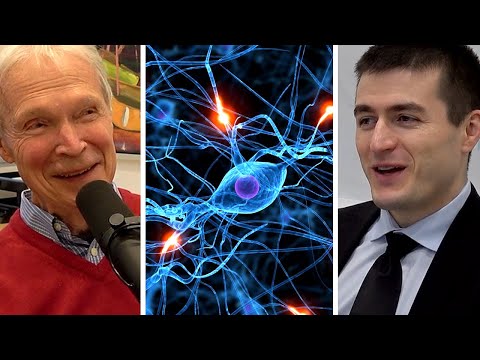 20:50ENLex FridmanPodcastGlitches as Features: What John Hopfield Says Artificial Neural Networks Are MissingModeration: Lex FridmanIn a short conversation with Lex Fridman, physicist and neural-network pioneer John Hopfield compares evolved brains with today's artificial networks and explains why he expects AI to borrow from biology generation after generation.
 1:03:10EN
 Cognitive Revolution "How AI Changes Everything"PodcastPause Tokens, Analogical Prompts and Ring Attention: A Tour of the Transformer's Next UpgradesModeration: Nathan LabenzNathan Labenz and Trey Kollmer walk through five recent papers on pausing, backspacing, prompting, streaming and long-context training, and sketch how they might combine into a more capable model.
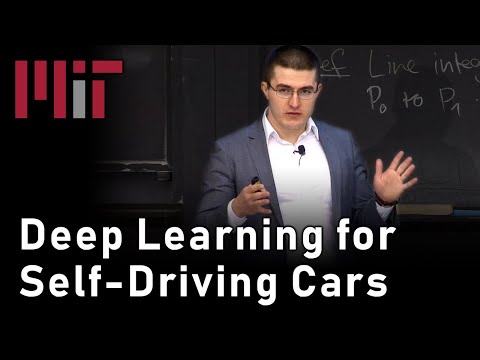 1:31:29ENLex FridmanPodcastIs Driving More Like Chess or Conversation? Lex Fridman's Opening Lecture on Deep Learning for Self-Driving CarsModeration: Lex FridmanThe first lecture of MIT 6.S094 introduces neural networks, reinforcement learning and computer vision through the question of how hard driving really is.
Mehr laden24 von 51 angezeigt